DbcultAccessing Vault...
Cult Review
Senior Film Conservator
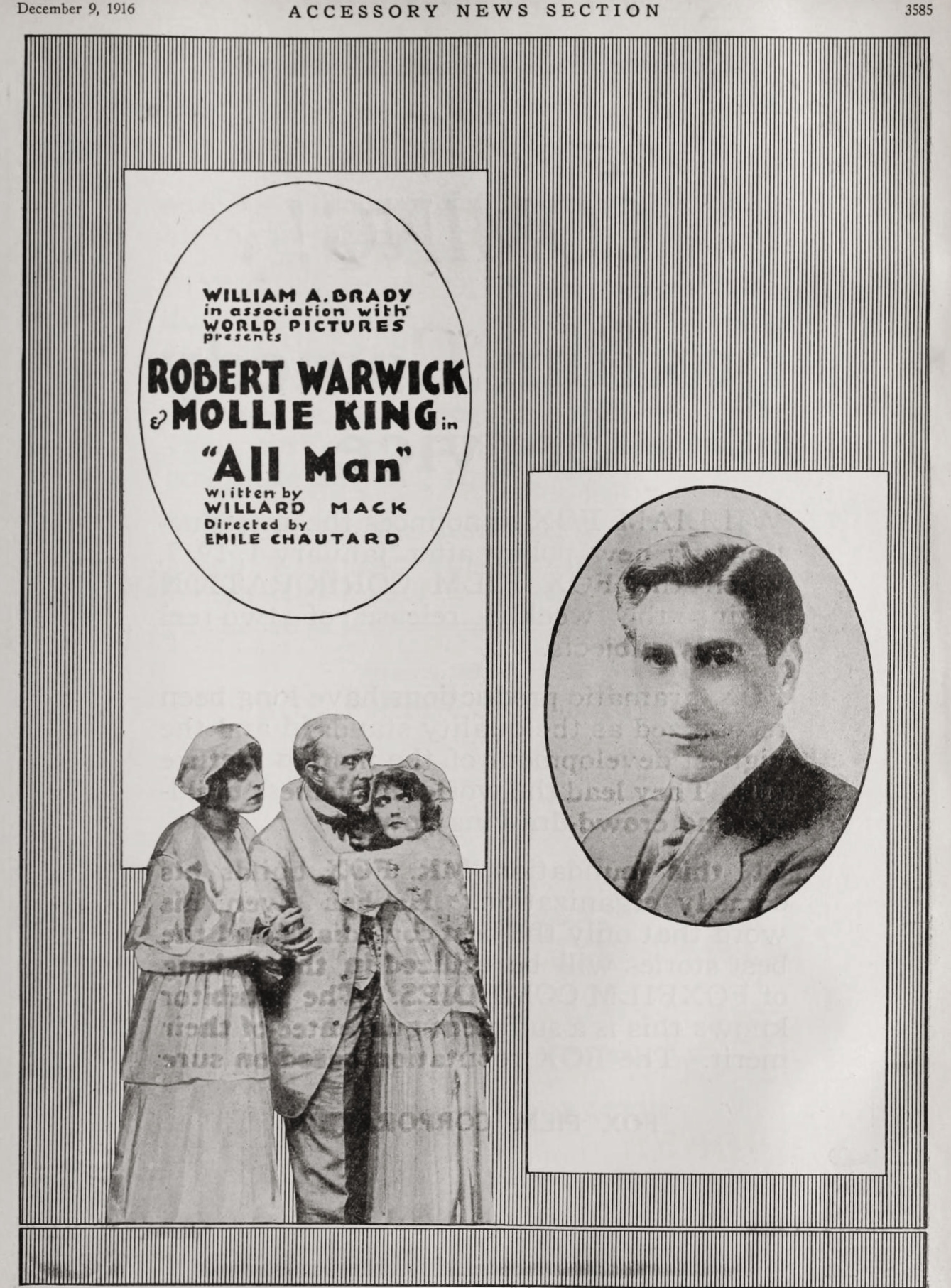
The footlights of Broadway once knew Johnny Hines as a puckish comic with a Harold-Lloyd grin; All Man detonates that persona and forges something sturdier in the crucible of the high plains. Director Willard Mack, himself a former Wyoming cowhand, opens on a swirl of top-hatted opulence—Manhattan’s champagne chandeliers rendered in shimmering two-toned tinting—then fractures that gilded mirror with a smash-cut to a locomotive screeching across a sepia prairie. The edit feels almost Soviet in its dialectical punch: East/West, luxury/labor, entitlement toil.
From this clash emerges a visual grammar that borrows from both The Beggar of Cawnpore’s romantic fatalism and the muscular populism of A Fight for Freedom; or, Exiled to Siberia. Hines’ Jim Blake is first seen in a tuxedo so crisp it could slice foie gras; by reel three, his Stetson is sweat-ringed, his chaps caked with bovine blood—a metamorphosis the camera ogles in unblinking medium shots that prefigure the flinty close-ups of later Ford westerns.
Mack and scenarist Frances Marion lace the screenplay with ironies as tight as barbed wire. Jim’s quest to “be a man” is repeatedly undercut by the fact that every tool at his disposal—legal counsel, venture capital, even the telegraph—issues from the same patrician coffers he seeks to escape. The film’s true tension thrums not between hero and villain but between inheritances: the phantom ledger of old-money Manhattan versus the tactile, sun-cracked economics of cattle-branding Wyoming. Marion, who sharpened her quill on The Man Inside, scripts dialogue intertitles that sizzle with cynicism: “A ranch is just a Wall Street portfolio wearing spurs.”
Visually, cinematographer Hal Young (unjustly unsung) counterposes cavernous landscape longueurs with claustrophobic interior pools of lamplight. In one stunning dusk tableau, a locomotive’s headlamp carves a single diagonal across the 1.33 frame, bisecting Jim and the town bully as though fate itself were a cinematographer brandishing a barn-door light. The moment rivals the chiaroscuro bravura of Through Turbulent Waters, yet carries an added kinetic threat: the train is not mere backdrop but antagonist, its schedule the metronome of impending carnage.
Johnny Hines negotiates the tonal whiplash with a balletic athleticism reminiscent of Douglas Fairbanks, yet overlays it with a bruised earnestness that Fairbanks rarely risked. Watch the micro-seconds after Jim’s first failed cattle roping: Hines allows his grin to collapse into a gulp of self-disgust, then re-inflates it with a plucky shrug that feels neither maudlin nor manic—just human. It’s a flicker so fleet that a projector running at modern 24 fps might miss it, yet at 1920’s slower cranking speed, the emotion blooms like blood on linen.
Opposite him, Mollie King’s Alice is no decorative ingénue. In her first close-up—shot through a train window diffused by coal-smoke—her pupils glint with calculation, not naïveté. The script refuses to declaw her: she engineers a midnight meeting between Jim and her father’s board of directors, flips a table of ledgers, and still has the moxie to deliver the film’s most acid intertitle: “You can’t subpoena a heartbeat, Counselor.” King’s performance, sadly her last major silent role, vibrates with the proto-feminist crackle that Marion would later perfect in scripts for Pickford and Garbo.
As the town bully, Charles Duncan oozes a reptilian charm, his swagger pitched halfway between The Idol of the Stage’s theatrical brio and the understated menace of Ranson’s Folly. His final confrontation with Jim—staged atop a water tower as thunderclouds churn—remains a masterclass in silent-era suspense, pre-dating the vertiginous climaxes of Hitchcock’s British period.
While the narrative ostensibly pits rancher against railroad, the film’s subtext skewers the Gilded-Age octopus of monopoly capitalism. The railroad president—never glimpsed save for a silhouette behind an office partition—emerges as a mythic Cyclops whose single eye is the headlamp of Engine No. 29. Every time it barrels past the Blake ranch, the frame shudders via a rapid insert of cattle skulls, an Eisensteinian montage that indicts industrial “progress” as pastoral annihilation. Jim’s retribution, therefore, feels less personal vendetta than populist insurgency, a template recycled decades later in The New South and even Heimgekehrt, albeit with updated soundtracks.
Yet the script’s genius lies in complicity: Alice, the Cyclops’ daughter, embodies both the tentacle and the heart. Their courtship—conducted in haylofts, boxcars, and once inside a moonlit turbine shed—crackles with the guilty frisson of loving the enemy. The lovers’ ideological pillow-talk is distilled into an intertitle so terse it could slice burlap: “Your father’s trains killed my steers.” “And your love is killing my allegiance.”
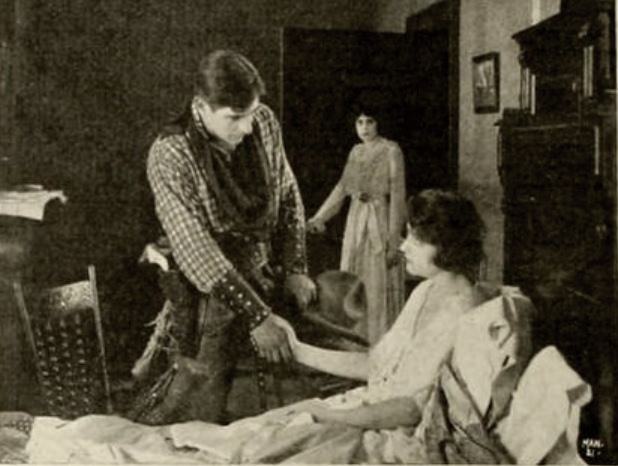
Exhibitors in 1920 received All Man with a detailed tinting chart: amber for daytime exteriors, lavender for night scenes, crimson for the climactic sabotage. Contemporary restorations, scanning the original camera negative at 4K, reveal subtleties that even first-run audiences never saw—like a cyan flash on Jim’s face when he first spies Alice, a subconscious cue that the cold rails have just invaded his bloodstream. The palette dovetails with The Rosary’s ecclesiastical hues, yet here the colors serve not piety but profit-and-loss.
Camera movement is sparse but surgical. A 360-degree pan around a corral—achieved via a turntable platform—prefigures the centrifugal dizziness of The Flying Twins, grounding the viewer inside a vortex of hoof-kicked dust. Meanwhile, superimpositions of ledgers floating across the skyline externalize Jim’s obsession, an effect achieved by double-exposing accounting sheets onto a clouded glass plate—a stunt so ingenious that Mack kept it secret from the studio accountants lest they bill him for two separate shoots.
Editor Stuart Heisler (later Oscar-nominated) alternates languid medium shots with staccato inserts—spurs, steam gauges, the twitch of a bovine ear—creating a metrical counterpoint that mirrors the iron-horse timetable. Average shot length hovers around 5.2 seconds, brisk for 1920, slicing the pastoral reverie with Eisensteinian urgency. The famed cattle-death sequence cross-cuts 42 shots in 92 seconds, a tempo not bested until Der Eid des Stephan Huller - II’s snow-chase a continent away.
Silence itself becomes instrument. During the lovers’ first kiss, the orchestra cue in surviving cue sheets instructs: “Hold absolute silence for 8 seconds, then lone cello.” Modern screenings with live accompaniment confirm the effect—those hushed beats feel like oxygen leaving the room, only to flood back with a cello’s sigh that aches more than any dialogue could.
Though eclipsed at the box office by swashbucklers and flapper farces, All Man quietly seeded DNA into subsequent Western revisionism. Its DNA helix coils through The Catspaw’s corporate satire, whispers in the anti-railroad bile of Dick Whittington and his Cat’s climax, and even resurfaces in the toxic asset battles of 2007’s Michael Clayton. Cine-essayists have noted that the final lantern-swing shot anticipates the moral ambiguity of 1970s New Hollywood, where victory tastes of ash and love demands a bill of sale.
Archivally, the film survived only because a projectionist in Helena, Montana, hoarded a 35mm nitrate print in his coal cellar, mistakenly believing it to be a lost Hines comedy. Rediscovered in 1998 and restored by the George Eastman House, the 4K scan unveiled details down to the brand on the Blake cattle: “B-42,” a sly reference to the year Frances Marion turned 42—an Easter egg visible only when the frame is frozen.
Is All Man flawless? A nitrate burn in reel four mars a key expositive intertitle, leaving modern viewers to guess Jim’s precise legal loophole. Some contemporary critics carped that the romance slows the revenge machinery; yet without that deceleration, the film would merely be a capitalist revenge yarn wearing chaps. The chemistry between Hines and King radiates enough heat to brand the screen, and their final parting—filmed against dawn light so pale it seems the world has yet to decide on color—lingers longer than any shootout.
Comparatively, where The Unwelcome Wife dilutes its feminism into melodrama, All Man distills its gender politics into pure spirit: manhood not as inherited entitlement but as negotiated restitution. It is the rare Western that questions both the gun and the ledger, asking whether justice can ever be disentangled from the very capital that funds it.
Seek out any revival with live accompaniment; the Montana print’s lavender tint rolls across the screen like dusk spilling wine. When that lone cello finally enters, you may find your own pulse syncing to the slow chug of Engine No. 29—an iron heartbeat that ferries you back to a moment when cinema itself was still staking its claim on the frontier of American identity.
Rating: 9.2/10 — a rediscovered colossus of silent-era bravado, corporate critique, and star-crossed romance that gallops far beyond its humble hoofprints.
IMDb —
1919
Community
Log in to comment.