DbcultAccessing Vault...
Cult Review
Senior Film Conservator
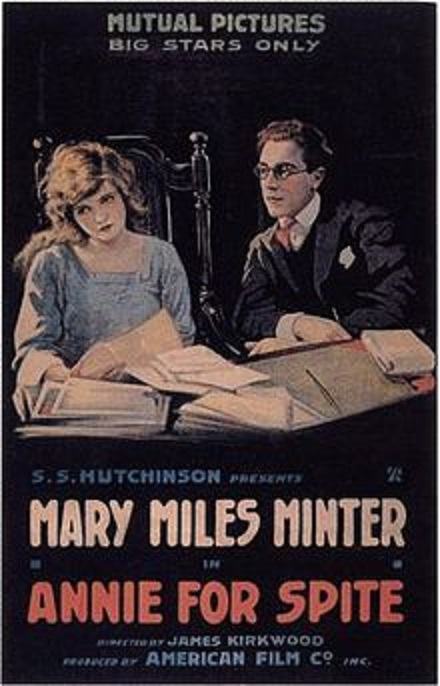
The early twentieth century was a period of profound experimentation in the burgeoning medium of cinema, a time when the visual grammar of storytelling was being etched into the collective consciousness. Annie-for-Spite (1917) stands as a quintessential artifact of this era, a melodrama that deftly navigates the treacherous waters of class resentment, aesthetic transformation, and the mercurial nature of human affection.
At its core, the film is propelled by a singular, corrosive emotion: spite. Mrs. John Grant Nottingham, portrayed with a chillingly refined bitterness by Nellie Widen, is not a benefactor driven by altruism. Her decision to pluck Annie Johnson from the depths of a tenement is a weaponized act of charity. This thematic preoccupation with inheritance and the manipulation of legal wills echoes the narrative complexities found in The Boss, where power is often wielded as a blunt instrument against familial expectation. The film establishes a stark binary between the opulent Nottingham mansion and the claustrophobic, soot-stained world of Annie’s origins.
Annie Johnson, played by the luminous Mary Miles Minter, is introduced as a 'homely' orphan. However, the film’s definition of homeliness is less an ontological fact and more a reflection of socio-economic exhaustion. Annie’s life is a grueling cycle of servitude, caring for the Cadogan children—a sequence that provides a gritty, almost Dickensian look at urban poverty, reminiscent of the atmospheric struggles depicted in David Copperfield. Minter’s performance in these early scenes is one of muted desperation, her face a mask of fatigue that the camera captures with a haunting intimacy.
The narrative hinge of Annie-for-Spite is the miraculous transfiguration of the protagonist. As Annie is enveloped by the comforts of the Nottingham estate, her physical appearance undergoes a radical shift. This is not merely a matter of costume and lighting, though these elements are handled with sophisticated care; it is an internal radiance manifesting externally. The film posits that beauty is a luxury afforded by peace and security. This theme of a young woman finding her footing in a hostile or unfamiliar world is a recurring motif in Minter's filmography, notably seen in The Shine Girl, where the protagonist's inner light serves as a beacon for those around her.
The transition from the 'ugly' Annie to the 'lovely' girl is handled with a poetic sensibility. The cinematography utilizes soft focus and strategic lighting to emphasize the softening of Annie’s features. It is a cinematic trick as old as the medium itself, yet in the hands of director Henry King, it feels like a genuine revelation of character. This evolution mirrors the tonal shifts in Life's Harmony, where the environment serves as a mirror to the soul's progression.
The antagonist of the piece, Emily Nottingham (Eugenie Forde), represents the rapacious greed of the upper-middle class. Her sense of entitlement to the Nottingham fortune is visceral, and her disdain for Annie is not merely a matter of class, but of disrupted plans. The legal battle that ensues after the elder Mrs. Nottingham’s death provides a tense, procedural climax. The contestation of the will is a moment of high drama that explores the fragility of a person's final wishes when faced with the cold machinery of the law. This legalistic tension is a common trope in silent dramas that seek to critique the rigidity of social structures, similar to the thematic undercurrents in The Crucible.
The irony of the conclusion is thick: Emily wins the legal battle, reclaiming the inheritance she so desperately craved, yet she loses the moral and emotional war. By securing the love of Willard (George Fisher), Annie achieves a status that Emily’s money cannot buy. The film suggests that while the law can redistribute wealth, it cannot dictate the heart’s allegiances. This resolution feels far more satisfying than a simple financial victory, elevating the film from a mere melodrama to a poignant commentary on value.
When placing Annie-for-Spite within the broader context of 1917 cinema, its sophistication becomes even more apparent. Unlike the more overtly tragic tones of The Sin Woman, Annie-for-Spite maintains a balance of light and shadow. It avoids the heavy-handed moralizing often found in The Sting of Victory, opting instead for a character-driven exploration of growth. Even when compared to international efforts like the Romanian Cetatea Neamtului, which focuses on historical grandeur, Minter's film feels remarkably modern in its psychological focus.
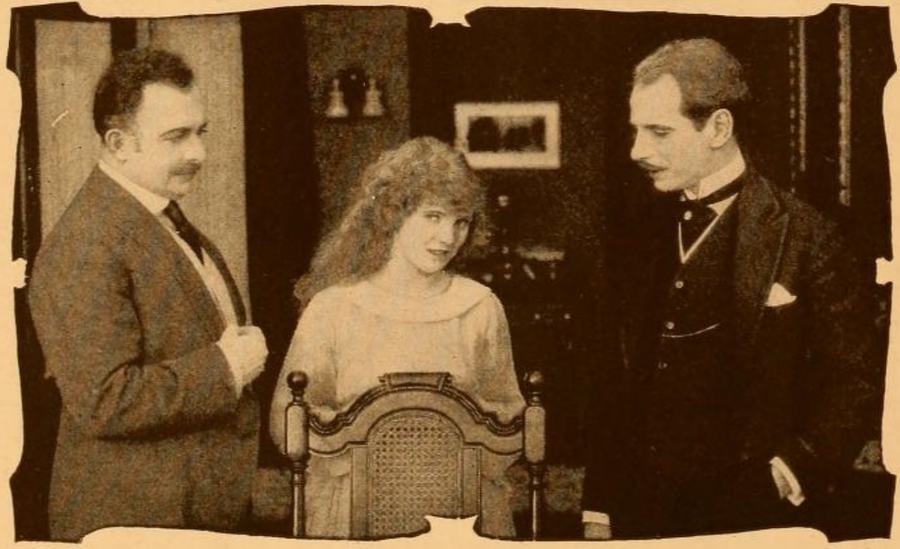
The film also shares an DNA with stories of hidden identities and sudden reversals of fortune, a staple of the era. One might find echoes of the intrigue found in Rupert of Hentzau, though scaled down to the domestic sphere. The domesticity here is not a prison, however; it is the stage upon which the most vital human dramas are enacted. The use of the tenement setting as a prologue to the mansion serves the same purpose as the atmospheric world-building in The Haunted Manor, establishing a mood that dictates the audience's emotional response to the protagonist's journey.
Mary Miles Minter was often positioned as a rival to Mary Pickford, and Annie-for-Spite demonstrates why. She possesses an ethereal quality that translates beautifully to the silent screen. Her ability to convey complex emotions through subtle shifts in gaze and posture is extraordinary. In the scenes where she cares for the children, there is a weary maternalism that feels grounded and real, a far cry from the stylized acting often associated with the period. When she eventually finds happiness, her smile seems to illuminate the very celluloid it is captured on.
Her chemistry with George Fisher is understated yet palpable. Fisher plays Willard not as a dashing hero, but as a man whose perceptions are gradually corrected. His love for Annie is the ultimate validation of her transformation, proving that the 'ugly girl' was always a diamond in the rough, waiting for the right light to shine. This romantic arc is handled with a delicacy that avoids the saccharine, a feat also achieved in Comin' Thro' the Rye.
Technically, the film is a masterclass in silent era production. The set design of the Nottingham mansion is lavish without being gaudy, providing a stark contrast to the utilitarian department store and the cluttered tenement. The editing rhythm is deliberate, allowing the emotional beats to resonate before moving the plot forward. While it may lack the frantic energy of contemporary action-dramas like Wildfire, it gains a sense of gravitas through its measured pacing.
The screenplay by Julian La Mothe and Frederick J. Jackson is surprisingly tight. They manage to weave together the themes of spite, legal drama, and romance into a cohesive whole. The dialogue intertitles are used sparingly, allowing the visual storytelling to carry the weight of the narrative—a hallmark of high-quality silent cinema. This visual-first approach is something that can be seen in the intense character studies of the Russian film Zhizn i smert leytenanta Shmidta, though the subject matter here is far more intimate and domestic.
Ultimately, Annie-for-Spite is a film about the reclamation of the self. Annie Johnson begins the story as a pawn in someone else's game of vengeance, a body to be used to make a point. By the end, she has asserted her own agency, found love on her own terms, and risen above the petty machinations of the Nottingham family. It is a story that resonates because it touches on the universal desire to be seen for who we truly are, rather than what our circumstances dictate.
In the pantheon of 1917 films, it may not have the avant-garde reputation of Lulu, but it possesses a heart and a narrative clarity that makes it immensely watchable even a century later. It is a testament to the power of silent cinema to explore the nuances of the human condition with little more than light, shadow, and the expressive face of a truly talented actress. For those seeking to understand the evolution of the 'Cinderella' trope in American film, Annie-for-Spite is an essential, evocative, and thoroughly rewarding experience.
A legacy of silent resilience, Mary Miles Minter's Annie remains a beacon of transformative grace in a world built on the shifting sands of inheritance and spite.

IMDb 6.3
1930
Community
Log in to comment.