DbcultAccessing Vault...
Cult Review
Senior Film Conservator
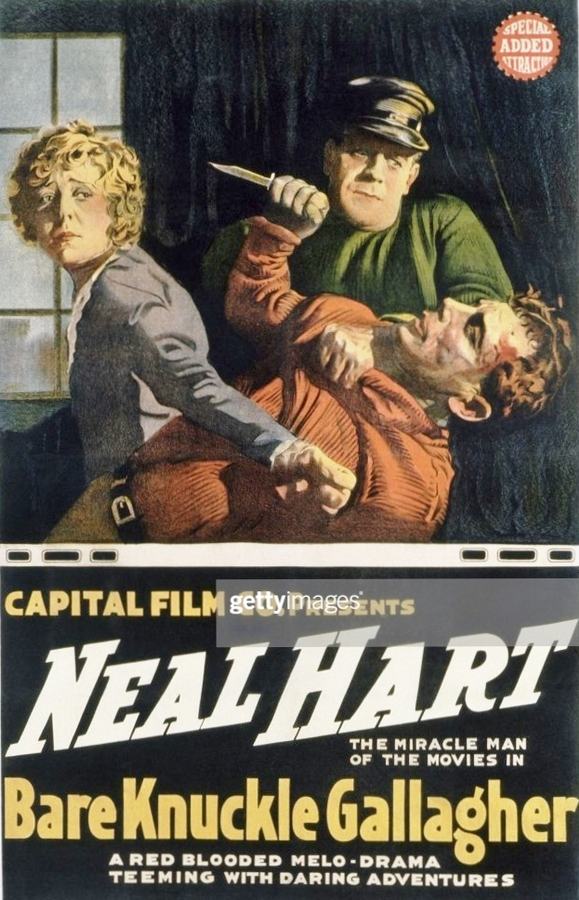
There is a specific, primal satisfaction in watching a silent-era titan like Neal Hart trade the saddle for the starboard side. In Bare Knuckle Gallagher, we are treated to a fascinating collision of genres—a maritime noir that predates the formalization of the term, yet carries the heavy, humid atmosphere of a coastal conspiracy. While Hart is traditionally associated with the wide-open frontiers of the American West, his transition to the claustrophobic, salt-sprayed deck of a sailing vessel provides a refreshing canvas for his particular brand of stoic heroism.
The film operates on a narrative engine fueled by the 'wronged man' trope, a structural device that has powered everything from the high-stakes drama of The Suspect to the more gothic undertones of Her Bitter Cup. However, where those films might lean into psychological unraveling, Bare Knuckle Gallagher leans into the physical. The 'frame-up' here isn't a delicate social maneuvering; it is a blunt force instrument. The circumstantial evidence that stamps Gallagher as a murderer is presented with a ruthless efficiency that reflects the era’s cinematic economy. We aren't here for a courtroom procedural; we are here to see how a man of action extricates himself from the tightening noose of a lie.
As an art critic, one cannot help but admire the stark, high-contrast cinematography that characterizes these maritime interiors. The shadows on the ship are not merely decorative; they represent the encroaching threat of the 'hoosegow.' The visual language of the film suggests a world where justice is as fluid as the ocean, and the only solid ground is found in the strength of one's grip and the speed of one's fists.
The title isn't merely a marketing gimmick; it is a promise. Hart’s Gallagher is a whirlwind of kinetic energy. In an era before the hyper-edited fight sequences of modern cinema, the brawls in this film possess a terrifyingly authentic weight. When Hart administers beatings to two or more of his crew at a time, it doesn't feel like a choreographed dance—it feels like a desperate struggle for survival. There is a raw, atavistic quality to these encounters that makes the polished action of films like Officer 666 feel positively polite by comparison.
Hart’s physical presence is the film's primary asset. He moves with a deliberate, predatory grace, his fists serving as the final arbiters of truth in a world governed by deception. These sequences are not just interludes between plot points; they are the plot. Each blow landed is a refutation of the false accusations leveled against him. It is a form of 'trial by combat' that resonates with the audience’s desire for immediate, visceral justice. This isn't the refined combat of Julius Caesar; this is the proletarian struggle of the docks, where the law is often a luxury the working man cannot afford.
"Gallagher doesn't just clear his name; he obliterates the very possibility of doubt through a symphony of bone and sinew."
Critically speaking, the narrative architecture of Bare Knuckle Gallagher does occasionally creak under the weight of its own conventions. The moment where the villains are overheard discussing their scheme is, as the plot notes suggest, 'old-time stuff.' Even for 1919, this was a well-worn trope, a relic of the Victorian stage where secrets were never truly secret if a protagonist was standing behind a convenient curtain or bulkhead.
However, there is a nostalgic charm to this transparency. In a modern context, we demand complex investigative work, but here, the universe itself seems to conspire to help the hero. It’s as if the moral vacuum created by the villains' lies is so great that the truth simply has to leak out. While it lacks the sophistication of the narrative twists found in The Field of Honor, it serves the pacing of a film that is more interested in its next fight scene than in a complex screenplay. This transparency allows the audience to remain in a state of righteous indignation, waiting for the inevitable moment when Gallagher’s knuckles meet the villains' collective jaw.
The conclusion of the film features a romantic ending that feels, to the discerning eye, somewhat 'tacked on.' This was a common practice in the silent era—a concession to the box office's demand for a 'happily ever after' to balance out the preceding violence. After the grit and the grime of the frame-up and the subsequent brawls, the sudden pivot to romantic bliss feels like a tonal whiplash.
Compare this to the more integrated romantic arcs in films like Unknown Love or even the comedic romanticism of Dull Care. In Bare Knuckle Gallagher, the romance isn't the heart of the story; it's the garnish. It’s the deep breath after a long, underwater struggle. While it might lack the emotional depth we look for in contemporary cinema, it serves its purpose as a palate cleanser, ensuring that the audience leaves the theater feeling that order, in all its forms, has been restored.
To truly appreciate what Hart is doing here, one must look at the landscape of 1919 cinema. While Golfo was exploring different cultural textures and Die Tangokönigin was leaning into the rhythmic elegance of the dance, Hart was doubling down on a rugged, masculine vulnerability. He represents a bridge between the frontier hero and the urban vigilante. Unlike the characters in Limousine Life, who navigate the world through wealth and status, Gallagher is a man defined solely by his labor and his integrity.
Even when compared to the dramatic weight of His Convict Bride, Hart’s film feels more immediate, more grounded in the physical reality of the body. There is no spiritual transcendence here, only the hard-won victory of a man who refuses to be broken by a corrupt system. It shares a certain thematic DNA with 'Neath Austral Skies in its exploration of justice in remote, unforgiving environments, yet it remains uniquely American in its focus on the individual's right to defend their honor with their own two hands.
The direction (though the credits are sparse on the writing side) shows a keen understanding of tension. The scenes aboard the vessel are shot with a sense of impending doom. Every creak of the timber and every splash of the wave feels like a countdown to the moment Gallagher is finally cornered. The use of space is particularly effective; the narrow corridors and cramped quarters of the ship amplify the intensity of the fight scenes. You can almost feel the lack of oxygen as Hart takes on his assailants.
Furthermore, the film’s pacing is relentless. It avoids the meandering subplots that often plagued longer features of the time, such as the occasionally wandering narratives of La madona de las rosas or the whimsical detours of All 'Fur' Her. Bare Knuckle Gallagher knows exactly what it is: a vehicle for Neal Hart to demonstrate why he was one of the most bankable action stars of his day. It is a lean, mean, fighting machine of a movie.
The term 'hoosegow'—a corruption of the Spanish *juzgado*—appears in the plot and serves as a linguistic reminder of the film's roots in the Western genre. By bringing this terminology to a maritime setting, the film creates a unique hybrid identity. Gallagher is a 'sea-cowboy,' a man who brings the law of the plains to the lawlessness of the ocean. This cross-pollination of genres is what makes the film stand out in the vast sea of silent era releases like What's His Name.
In the final analysis, Bare Knuckle Gallagher is a testament to the enduring power of the physical performance. While its plot devices may be 'old-time stuff,' and its romantic ending a bit of a stretch, the core of the film—the struggle of a righteous man against an unjust accusation—remains timeless. It is a gritty, unpretentious piece of cinema that values action over artifice, and in doing so, creates a lasting impression of Neal Hart as a formidable presence on the silver screen. It is a film that demands to be watched not just for its historical value, but for the sheer, unadulterated joy of seeing a master of the craft do what he does best: fight his way back to the light.
Reviewed by the Cinematic Chronicler — A deep dive into the shadows and salt of 1919.
IMDb 6
1934
Community
Log in to comment.