DbcultAccessing Vault...
Cult Review
Senior Film Conservator
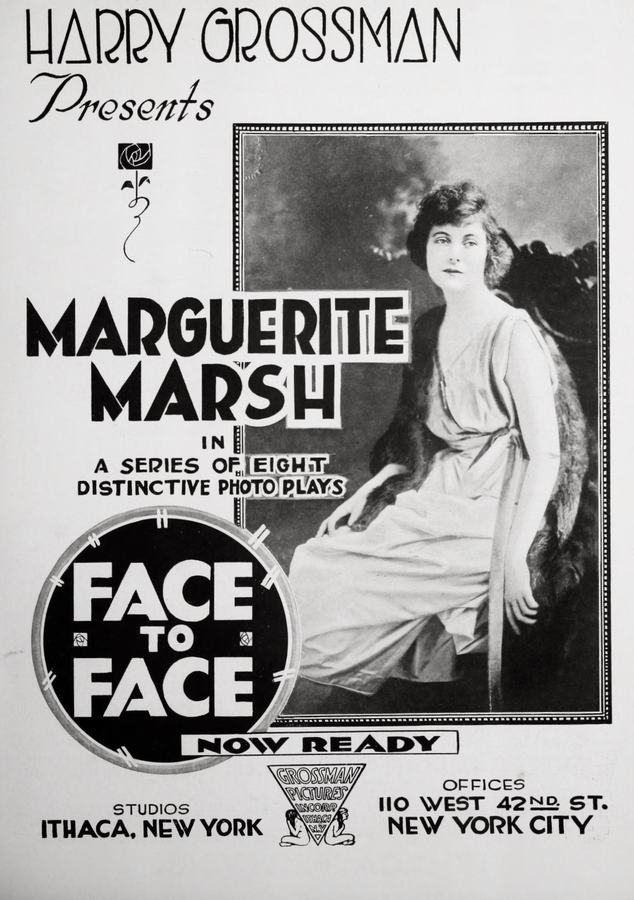
The cinematic landscape of the early 1920s was often a battleground between theatrical tradition and the burgeoning visual language of the camera. In Face to Face (1922), directed and written by Harry Grossman, we witness a fascinating, if somewhat neglected, specimen of the silent melodrama that prioritizes psychological symbolism over mere plot progression. While the era was rife with slapstick like The Saphead, Grossman’s work leans into a grittier, more fatalistic register, examining how a single moment of terror can derail the machinery of justice.
At its core, the film is a study of erroneous perception. The inciting incident—Bert Manners shooting his own reflection—is a stroke of narrative genius that predates the more sophisticated psychological thrillers of the late 1940s. Unlike the overt social commentary found in Birth Control or the sprawling historical epics like Potop, this film operates in a claustrophobic domestic space where the mirror serves as both a literal and figurative judge. When Manners pulls the trigger, he isn't just trying to destroy a perceived witness; he is symbolically attempting to erase his own criminal identity, only to have that very act bind him to a crime he did not commit.
The casting of Edna Holman and Marguerite Marsh provides a compelling duality. Marsh, often overshadowed by her sister Mae, brings a nuanced urgency to the screen that anchors the film’s more histrionic moments. Her portrayal of Helen is not merely that of a 'damsel in search of truth' but rather a proactive investigator, a character archetype that feels refreshingly modern compared to the passive heroines of The Desired Woman. Where En hjemløs Fugl might have focused on the pathetic nature of the outcast, Face to Face empowers its female lead to dismantle the patriarchal corruption embodied by Hartley.
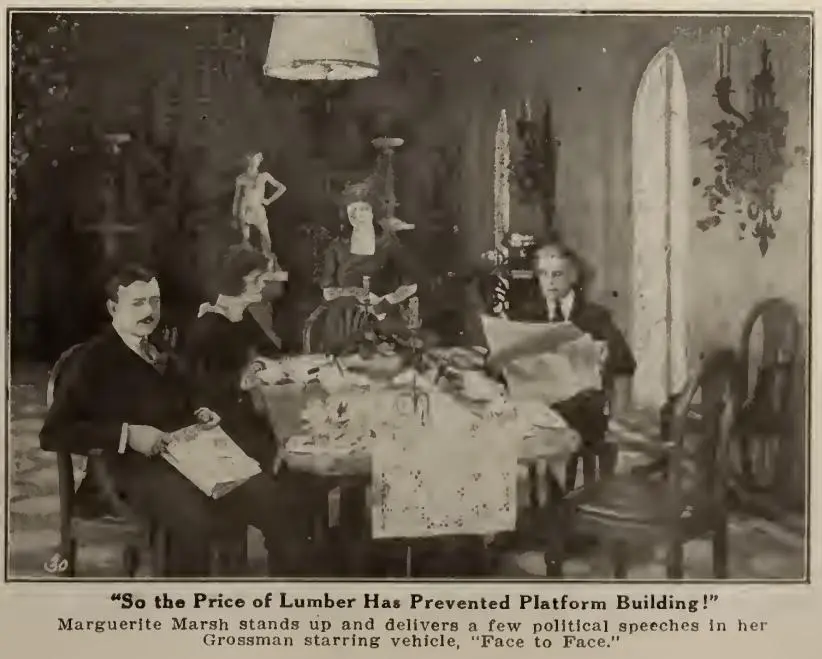
Grossman’s direction utilizes the limited technology of the day to create a sense of impending doom. The way the camera lingers on the bonds—those physical manifestations of Weston’s life and Hartley’s greed—reminds one of the heavy-handed but effective symbolism in Caino. The film’s pacing is deliberate, eschewing the frantic energy of contemporary comedies for a slow-burn tension that mirrors the internal state of its protagonist. We are forced to sit with Bert Manners in his cell, feeling the weight of the circumstantial evidence that threatens to crush him, a thematic resonance also explored in The Dead Line.
One cannot discuss this film without addressing its scathing critique of the legal system's reliance on appearances. The ease with which Manners is convicted speaks to a broader societal anxiety regarding the 'criminal class.' In many ways, the film acts as a domestic counterpart to the political anxieties of My Four Years in Germany, where the enemy is not a foreign power but the opportunistic predator within one's own social circle. Hartley’s willingness to let an innocent man hang to cover his financial indiscretions is a chilling reminder of the era's class disparities.
The narrative resolution, while satisfyingly tidy in the tradition of early 20th-century storytelling, carries a bitter aftertaste. The fact that justice is only served through the intervention of a school friend rather than the police highlights a profound skepticism toward institutional efficacy. This cynicism is echoed in Without Benefit of Clergy, where social structures fail to protect the vulnerable. In Face to Face, the truth is a fragile thing, easily obscured by a well-placed lie and a shiny set of stolen bonds.
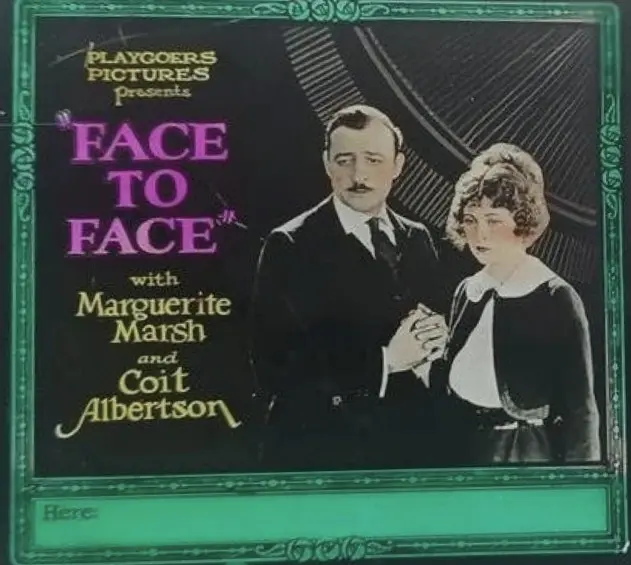
The central motif of the mirror deserves an exhaustive analysis. In the silent era, visual metaphors were the primary vehicle for subtext. When Manners shoots his reflection, Grossman is suggesting that the character's greatest enemy is his own perception of himself. This 'double' or 'doppelgänger' trope is a staple of early cinema, seen in various forms in films like Upside Down. However, in Face to Face, the mirror is not a source of whimsy but a harbinger of doom. It shatters the illusion of the 'perfect crime' before the crime has even been committed.
Furthermore, the film's title itself—Face to Face—implies a confrontation that is both external and internal. Manners must face the consequences of his presence at the scene, while Hartley must eventually face the moral vacuum of his own soul. This thematic depth elevates the film above standard programmers like Welcome Little Stranger or the lighter fare of Friend Husband. It is a work that demands the viewer grapple with the ambiguity of guilt.
Released during a period of transition, Face to Face captures the aesthetic of a world still reeling from the aftermath of the Great War and the shifts in social mores. While it may not possess the experimental fervor of Luciella or the mythic scale of Conn, the Shaughraun, it excels in its quiet, persistent exploration of human fallibility. The screenplay by Harry Grossman is tightly wound, ensuring that no scene is wasted. Every look shared between characters, every shot of the incriminating evidence, builds toward a climax that feels earned rather than manufactured.
The film also serves as a testament to the resilience of the human spirit, as seen through Helen’s character. Her determination to seek the truth, even when the odds are stacked against her, mirrors the thematic reawakening found in The Reawakening. It is this spark of agency that prevents the film from descending into pure nihilism. In the end, the truth is not just discovered; it is fought for, reclaimed from the shadows of a broken mirror and a corrupt heart.
In conclusion, 'Face to Face' remains a vital piece of silent cinema history. It challenges the viewer to look beyond the surface of things, to question the validity of what we see, and to recognize that the most dangerous reflections are often the ones we carry within ourselves. It is a haunting, evocative journey into the heart of darkness, lightened only by the persistent flame of justice.
IMDb —
1928
Community
Log in to comment.