DbcultAccessing Vault...
5.5/10
Senior Film Conservator
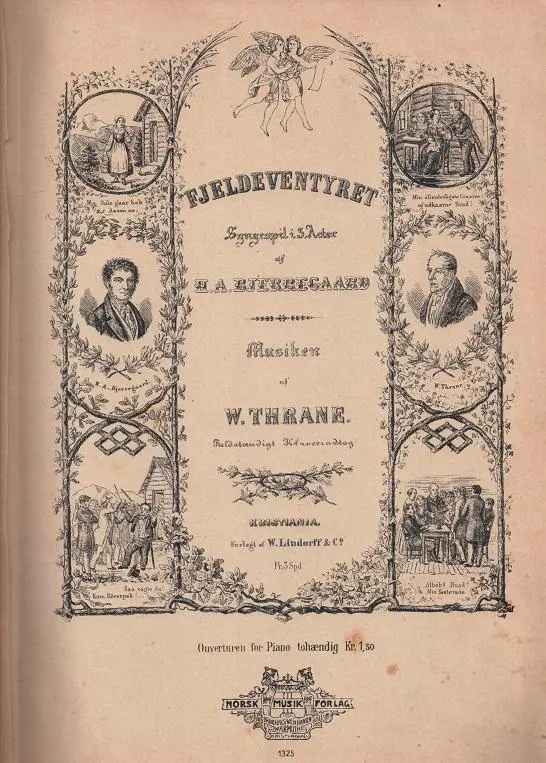
A definitive 5.5/10 rating for a film that redefined the boundaries of cult cinema. Fjeldeventyret remains a cornerstone of transgressive art.
Is Fjeldeventyret worth your time in the modern era? Short answer: Yes, but only if you approach it as a cultural artifact rather than a fast-paced romance.
This film is specifically for historians of Scandinavian cinema and those who find beauty in the slow, deliberate framing of early 20th-century pastoral drama. It is definitely not for viewers who require the kinetic energy of contemporary thrillers or the complex psychological layering found in modern indie films.
1) This film works because it utilizes the natural landscape of Norway not just as a backdrop, but as a silent protagonist that dictates the emotional stakes of the story.
2) This film fails because its comedic relief characters often feel like caricatures from a different, less sophisticated production, breaking the tension of the central romance.
3) You should watch it if you want to understand how early filmmakers used the 'National Romantic' style to define a country's identity through the lens of a camera.
Fjeldeventyret, or 'The Mountain Adventure,' serves as a fascinating bridge between the 19th-century theatrical tradition and the emerging visual language of the 1920s. Based on the play by Henrik Anker Bjerregaard, the film carries a certain stage-bound DNA, yet it breaks free whenever the camera ventures into the outdoors. The conflict is simple yet eternal: the lawman (the Lensmann) represents the old world—rigid, hierarchical, and bound by the soil. His daughter, Ragnhild, played with a surprising amount of nuance by Anna-Brita Ryding, represents the new world—fluid, urban, and driven by emotional choice.
When we compare this to other films of the same year, such as the gritty realism found in Under the Rouge, we see a stark contrast. While American cinema was diving into the underworld of crime and social decay, Norwegian cinema was still deeply invested in the romanticism of the landscape. The mountains in Fjeldeventyret are imposing. They reflect the lawman’s stubbornness. They are hard, unyielding, and ancient. In contrast, the memories of the capital are presented with a lighter touch, suggesting a freedom that the valley cannot provide.
Anna-Brita Ryding carries the weight of the film on her shoulders. In an era where silent acting often drifted into wild gesticulation and eye-rolling, Ryding maintains a level of restraint that feels ahead of its time. There is a specific scene where she sits by a window, looking out toward the peaks, where her eyes convey a sense of trapped longing that no dialogue card could ever fully capture. It is a quiet moment, but it is the heartbeat of the film.
The male lead, Haakon Hjelde, provides a capable foil, though his performance feels more aligned with the heroic tropes of the time. He is the 'city man'—polished and perhaps a bit too perfect. Their chemistry is functional, but the real sparks fly during the confrontations between Ragnhild and her father. These scenes are shot with a heavy emphasis on verticality; the father often looms over her, utilizing the height of the frame to signify his legal and patriarchal authority. It’s a visual trick that works. But it’s flawed in its repetition.
Director Leif Sinding, working from Bjerregaard's script, shows a keen eye for composition. The way he frames the mountain paths and the rushing streams gives the film a sense of scale that feels much larger than its modest budget. Unlike the claustrophobic interiors of The Girl Who Came Back, Fjeldeventyret breathes. The use of natural light is particularly impressive for 1925. There is a shimmering quality to the outdoor sequences that makes the Norwegian summer feel both fleeting and eternal.
However, the pacing is where modern audiences will struggle most. The film takes its time—sometimes too much time—establishing the geography of the valley. While this builds a sense of place, it occasionally stalls the narrative momentum. You can see similar pacing issues in Jean Chouan, where the historical weight of the subject matter seems to slow the director's hand. In Fjeldeventyret, the beauty of the scenery occasionally distracts the director from the urgency of the plot.
If you are looking for a definitive answer, consider your tolerance for silent cinema's quirks. This is a foundational piece of Norwegian film history. It captures a moment when a nation was trying to figure out how to tell its own stories without just mimicking the melodramas coming out of Hollywood or the expressionism coming out of Germany. It is a sincere film. It doesn't have the cynicism of The Cyclist or the experimental edge of I my kak liudi. Instead, it relies on the honest conflict of a heart divided between two worlds.
Pros:
Cons:
One of the most debatable aspects of Fjeldeventyret is the portrayal of the father. While he is technically the antagonist, Sinding’s direction doesn't entirely vilify him. In several shots, he looks tired, as if the weight of maintaining the law in such a rugged environment has drained him of his capacity for empathy. It is a nuanced take on the 'stern father' archetype. He isn't just a barrier to Ragnhild's happiness; he is a man terrified of a world he no longer understands. This makes the eventual resolution far more poignant than a standard 'happily ever after' romance.
When placed alongside Tamilla or The Galloping Jinx, Fjeldeventyret feels significantly more grounded. It lacks the escapist energy of the American western but gains a sense of gravity from its connection to the land. It is less of a 'movie' and more of an 'experience' of a specific time and place. The pacing reminds me of Life Story of John Lee, or The Man They Could Not Hang, where the inevitability of the protagonist's fate is the primary source of tension.
Fjeldeventyret is a quiet triumph of atmosphere over action. It captures the soul of a landscape and the struggle of a woman trying to find her place within it. While the comedic elements have aged poorly and the pacing requires patience, the visual storytelling and the emotional core remain surprisingly intact. It is a film that demands your full attention, rewarding the viewer with a deep sense of historical immersion. It’s not a masterpiece. But it is essential for anyone serious about the roots of European cinema. It works. But it’s flawed. Ultimately, it is a journey worth taking for the view alone.
IMDb 7.6
1924
Community
Log in to comment.