DbcultAccessing Vault...
Cult Review
Senior Film Conservator
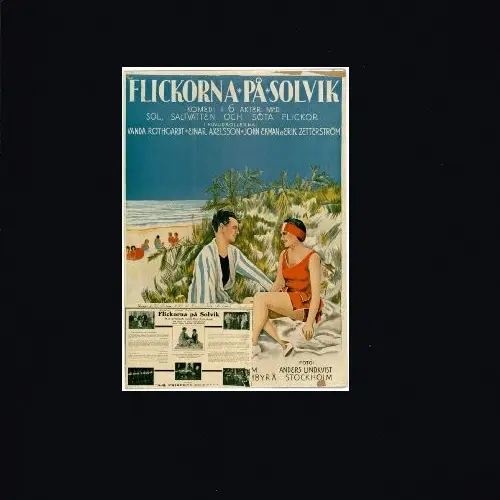
Is Flickorna på Solvik a mandatory watch for the modern cinephile? Short answer: No, unless you are a dedicated historian of Nordic silent film. While it offers a fascinating glimpse into the aristocratic anxieties of 1920s Sweden, the film lacks the narrative propulsion required to keep a contemporary audience engaged for its full duration.
This film is for the archival researcher, the silent film completist, and those who find beauty in the slow, rhythmic pacing of early 20th-century European drama. It is NOT for anyone seeking high-octane thrills, modern pacing, or a complex plot with rapid-fire twists. It is a film of atmosphere, not action.
1) This film works because: It captures the specific geographic and cultural soul of the Skåne region with an authenticity that few films of the era managed to achieve.
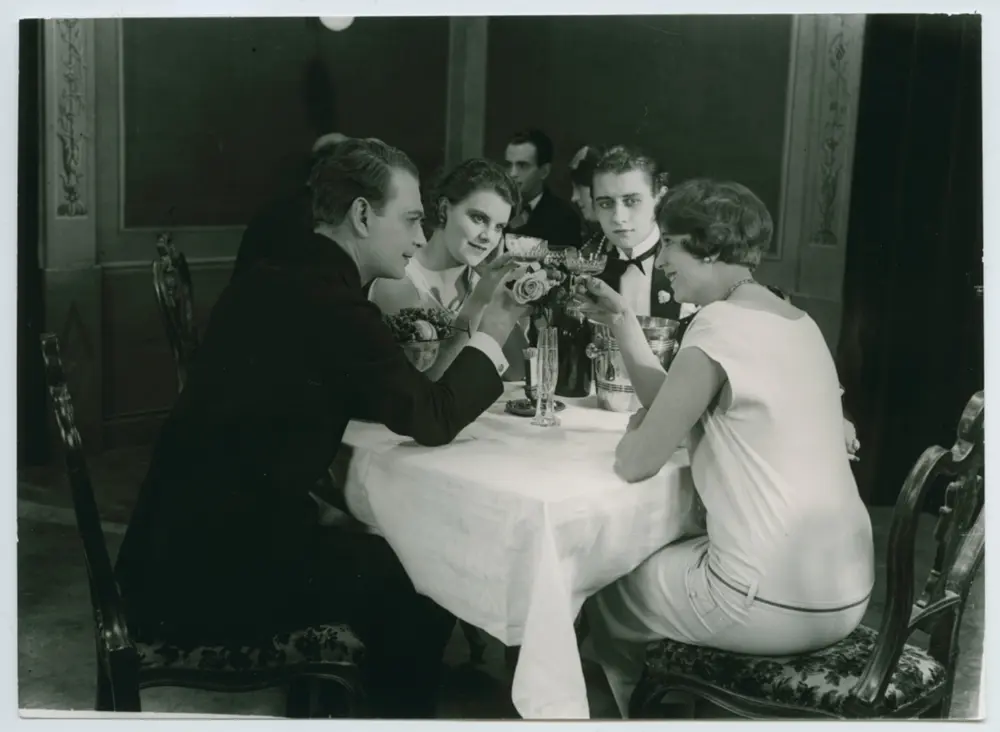
2) This film fails because: The narrative structure is overly reliant on static domestic scenes that fail to build sufficient tension, leading to a glacial pace that feels repetitive.
3) You should watch it if: You have an interest in the early career of Alice O'Fredericks or want to see how Swedish cinema transitioned from rural epics to domestic manor-house dramas.
In Flickorna på Solvik, the Cronoholm manor is not merely a setting; it is a weight that hangs over every character. Director and writer John Larson uses the architecture of the estate to mirror the Baron’s internal state. The high ceilings and dark wood paneling emphasize the Baron's isolation from the outside world. It is a visual language that suggests a man trapped by his own history.
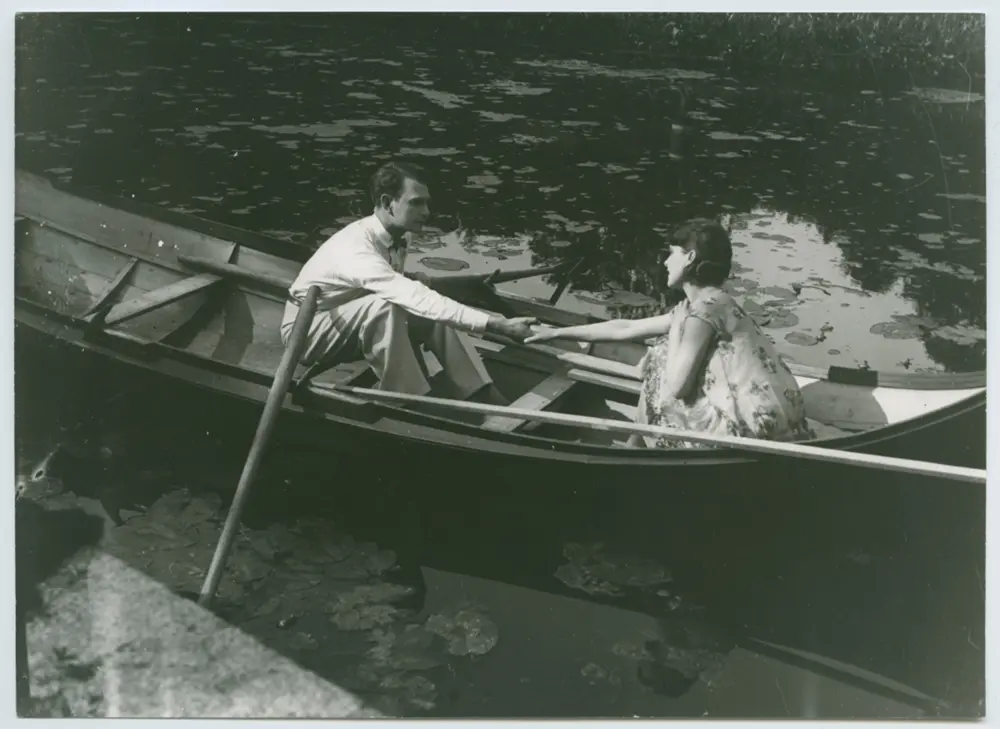
Contrast this with the outdoor scenes in the Skåne countryside. When Martha and Börje leave the manor, the cinematography by Victor Hallin opens up, utilizing natural light to signify freedom. However, even these moments are tinged with a certain melancholy. The film doesn't celebrate the landscape so much as it observes it with a cold, detached eye. It reminds me of the visual approach in Empty Hands, where the environment serves as a mirror for the characters' internal lack of fulfillment.
The manor house drama was a staple of the 1920s, but Larson’s approach is notably more somber than international counterparts like The Foolish Virgin. There is no grand melodrama here; instead, we get small, piercing moments of domestic friction. A scene where the Baron adjusts his collar before a dinner that no one wants to attend speaks volumes about the performative nature of his life. It is a brutally simple observation of a dying class.
Einar Axelsson delivers a performance that is surprisingly grounded for the silent era. Often, actors of this period leaned into histrionics, but Axelsson’s Börje is characterized by a quiet, simmering frustration. You can see it in the way he handles the props—there’s a specific moment where he grips a glass of wine with an intensity that suggests he’d rather shatter it than drink it. It’s a subtle touch that elevates the film above mere melodrama.
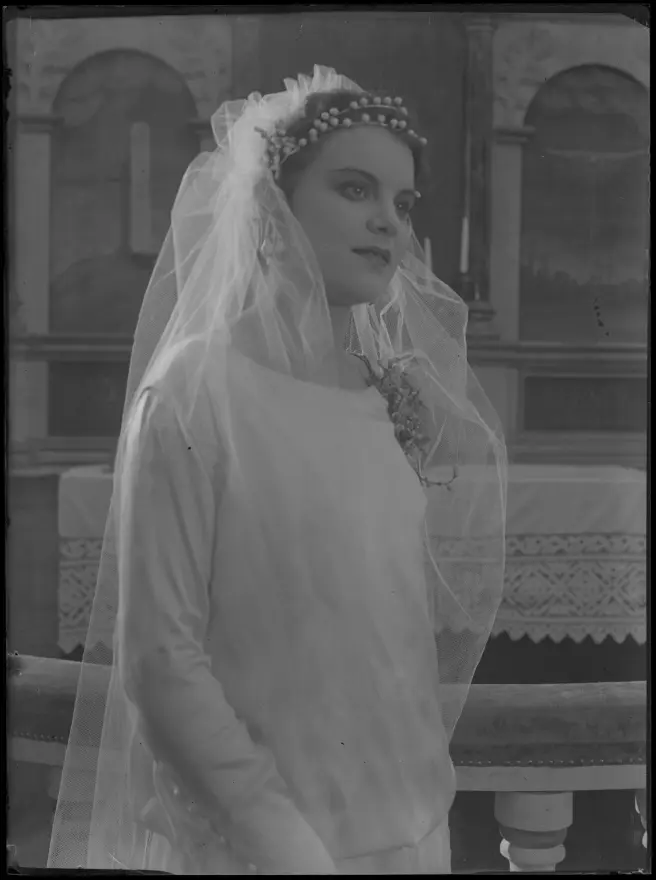
Alice O'Fredericks, who would later become a powerhouse director in Denmark, shows early signs of her keen understanding of human dynamics. As Martha, she provides the film’s emotional core. While the Baron is obsessed with the past and Börje is frustrated by the present, Martha seems to be the only one looking toward the future. Her performance is less about grand gestures and more about the micro-expressions of a woman who knows she is being undervalued.
The supporting cast, including Benkt-Åke Benktsson and Olga Hellqvist, provide a solid, if somewhat theatrical, backdrop. The interactions between the family and the 'girls' of the title are where the film’s social commentary is most potent. These women are often relegated to the background, yet Larson’s camera lingers on them just long enough to suggest that their lives are just as complex as the aristocrats they serve. It’s an unconventional observation for a film of this vintage.
Short answer: Only for the archival enthusiast.
If you are looking for a story that will grip you with its plot, Flickorna på Solvik will likely disappoint. The narrative moves at a crawl, and the stakes often feel low. However, if you appreciate the technical craft of silent cinema—the way a director can convey class struggle through the placement of furniture or the lighting of a hallway—then there is much to admire here. It is a film of textures and shadows rather than twists and turns.
The biggest hurdle for the modern viewer is undoubtedly the pacing. John Larson seems uninterested in the editing techniques that were beginning to revolutionize cinema in 1926. While films like The Living Image, or the Lady of Petrograd were experimenting with more dynamic cuts, Flickorna på Solvik remains stubbornly static. Many scenes are shot in long takes from a medium distance, which can make the viewer feel like they are watching a stage play from the tenth row.
However, Victor Hallin’s cinematography deserves some credit. His use of chiaroscuro in the manor's library creates a sense of dread that the script doesn't always earn. The way the shadows of the window frames fall across the Baron’s desk suggests a prison, a visual metaphor that is perhaps the most sophisticated element of the film. It’s a technique seen in more polished works like The Branded Woman, though Hallin uses it with more restraint here.
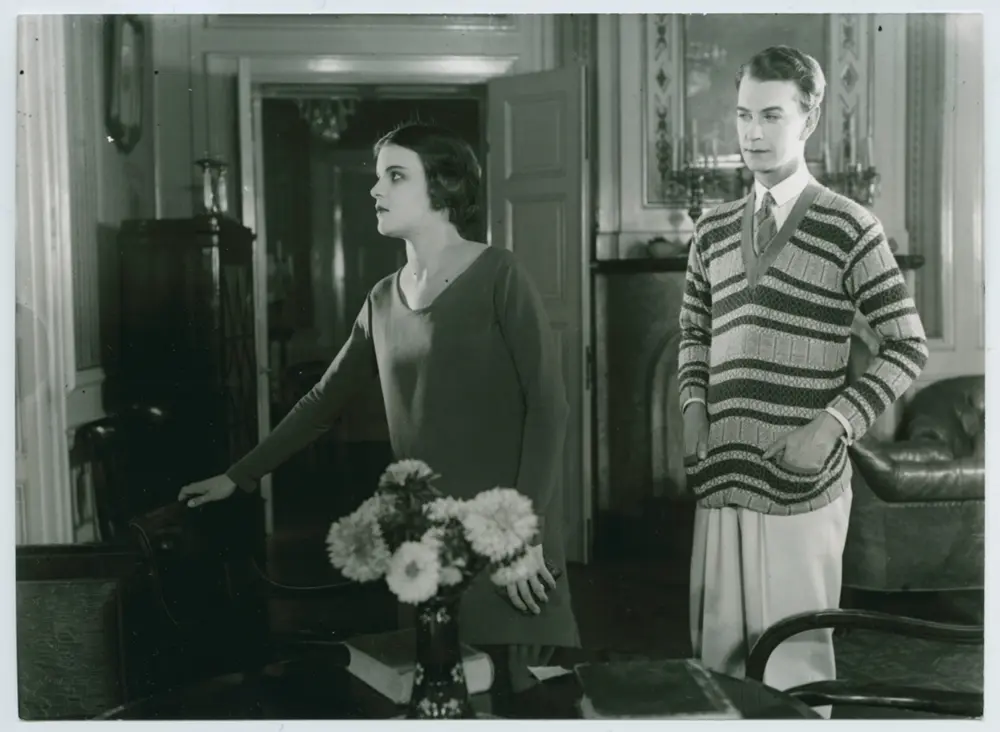
The tone is also remarkably consistent. There is a persistent sense of autumnal decay that permeates every frame. Even the scenes that should be lighthearted—such as the gatherings of the young people—are shot with a certain flatness that drains the joy out of them. This might be a flaw, or it might be a deliberate choice to show how the Cronsköld family’s gloom infects everything around them. Personally, I find it a bit suffocating. It works. But it’s flawed.
Pros:
Cons:
When compared to other films of the era, such as The Miracle or Trapped by the Camera, Flickorna på Solvik feels somewhat antiquated. While those films were leaning into the spectacle and technical possibilities of the medium, Larson’s film is content to be a quiet character study. There is a place for that, of course, but the film doesn't quite have the psychological depth of something like The Dawn of a Tomorrow.
One surprising observation is how little the film focuses on the 'girls' mentioned in the title. One might expect a story about youthful rebellion or sisterhood, but they are often pushed to the periphery in favor of the Baron’s brooding. It’s a strange narrative choice that makes the title feel almost like a marketing bait-and-switch. In reality, this is the Baron’s movie, and everyone else is just living in his shadow.
Flickorna på Solvik is a film that demands patience and offers modest rewards. It is a somber, well-acted piece of cinema that captures a specific moment in Swedish history with great care. However, its refusal to engage with the more dynamic editing and storytelling techniques of its time makes it a difficult recommendation for anyone but the most dedicated film historian. It is a respectable effort, but one that remains firmly rooted in the past. If you want to see a manor house drama that actually moves, look elsewhere. If you want to watch the dust settle on a fading empire, this is your film.
IMDb 6.2
1928
Community
Log in to comment.