DbcultAccessing Vault...
7.5/10
Senior Film Conservator
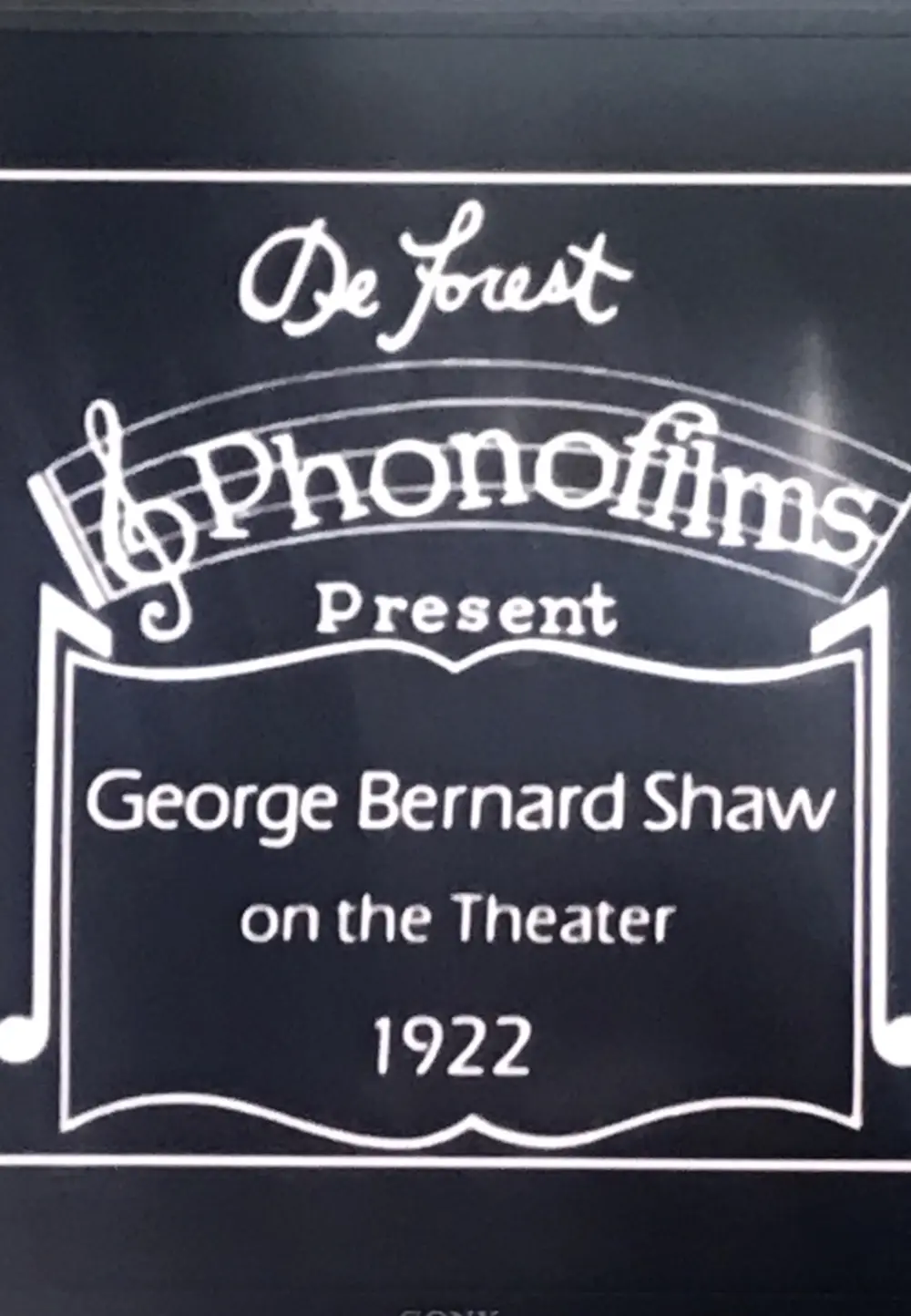
A definitive 7.5/10 rating for a film that redefined the boundaries of cult cinema. George Bernard Shaw remains a cornerstone of transgressive art.
Is George Bernard Shaw (1928) worth watching today? Short answer: Yes, but strictly as a four-minute time capsule rather than a piece of entertainment.
This film is for the historian, the audiophile, and the student of literature who wants to see the sparks of life in a man usually confined to dusty book jackets. It is absolutely not for anyone seeking a plot, a character arc, or visual spectacle. It is a technical demo that accidentally captured a legend.
This film works because George Bernard Shaw possessed a natural, effortless charisma that transcends the primitive, static cinematography of the late 1920s.
This film fails because it is technically limited by the early DeForest Phonofilm process, resulting in a visual and auditory experience that feels like peering through a foggy window into a noisy room.
You should watch it if you want to see the exact moment the 'talking head' format was born, or if you are fascinated by the transition from silent masterpieces like Satan's Rhapsody to the era of sound.
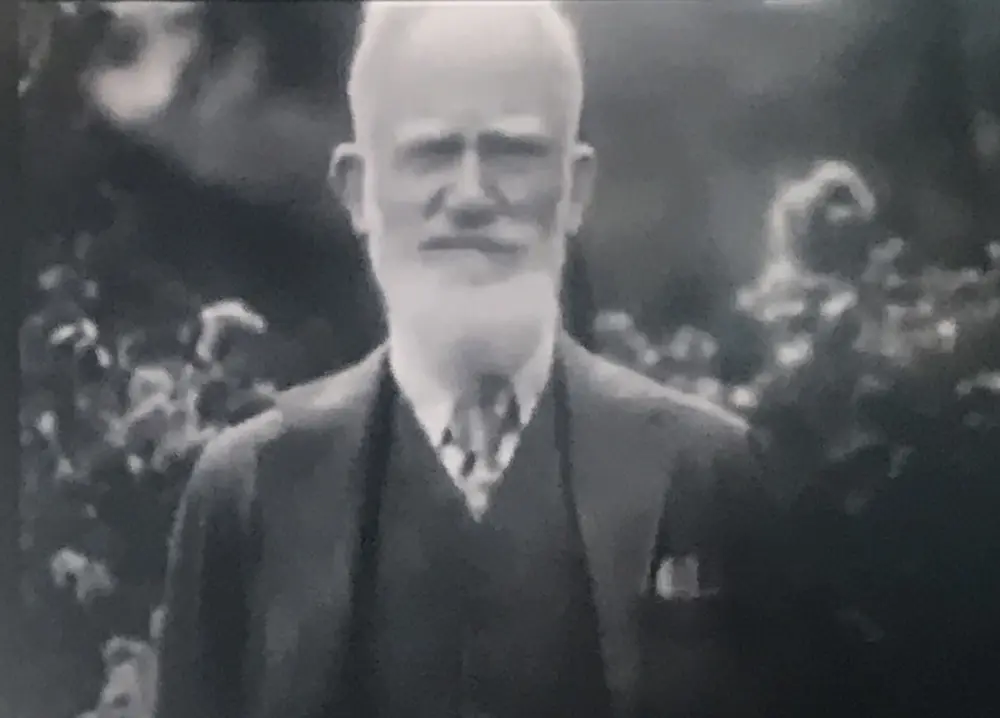
In 1928, the film industry was in a state of chaotic flux. While the public was beginning to embrace the 'talkies,' the technology was far from standardized. Lee De Forest, an inventor with more ambition than business sense, was pushing his Phonofilm process—a method of recording sound directly onto the film strip. This was a direct rival to the Vitaphone system used in The Jazz Singer.
To prove his system worked, De Forest didn't hire a traditional actor. He hired a personality. George Bernard Shaw was the perfect subject. He was a man of words, and sound-on-film was the ultimate vehicle for those words. When you watch this short, you aren't seeing a character; you are seeing a celebrity endorsement of a new technology.
The camera is motionless. It’s a medium shot that feels claustrophobic compared to the sweeping visuals of contemporary silent films like The Princess of India. Yet, the stillness works. It forces you to focus on Shaw’s face, his twinkling eyes, and the way his beard moves as he speaks. It’s intimate in a way that early cinema rarely was.
Shaw is a ham. There’s no other way to put it. He knows he’s making history, and he leans into it with a mischievous grin. He plays to the camera as if it’s a living person. This wasn't the norm in 1928. Most actors of the era were still stuck in the melodramatic gestures of the silent stage, as seen in The Gorgona.
Shaw, however, understands the intimacy of the lens. He talks to us. He jokes about his appearance. He mocks the very technology he is helping to promote. It’s a punchy, self-aware performance that feels surprisingly modern. He doesn't need a script; his personality is the script. It works. But it’s flawed by the very air it breathes.
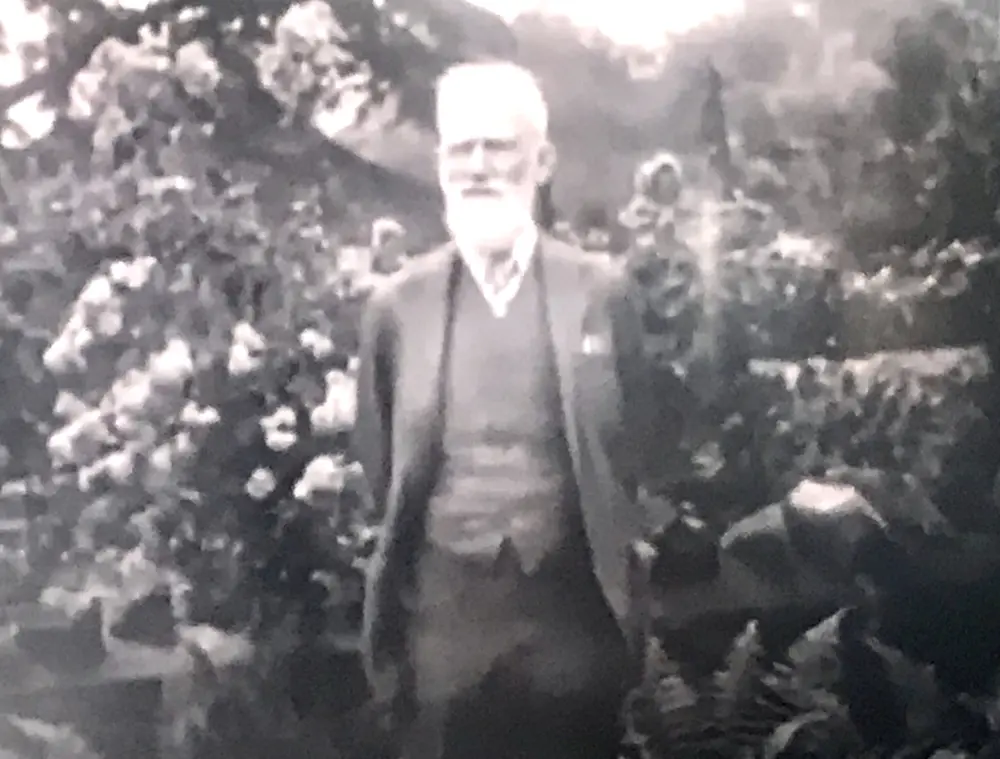
The sound quality is, predictably, thin. There is a constant hiss, a sonic ghost that haunts every syllable Shaw utters. But when he speaks, the clarity of his thought pierces through the static. You can hear the rhythmic cadence of a man who spent his life perfecting the English language. This isn't the stilted dialogue found in early talkies like Sinners; it’s the fluid wit of a master.
To answer this question, you have to decide what you value in cinema. If you value the 'now,' then no. This is a relic. It is four minutes of an old man talking in a garden. It lacks the adventure of The Big Adventure or the mystery of The Leavenworth Case.
However, if you value the 'how,' then it is essential viewing. This film represents the birth of the modern documentary and the interview format. Without these early experiments by De Forest, the transition to sound would have been even more stumbling than it already was. It’s a short, sharp shock of history.
The cinematography is functional at best. De Forest was an inventor, not a director. He places the camera, ensures the light is sufficient, and hits record. There is no attempt at artistic framing or shadows, unlike the expressionistic work seen in Nathan der Weise. The focus is entirely on the audio synchronization.
The pacing is dictated entirely by Shaw's speech. There are no edits. No cutaways to a reaction shot or a close-up of his hands. It is a single, unbroken take. In 1928, this was a feat of endurance for the equipment. For the modern viewer, it’s a test of attention, though at four minutes, it’s hardly a marathon.
One surprising observation: Shaw seems to be directing himself. He knows when to pause for effect, allowing the primitive microphone to catch the silence before his next barb. He is teaching the audience how to listen to a film. It’s a pedagogical moment disguised as a chat.
Pros:
Cons:
George Bernard Shaw (1928) is a ghost story. It is the ghost of a new technology trying to find its feet, and the ghost of a brilliant man ensuring his voice would outlive his body. It isn't 'good' by any modern standard of filmmaking. It is flat, noisy, and visually boring.
But it is magnetic. Shaw’s personality is a force of nature that refuses to be dampened by the crackle of the Phonofilm. If you compare it to the silent comedies of the time, like Chickens, you realize how much was gained—and lost—during this transition. We lost the universal language of pantomime, but we gained the specific, biting wit of the individual.
Watch it once. Not for the 'movie,' but for the man. It’s a four-minute investment in understanding where everything we watch today began. It’s clunky. It’s dusty. But it’s alive.
"A fascinating, if technically harrowing, look at the dawn of sound cinema that relies entirely on the charm of its subject to overcome its mechanical limitations."

IMDb 7.6
1925
Community
Log in to comment.