DbcultAccessing Vault...
Cult Review
Senior Film Conservator
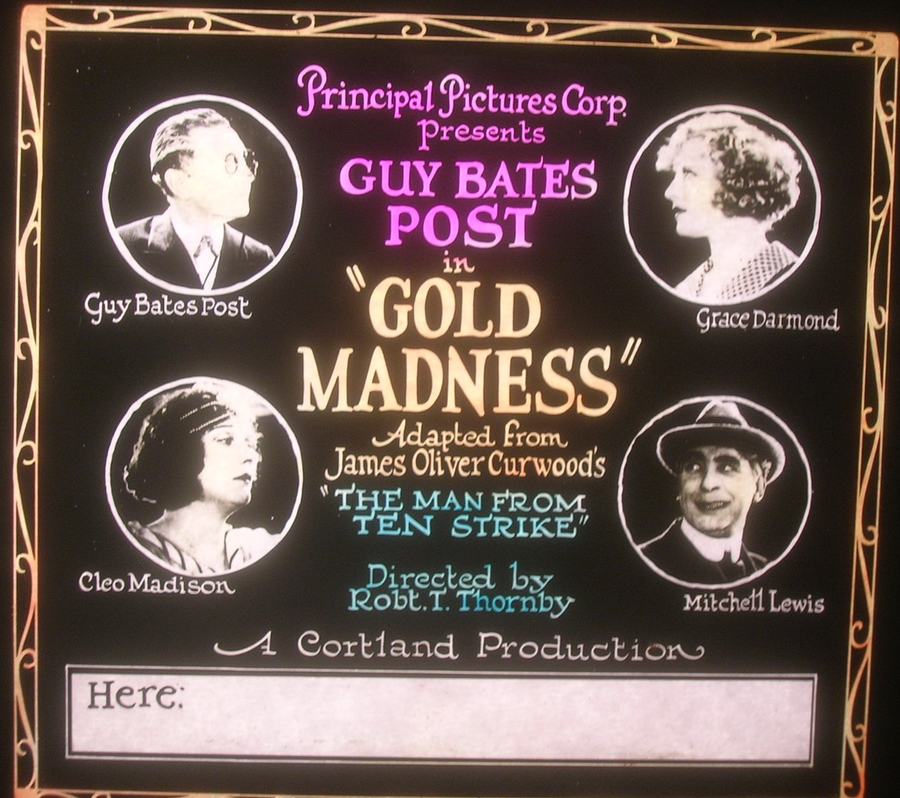
The silent era of cinema frequently grappled with the elemental friction between human integrity and the seductive pull of the untamed wilderness. In Gold Madness (1923), directed by the often-underappreciated craftsmen of the early twenties, this friction is elevated to a psychological study of spiritual erosion. Based on the evocative prose of James Oliver Curwood, the film transcends the typical 'Northern' genre tropes to deliver a searing indictment of materialism. The narrative doesn't merely depict a quest for bullion; it maps the topography of a soul’s descent into the abyss of greed, a theme echoed in other works of the period like The Argonauts of California - 1849, though with a far more intimate, domestic focus.
The film centers on Tim Kendal, portrayed with a stoic vulnerability by Guy Bates Post. Post, an actor known for his ability to convey internal turmoil through subtle shifts in posture, inhabits Kendal as a man whose hands are calloused by honest labor but whose heart remains dangerously open. His foil is Scotty McGee, played by Mitchell Lewis with a menacing, sycophantic charm that feels strikingly modern. McGee is not your standard mustache-twirling villain; he is a social parasite who understands the specific alchemy of discontent. He identifies the cracks in the marriage of Tim and Olga and uses the promise of gold as a wedge. This isn't just a theft of a wife; it is the theft of a man’s reality.
Grace Darmond’s performance as Olga is perhaps the most complex element of the film. She captures the 'madness' referenced in the title—not as a frantic delirium, but as a slow, mesmerizing intoxication. Unlike the more overt archetypes found in The Panther Woman, Olga is a victim of her own escalating desires. Her departure with McGee is framed not as a romantic elopement, but as a commercial transaction. She trades her husband’s devotion for the speculative glitter of McGee’s promises, a move that highlights the transactional nature of human relationships when stripped of moral anchors.
The visual storytelling in Gold Madness utilizes the stark contrasts of the frontier landscape to mirror the internal states of its characters. The vast, indifferent expanses of the North serve as a canvas for Kendal’s isolation. The cinematography avoids the theatrical flatness common in some 1923 productions, instead opting for deep-focus shots that emphasize the distance—both physical and emotional—between the characters. This use of space evokes a sense of existential dread similar to the atmosphere in Barbarous Mexico, where the environment itself feels complicit in the cruelty of the protagonists.
"The gold is not in the ground, but in the fever of the eye that seeks it." This sentiment permeates every frame of the second act, as Kendal’s eventual discovery of wealth feels less like a triumph and more like a bitter irony.
When Kendal finally strikes gold, the film resists the urge to indulge in a montage of sudden luxury. Instead, we see the weight of the fortune settle on his shoulders. The wealth provides him with the means for revenge, but it also clarifies his vision. He realizes that McGee and Olga are not merely personal enemies, but societal pathogens. His decision to join the police force is a fascinating narrative pivot. It transforms a revenge plot into a jurisprudential crusade. This transition from the 'wild' justice of the prospector to the 'civilized' justice of the badge is a sophisticated commentary on the closing of the American frontier.
In the context of 1920s cinema, Gold Madness stands out for its refusal to provide a simple happy ending. While films like Hearts Asleep often leaned into the sentimental resolution of domestic strife, this film remains remarkably cynical about the possibility of reconciliation. When Kendal arrests Olga and McGee, there is no tearful reunion or plea for forgiveness that softens the blow. The law is absolute, and Olga’s 'madness' has led her to a destination where her husband’s love can no longer reach her. This stark realism is more akin to the grim social critiques found in S.M il Danaro, which similarly explored the corrupting influence of currency.
Furthermore, the script by Fred Myton manages to avoid the repetitive sentence structures of lesser silent films’ intertitles. The dialogue—or rather, the text representing it—is sharp and economical. It doesn't over-explain the motivations, trusting the audience to interpret the longing in Kendal’s eyes or the predatory stillness of McGee. This level of trust in the viewer is what separates an 'art' film of the era from mere commercial fodder like The Freckled Fish or the lighter fare of Kiss Me, Caroline.
James Oliver Curwood’s influence cannot be overstated. His stories were often preoccupied with the idea of 'the wild' as a place of moral testing. In Gold Madness, the wild is both a literal place and a psychological state. The 'Gold Madness' is a contagion that spreads through the civilized world, brought into the wilderness by those who see the earth only as a resource to be exploited. This thematic depth puts the film in conversation with other high-concept dramas of the time, such as The Question or the atmospheric Der violette Tod.
The casting of Cleo Madison adds another layer of gravitas to the production. Though her role is supporting, her presence reminds the viewer of the burgeoning power of female performers in the early industry who were beginning to demand roles of greater substance. The ensemble works with a rhythmic precision, ensuring that the pacing—often a hurdle for modern audiences viewing silent films—remains taut and engaging. Unlike the sprawling, sometimes aimless narrative of Viaje redondo, Gold Madness is a lean, focused engine of a movie.
From a technical standpoint, the film showcases the peak of silent era tinting and lighting. The night scenes are bathed in deep, sea blues (#0E7490) that evoke a freezing, inhospitable world, while the interiors of the swindlers' dens are often cast in a deceptive, warm yellow (#EAB308) light that mimics the very gold they covet. This color semiotics was a sophisticated way to guide the audience's emotional response without the benefit of a synchronized score. It creates a sensory experience that is as much about the 'feel' of the environment as it is about the plot.
The legacy of Gold Madness is one of cautionary wisdom. It warns that the pursuit of wealth at the expense of human connection is a form of insanity—a 'madness' that eventually consumes the host. While it may not have the name recognition of some contemporary blockbusters, its DNA can be found in every modern neo-noir and crime thriller that explores the intersection of greed and the law. It is a vital piece of cinematic history that deserves a place alongside the great character studies of the 1920s, such as Der Mann ohne Namen or the haunting Mechta i zhizn.
In conclusion, this film is a masterclass in thematic cohesion. Every element, from the rugged performances to the stark cinematography, serves the central premise: that the only thing more dangerous than the frozen North is the coldness of a heart obsessed with gold. It is a harrowing, beautiful, and ultimately satisfying journey through the darkest corners of the human psyche, proving that even in the silent era, cinema had a powerful voice.
IMDb —
1919
Community
Log in to comment.