DbcultAccessing Vault...
Cult Review
Senior Film Conservator
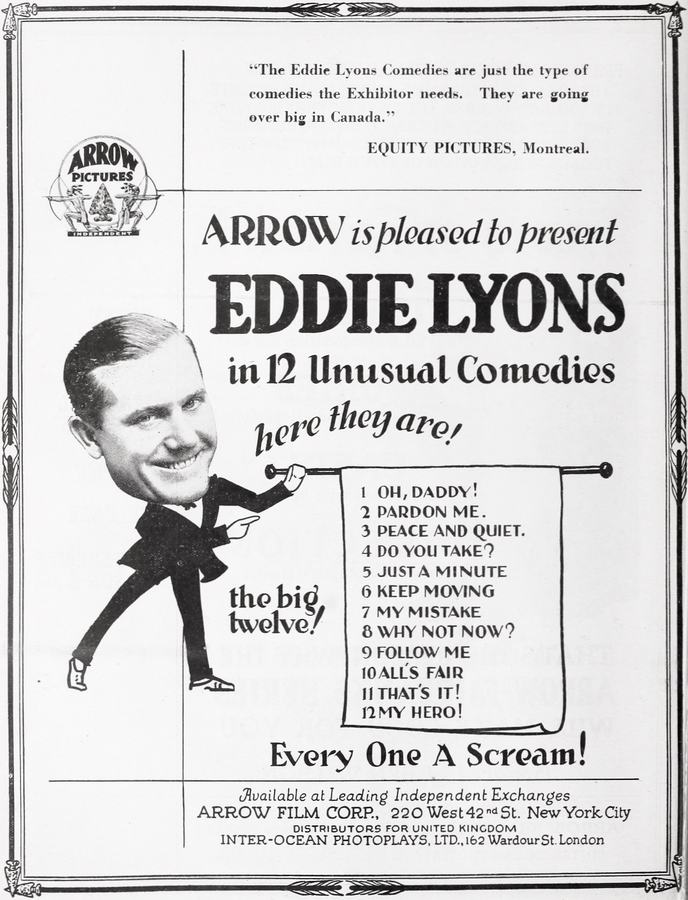
In the pantheon of silent cinema, the year 1922 stands as a monolithic pillar of transition. While the world was swooning over the exoticism of The Sheik, a different kind of alchemy was being brewed in the short-form comedy laboratories of Hollywood. Why Not Now?, a film often overshadowed by the gargantuan shadows of Lloyd or Keaton, presents a fascinating case study in the evolution of the comedic persona. It is not merely a film; it is a rhythmic exercise in frustration, a celluloid poem dedicated to the friction between human desire and the stubbornness of reality.
Before he became a foundational architect of the 'Our Gang' series, Robert A. McGowan was honing a specific brand of situational logic that feels remarkably modern. In Why Not Now?, the writing doesn't rely on the broad, often cruel strokes found in earlier works like He Wins. Instead, McGowan constructs a narrative scaffolding that allows the protagonist's internal anxiety to dictate the external pace. There is a cerebral quality to the gags here; they are built on the subversion of social expectations rather than just the gravity-defying tumbles of the Keystone era.
The screenplay functions like a Swiss watch with a loose spring. Every gear turns with precision until a moment of hesitation—the 'Why Not Now?' of the title—causes the entire mechanism to shudder. This structural integrity is what separates McGowan’s work from the more ephemeral shorts of the period. While a film like Priklyuchenie Liny v Sochi might rely on the novelty of its location, McGowan’s script is rooted in the universal discomfort of the social contract.
Eddie Lyons, often remembered for his partnership with Lee Moran, here proves his mettle as a solo engine of comedic energy. His performance is a masterclass in what I would call 'vibrational acting.' He doesn't just move through a scene; he oscillates. There is a frantic, almost desperate quality to his movements that mirrors the post-war jitters of the early 20s. Unlike the stoic resilience found in Nuori luotsi, Lyons’ character is perpetually on the verge of a nervous collapse, making his eventual triumphs feel all the more earned.
Lyons possesses a facial dexterity that rivals the greats. His eyes, wide with a mixture of hope and impending doom, serve as the film's emotional compass. When he contemplates the central question of the film—why not take the leap?—we see the entire history of human doubt flicker across his brow. It is a performance that anticipates the neurotic comedy of the late 20th century, bridging the gap between the clown and the Everyman.
To truly appreciate the nuance of Why Not Now?, one must look at the cinematic landscape of the time. While European cinema was diving into the lyrical abstraction of Opus II or the melancholic naturalism of Der fremde Vogel, American comedy was perfecting the art of the 'gag-sequence.' Yet, this film feels more aligned with the character studies found in The Hater of Men than the mindless slapstick of its peers.
There is a sophistication in the gender dynamics as well. Unlike the rigid archetypes seen in Algie's Romance, the interactions in Why Not Now? possess a flickering equality. The stakes are personal, domestic, and relatable. It lacks the propagandistic weight of If the Huns Came to Melbourne or the industrial grit of Britain's Bulwarks, No. 1: Women Munitioners of England, focusing instead on the quiet desperation of the private life.
Visually, the film is a testament to the efficiency of early studio lighting. The interiors are bright, almost clinical, which serves to highlight the absurdity of the protagonist's plight. There is no place to hide in this world. Every shadow is chased away by a high-key lighting setup that demands total transparency from its actors. This clarity is reminiscent of the work in My Lady Incog., where the camera acts as an unblinking witness to social artifice.
The editing, too, deserves scrutiny. The cuts are sharp, designed to emphasize the 'stop-start' nature of the plot. We are never allowed to settle into a comfortable rhythm. Just as Lyons’ character finds his footing, a jump cut or a sudden change in perspective throws him—and the audience—off balance. This is not the languid storytelling of La verdad; this is a film that breathes in short, sharp gasps.
What remains most striking about Why Not Now? is its thematic resonance. We live in an era of 'now or never,' a culture of instant gratification that would, on the surface, seem to render this film’s central conflict obsolete. However, the film argues that the 'now' is always being deferred by something—be it a lost hat, a social faux pas, or our own internal sabotage. In this sense, it shares a DNA with the more dramatic explorations of fate found in The Rose of Blood or the haunting isolation of The Woman from Nowhere.
Even when compared to the athletic comedy of The Third String, Lyons’ work here feels more psychologically grounded. He isn't just a body in motion; he is a mind in turmoil. The film’s conclusion, which I shall not spoil for the three people who haven't seen this century-old gem, is both a punchline and a philosophical resolution. It suggests that the answer to 'Why not now?' is often 'Because life is a series of inconvenient interruptions.'
In the grand tapestry of silent film, Why Not Now? is a vibrant, orange-hued thread that refuses to fade. It lacks the pretension of the avant-garde but possesses a technical proficiency and a comedic soul that makes it endure. Eddie Lyons and Robert A. McGowan created something that transcends the 'short subject' label; they created a portrait of the human condition under the pressure of the clock. It is a film that demands to be watched, not as a museum piece, but as a living, breathing document of comedic timing. If you find yourself wondering whether to seek out this rare piece of cinema, the film itself provides the only logical answer: Why not now?
IMDb 6.8
1926
Community
Log in to comment.