DbcultAccessing Vault...
Cult Review
Senior Film Conservator
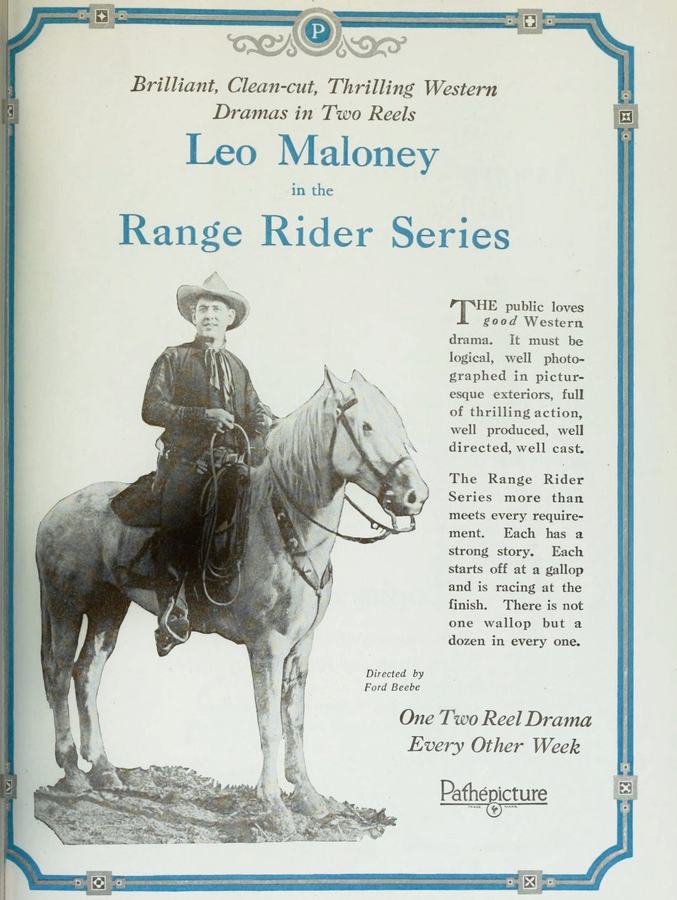
To witness His Enemy's Friend is to step back into a formative era where the grammar of the American Western was still being etched into the celluloid of history. This 1925 silent gem, directed with a surprisingly nuanced hand by Ford Beebe and starring the ruggedly charismatic Leo D. Maloney, serves as a quintessential example of how early cinema leveraged simple moral dichotomies to achieve profound emotional resonance. While contemporary audiences might dismiss the plot as a derivative riff on the Capulet-Montague dynamic, such a reductionist view ignores the film’s sophisticated handling of space, landscape, and the silent language of the face.
The film opens with an immediate sense of geographic and social isolation. The feud between the families is not merely a plot device; it is a character in its own right, manifesting in the way the camera lingers on the fences and boundaries that carve up the valley. Josephine Hill, playing the titular hero's forbidden love, carries the weight of this history in her gaze. Unlike the more flamboyant performances found in The Broadway Bubble, Hill’s work here is restrained, channeling a quiet desperation that feels modern even a century later. Her character is a pawn in a patriarchal game, yet she manages to exude a sense of agency that elevates the material above standard melodrama.
The cinematic tension is amplified by the presence of the "Carter" family, a name that resonates with the same ominous weight as the eponymous mystery in The Mystery of the Yellow Room. In this landscape, a name is a destiny, and for Leo (Maloney), it is a cage. Maloney, who also co-wrote the screenplay with Beebe, demonstrates an innate understanding of the Western hero’s duality: he is both a man of action and a man of immense internal fortitude. His physicality during the riding sequences is impressive, but it is his tenderness during the medical scenes that truly defines the film’s moral core.
The inciting incident—the discovery of the young boy in a rabbit trap—is filmed with a gritty realism that contrasts sharply with the idealized romanticism of other films from the period, such as The Fairy and the Waif. The trap itself serves as a potent metaphor for the feud: a cold, mechanical device that cares nothing for the innocence of those it ensnares. When Leo finds the child, the film shifts from a romance into a survivalist drama. The care with which he binds the broken leg is captured in tight shots that emphasize the vulnerability of human flesh against the harshness of the frontier.
"In the silence of the shack, the roar of the feud is silenced by the rhythmic breathing of a child in recovery. It is here that the film finds its soul."
This act of kindness is immediately subverted by the arrival of the villain, played with a sneering, oily malevolence by Bud Osborne. Osborne was a staple of the genre, but here he manages to infuse his character with a particular brand of opportunistic evil. He doesn't just want to defeat Leo; he wants to erase him. The false accusation of cattle rustling is a classic trope, yet Beebe directs the ensuing chase with a kinetic energy that rivals the suspense found in The Opium Runners. The cinematography utilizes the natural contours of the hills to create a sense of claustrophobia despite the wide-open spaces.
One cannot discuss His Enemy's Friend without acknowledging the sheer technical proficiency of Leo D. Maloney. Much like the multifaceted talent seen in South of Santa Fe, Maloney manages to balance the demands of being a leading man with the logistical rigors of production. His direction—or co-direction with Beebe—favors long takes that allow the physical comedy and the stunt work to breathe. There is a lack of artifice here that makes the more dramatic moments hit with the force of a physical blow.
The film’s pacing is remarkably tight. Unlike the sprawling, sometimes meandering narratives of Humanidad, every scene in this Western serves a specific narrative or thematic purpose. The complications arising from the father’s arranged marriage for Josephine add a layer of domestic pressure that mirrors the external threat of the rustling charges. It creates a pincer movement of conflict that keeps the audience engaged until the final, cathartic confrontation.
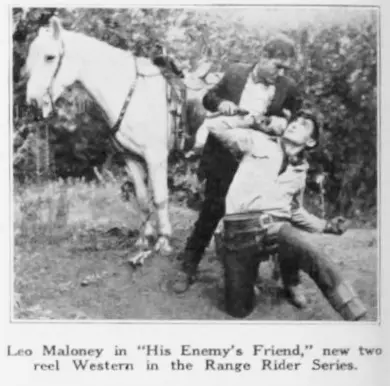
The finale of the film is where it truly distinguishes itself from its contemporaries. In a standard Western, one would expect a bloody shootout to resolve the feud—a violent purging of the old guard. However, His Enemy's Friend opts for a psychological and emotional resolution. When the father enters Leo’s shack, gun in hand, the expected violence is replaced by a moment of staggering clarity. The sight of his son, the heir to his name and his hatred, being nurtured by the man he came to kill, causes a total collapse of his worldview.
This scene is played with a theatricality that borders on the operatic, yet the performances ground it in something visceral. It reminds one of the dualistic nature of the soul explored in Dr. Jekyll and Mr. Hyde, though here the transformation is purely moral rather than physical. The father must kill the "monster" in his mind to save the man who saved his son. It is a sophisticated thematic turn that elevates the film into the upper echelon of silent-era Westerns.
When placed alongside other works of the era, such as the whimsical Rumpelstiltskin or the investigative rigors of A Study in Scarlet, His Enemy's Friend stands out for its earnestness. It doesn't rely on the fantastical or the purely cerebral; it operates in the gut. Even when compared to Maloney's other works like The Ranger and the Law, this film feels more personal, more invested in the internal lives of its characters.
The film also shares a certain thematic DNA with Le crépuscule du coeur, particularly in its exploration of the "twilight" of old grudges and the dawning of new understanding. While the setting is the American West, the emotions are universal. The struggle to break free from the sins of the father is a narrative as old as time, yet Beebe and Maloney make it feel fresh through the specific lens of the cowboy mythos.
Technically, the restoration of such films is vital. The lighting, often harsh and naturalistic, provides a stark beauty that is frequently lost in lower-quality prints. The way the shadows play across the shack’s walls during the climax creates a chiaroscuro effect that wouldn't be out of place in a much more expensive production. It’s this attention to visual detail that makes the film a rewarding watch for cinephiles and casual viewers alike.
In the grand tapestry of 1920s cinema, it is easy for smaller productions to be overshadowed by the gargantuan epics of Griffith or DeMille. However, His Enemy's Friend proves that the soul of the medium often resides in these shorter, more focused narratives. It is a film about the power of the individual to stand against the tide of collective animosity. It is about the radical nature of care in a world that demands vengeance.
Whether you are a fan of the genre or simply a lover of well-crafted storytelling, this film offers a wealth of riches. From the nuanced performances of Josephine Hill and Leo D. Maloney to the tight, effective direction of Ford Beebe, it remains a vital piece of the Western canon. It may not have the high-tech gadgetry of Sneakers or the absurdist humor of Mixed Nuts, but it possesses a timeless integrity that those films can only envy. It is a reminder that at the end of the day, the greatest stories are not about the fights we win, but the enemies we turn into friends.
Note: For those interested in more character-driven dramas of the era, I highly recommend checking out The Beloved Vagabond or the quirky short Short Weight for a change of pace.
IMDb —
1923
Community
Log in to comment.