DbcultAccessing Vault...
4.6/10
Senior Film Conservator
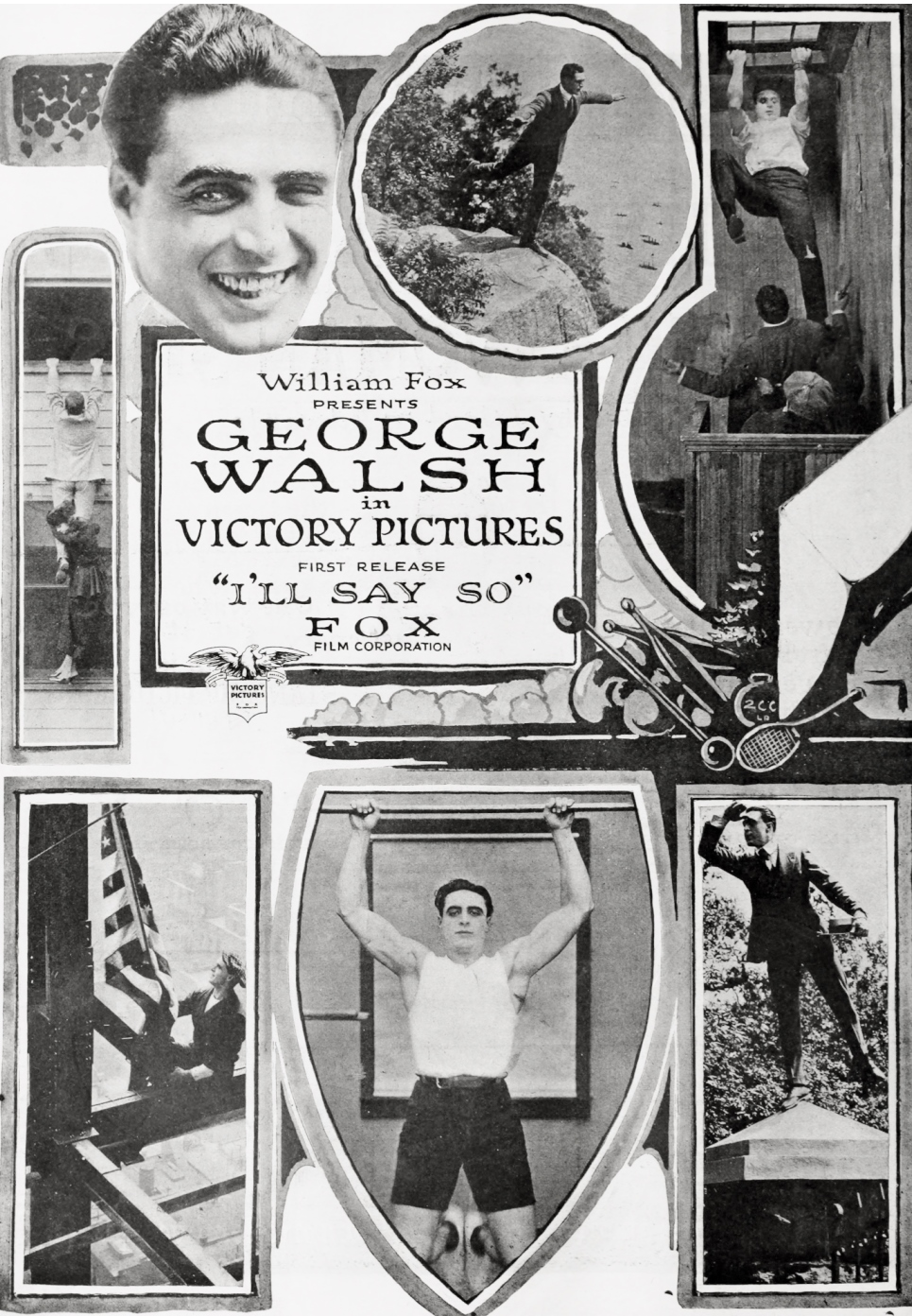
A definitive 4.6/10 rating for a film that redefined the boundaries of cult cinema. I'll Say So remains a cornerstone of transgressive art.
The year 1918 stood as a pivotal juncture in the evolution of American cinema, a period where the industry was not only refining its narrative grammar but also grappling with its role as a vessel for national sentiment during the Great War. In this milieu, I'll Say So emerges as a fascinating artifact of kinetic energy and geopolitical anxiety. Directed with a certain breathless abandon, the film serves as a showcase for George Walsh, an actor whose physicality and charm often invited comparisons to the legendary Douglas Fairbanks. While Walsh’s work in Headin' South explored the archetypes of the Western hero, here he navigates a more complex intersection of domestic comedy and international intrigue.
The central conceit of the film—Bill Durham’s rejection from the army due to flat feet—is a stroke of comedic genius that simultaneously taps into the collective insecurity of a nation at war. In an era where the hyper-masculine ideal was defined by the uniform, Durham’s disqualification renders him a civilian outlier. However, Ralph Spence’s screenplay cleverly uses this perceived physical flaw as a catalyst for a more visceral, unregimented form of service. Unlike the tragic weight found in contemporary dramas like The Immortal Flame, 'I'll Say So' treats this rejection as a springboard for individualistic agency.
Walsh portrays Durham not as a dejected victim, but as a man possessed by a manic need to prove his worth. This psychological drive propels the narrative through a series of increasingly absurd and dangerous scenarios. The film suggests that while the military might have strict standards for its cogs, the rogue patriot operates on a plane of agility and intuition that no drill sergeant could instill. This theme of the 'outsider hero' was a common trope, yet Walsh’s performance elevates it through a series of acrobatic stunts that rival the spectacle of The Great Diamond Robbery.
The introduction of August Myers as the villainous guardian of Barbara Knowles shifts the film into the territory of the spy thriller. Myers represents the 'enemy within,' a recurring nightmare in the American consciousness during the First World War. His clandestine activities on the Mexican border reflect the real-world tensions of the Zimmerman Telegram era, lending the film a sense of topical urgency that would have been palpable to 1918 audiences. This isn't just a romantic chase; it’s a defense of the sovereign border, a theme that echoes the frontier justice of Captain Courtesy.
Regina Quinn’s portrayal of Barbara Knowles provides the necessary emotional stakes. While the era’s gender roles often relegated women to the status of a prize to be won, Quinn manages to imbue Barbara with a sense of vulnerability that makes Durham’s crusade feel personal rather than purely ideological. The contrast between her domestic confinement and Durham’s cross-country odyssey creates a rhythmic tension that keeps the viewer engaged. Her plight is far more grounded than the operatic suffering seen in Anna Karenina, focusing instead on the immediate threat of a forced union with the sinister Carl Vogel.
Visually, 'I'll Say So' is a masterclass in the silent era’s 'cinema of attractions.' The camera work, though rudimentary by modern standards, captures Walsh’s movements with a clarity that emphasizes his athletic prowess. The transition from the urban landscapes of New York to the rugged terrain of New Mexico allows for a visual diversity that was missing from more claustrophobic dramas like The Vital Question. The New Mexico sequences, in particular, utilize the natural light and vast horizons to create a sense of epic scale, contrasting sharply with the shadowy, conspiratorial atmosphere of Myers’ office.
The editing pace accelerates as the film reaches its climax. The cross-cutting between Durham’s train journey back East and the preparations for the forced wedding is a classic example of Griffith-style suspense. It’s a technique that keeps the audience on the edge of their seats, far removed from the slower, more deliberate pacing of Ruslan i Lyudmila. Here, the focus is on momentum, a relentless forward motion that mirrors Durham’s own unstoppable will.
When comparing 'I'll Say So' to its contemporaries, one must look at how it handles the theme of justification and morality. In Was She Justified?, the narrative revolves around a moral quandary, whereas 'I'll Say So' operates on a binary of clear-cut patriotism. There is no ambiguity in Bill Durham’s actions; his violence is sanctioned by the audience's shared hatred of the 'Hun' and the bandit. This moral simplicity is what allowed the film to function as both entertainment and propaganda.
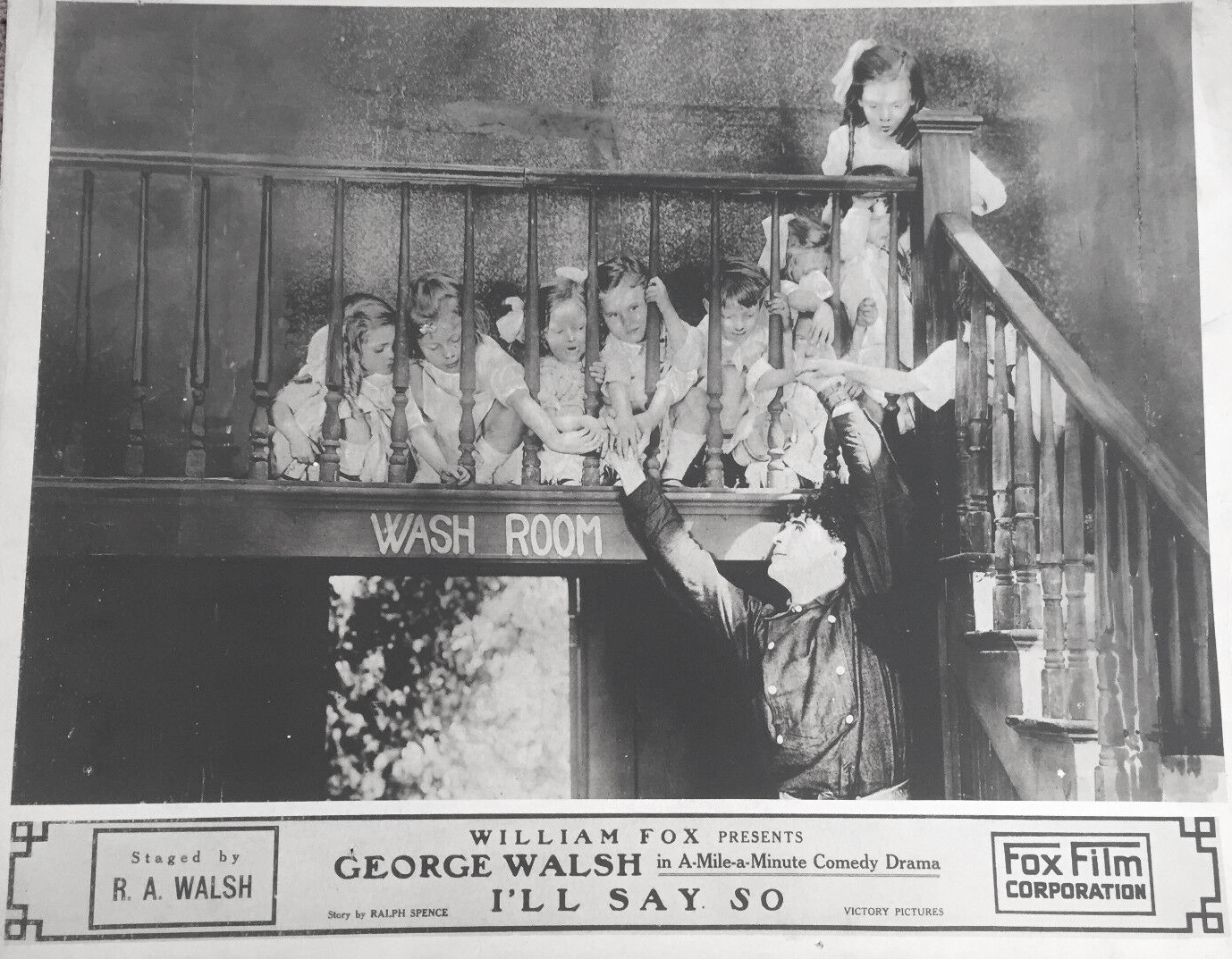
The film also shares an interesting DNA with The Slave, specifically in its exploration of social entrapment. While Barbara is literally trapped by her guardian’s treasonous plans, Durham is trapped by his physical 'condition.' Both characters must break free from their respective cages—one social, one biological—to achieve a state of grace. This thematic resonance is what prevents the film from being a mere series of stunts and gags.
The finale at the church is a quintessential piece of silent film melodrama. The timing is, as expected, miraculous. Durham’s arrival to 'dispose' of Carl Vogel is executed with a mix of comedic timing and genuine menace. It’s a moment of catharsis that rewards the audience’s investment in Durham’s long-distance struggle. Unlike the more somber resolutions found in Flor de durazno, 'I'll Say So' concludes with a triumphant union that reinforces the status quo of the American family unit and the security of the nation.
The wedding scene is also notable for its use of space. The church, usually a sanctuary of peace, becomes a battlefield where the domestic and the political collide. By physically removing the German spy from the altar, Durham isn't just winning back his girl; he is purging the American social fabric of foreign contamination. It is a powerful, if somewhat heavy-handed, metaphor that resonated deeply with the audiences of the time.
Ralph Spence’s writing deserves significant credit for the film’s enduring charm. Spence, who would later become one of the most sought-after 'title doctors' in Hollywood, imbues the intertitles with a wit and briskness that keeps the narrative from bogging down in exposition. His ability to balance the high-stakes espionage with the lighthearted romantic elements is a precursor to the screwball comedies of the 1930s. The film lacks the experimental edge of Borgkælderens mysterium, but it makes up for it with a sheer sense of fun and professional polish.
Furthermore, the supporting cast, including William Bailey and May McAvoy, provide a solid foundation for Walsh’s pyrotechnics. McAvoy, in particular, would go on to have a significant career, and here she shows the early sparks of the screen presence that would make her a star. The ensemble works in harmony to create a world that feels lived-in, despite the heightened reality of the plot. This cohesion is something that even more visually ambitious films like Cupid Angling occasionally struggled to achieve.
In the final analysis, I'll Say So is more than just a patriotic romp; it is a testament to the power of the individual in the face of institutional rejection. Bill Durham’s flat feet are not a limitation but a distinction. The film’s vibrant energy, fueled by George Walsh’s charismatic performance, ensures that it remains a compelling watch for those interested in the history of action cinema. It captures a specific American spirit—brash, resourceful, and eternally optimistic—that was essential during the dark days of 1918.
Whether it’s the dusty skirmishes on the Mexican border or the high-society showdown in New York, the film maintains a level of engagement that many of its contemporaries lacked. While it may not possess the philosophical depth of The Image Maker or the atmospheric dread of Land o' Lizards, its importance lies in its ability to synthesize various genres into a cohesive, entertaining whole. It remains a sparkling example of Fox Film Corporation’s ability to tap into the zeitgeist and deliver exactly what the public needed: a hero who, despite his flaws, would always find a way to say 'so' to the challenges of the world.
Ultimately, the film stands as a celebration of the kinetic image. In the silence of the theater, Walsh’s movements spoke volumes, bridging the gap between the audience's fears and their hopes. For anyone looking to understand the DNA of the modern action-comedy, 'I'll Say So' is an essential chapter, a film that proves that even with flat feet, a hero can still run circles around the forces of tyranny.

IMDb 6.4
1930
Community
Log in to comment.