DbcultAccessing Vault...
6.1/10
Senior Film Conservator
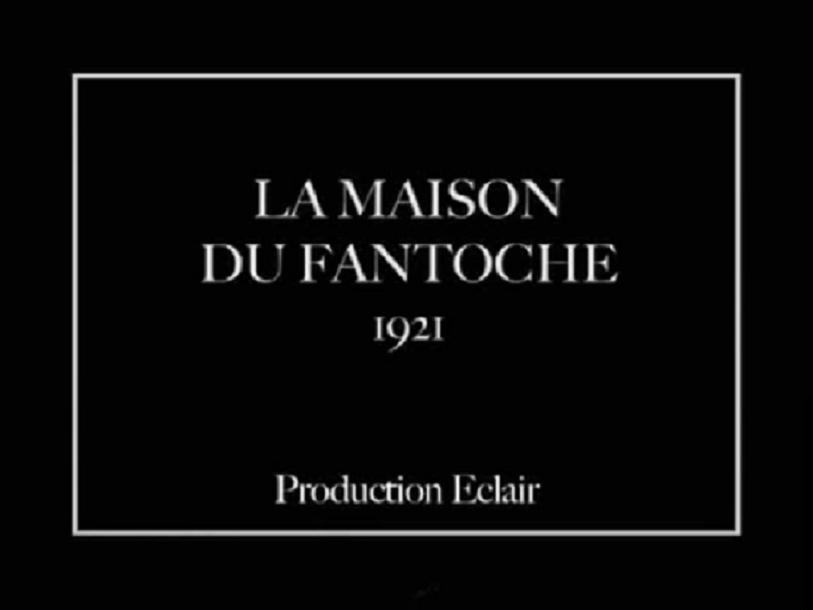
A definitive 6.1/10 rating for a film that redefined the boundaries of cult cinema. La maison du Fantoche remains a cornerstone of transgressive art.
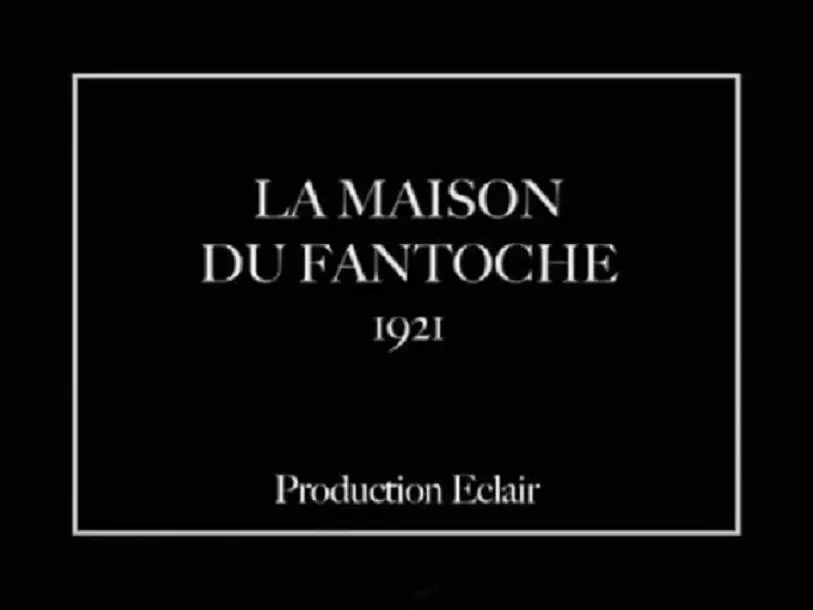
Paris, 1908. While the boulevards buzz about the first Model T, Émile Cohl is busy evicting a doodle from existence itself. The result—La maison du Fantoche—runs a hair under four minutes, yet its afterimage lingers like a nicotine stain on the retina. Forget the cutesy myth that early animation was mere novelty; here is a horror story wearing the mask of a nursery prank, a tale whose real estate broker is nihilism.
Fantoche’s physique—single-stroke limbs, circle for a cranium—should feel harmless. Instead, he registers as a cadaverous Giacometti precursor, a stick man whose very linework quivers with ontological panic. Cohl animates him on what looks like yellowed rice paper, the grain swimming beneath the character like skin threatening to slough off. Each time Fantoche knocks on a new door, the paper ripples; the world itself appears queasy about harboring him.
Doors in this film are not doors; they are guillotine blades wearing moulding. One opens onto a miniature salon where Rococo chairs multiply like cancer cells, their legs snapping shut to form a barricade. Another reveals a cardboard skyline that folds into an origami eviction notice. Cohl’s background artistry—watercolor washes bleached to the pallor of old bones—owes more to symbolist nightmares than to vaudeville gags. The palette is tubercular: nicotine ochre, bruise mauve, absinthe green. Color itself seems to decompose before your eyes.
Compare this to the gaudy chromatic orgy of From Dusk to Dawn (1913), where vampires cavort in solarized greens and fuchsia. That film luxuriates in excess; Cohl practices austerity as a form of cruelty. Every withheld hue feels like a withheld room.
When Fantoche finally descends into the underworld, the gag reverses: Satan isn’t overcrowded; he’s over-regulated. A demon clerk consults a ledger thicker than a Haussmann façade and shakes his head—no lease, no sublet, no Airbnb. The implication? The afterlife has become London circa 1908: skyrocketing rents, spiritual red-lining. Fantoche’s silhouette, already fraying, begins to flake like singed newsprint. Cohl underscores the moment by letting the film’s own sprocket holes gnaw into the image, as though the strip itself denies him sanctuary.
This is where Cohl outpaces contemporaries such as La dame en gris (1909), whose ghosts merely pine for lost lovers. Fantoche has no backstory, no lover, no testament—only the accelerating fact of displacement. The absence of psychology radicalizes the viewer’s empathy: we side with a cipher because we ourselves, in modernity’s churn, are ciphers hunting for a foothold.
Watch the contour of Fantoche’s arm when he tries to bribe a porter with a coin sketched in white lead. The line jitters, then extrudes a second arm—like poverty forcing a man into double shifts. Moments later his torso elongates, snake-swallowing its own future. Cohl’s squiggle aesthetic—so seemingly childlike—anticipates the protean body horror later perfected by The Vamp (1918). Yet where that film uses transformation to titillate, Cohl wields it to alienate. Every extension of limb is an eviction from human proportion.
Archival prints screen silent, but the imagery is so stark you swear you hear things: the rasp of a match when a threshold ignites, the sigh of paper when a wall collapses inward. My own pulse became the soundtrack—an intrusive metronome counting down available breaths. During a recent 16 mm midnight screening at the Cinémathèque, the projector’s clatter synced uncannily with Fantoche’s knocks, as though the apparatus itself participated in the refusal.
Read against France’s imperial reach, the film’s obsession with border control feels prophetic. Fantoche, a being without passport, tribe, or corporeal bulk, embodies the refugee logic that will soon convulse Europe. Cohl, though no activist, lets the subtext seep: every slammed door reverberates with the thud of nation-state consolidation. Compare this to the pastoral escapism of East Is East (1916), where exile ends in bucolic redemption. Cohl offers no pasture, only pavement.
Streamed on a phone, the film mutates into a new monster: the LCD becomes the latest landlord refusing occupancy. Fantoche’s inked body, already fragile, now competes with notification banners. Yet the analogy holds—our avatars, too, hop from platform to platform, perpetually one algorithmic eviction away from digital death. The stick man anticipated the doom-scroll: an endless hunt for a home feed that will never quite house you.
Christian eschatology promises that the meek shall inherit the earth. Cohl amends the clause: the meek shall inherit nothing, not even Hades’ basement studio. Fantoche’s ultimate dispersal—his graphite atoms vacuumed into the overexposed white of the end title—reads like a Calvinist syllogism: if salvation is scarce, then annihilation is mercy.
Surviving prints reside at the Cinémathèque française and the BFI, though a 2K restoration circulates among private torrents—ironic, given the film’s obsession with piratical squatting. The best public access is via the “Cohl Essentials” Blu-ray, whose booklet essay by Dr. Solène Baudu argues that Fantoche’s silhouette influenced later noir cinematography. She’s right: watch how shadows cannibalize characters in The Shadows of a Great City (1915) and you’ll spot the genealogy.
Contemporary trade sheets shrugged the film off as “chamber whimsy.” A century later, academics hail it as proto-existentialism. Both camps miss the venom. Cohl isn’t whimsying; he’s vivisecting. The laughter you hear is the dry rattle of a skeleton realizing the lease on its grave has expired.
I have watched La maison du Fantoche perhaps thirty times—on acetate, on DCP, on a cracked iPhone at 3 a.m.—and each viewing evicts me from the cozy tenement of certainty. The film leaves you standing outside your own assumptions, suitcase in hand, knocking on a door that was never yours. In that sense, we are all Fantoche, and the screen is the last slammed door.
If this review whetted your appetite for further excursions into cinematic homelessness, consider pairing with Après lui (1918) or the spectral tenement of All Souls' Eve (1921). Bring a blanket; none of them offer warmth.
IMDb 7.7
1924
Community
Log in to comment.