DbcultAccessing Vault...
5.8/10
Senior Film Conservator
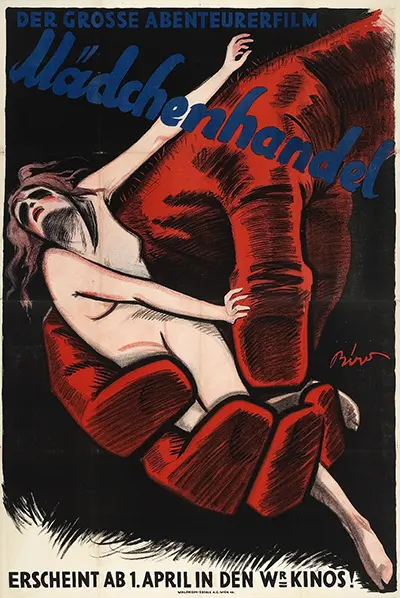
A definitive 5.8/10 rating for a film that redefined the boundaries of cult cinema. Mädchenhandel - Eine internationale Gefahr remains a cornerstone of transgressive art.
Should you invest your time in this nearly century-old silent film today? Short answer: yes, but only if you have a tolerance for the unvarnished, often uncomfortable social realism of the Weimar Republic.
This film is for the dedicated cinephile, the historian of the 'Aufklärungsfilm' (enlightenment film) genre, and those interested in how early cinema tackled global social crises. It is definitely not for viewers seeking lighthearted escapism or those who find the slow, theatrical pacing of 1920s silent drama tedious.
Before we dive into the murky waters of this 1927 production, let's establish the baseline. This film remains a significant piece of social history, even if its cinematic techniques have aged.
1) This film works because: It refuses to romanticize the 'underworld,' opting instead for a cold, almost clinical depiction of how easily a life can be dismantled by organized crime.
2) This film fails because: The third act relies heavily on convenient coincidences that undermine the gritty realism established in the first half.
3) You should watch it if: You want to see the darker side of 1920s Berlin and Budapest, far removed from the glitz of typical Hollywood portrayals of the era.
Mädchenhandel - Eine internationale Gefahr is a film that breathes the anxieties of its time. By 1927, Germany was caught between the trauma of the Great War and the impending shadow of the Great Depression. The film captures this perfectly in its opening scenes in Berlin. The city is presented not as a playground, but as a predator. We see the protagonist, played with a fragile resolve by the cast, navigating a world where a 'job offer' is often a death sentence for one's soul.
The transition from Berlin to Budapest is handled with a sense of escalating dread. Unlike the more optimistic tones found in The Girl Who Came Back, there is no sense of adventure here. Every train whistle sounds like a warning. The cinematography by the uncredited but clearly skilled crew uses the cramped quarters of the European rail system to create a sense of inevitable entrapment. It works. But it’s flawed by the era's technical limitations.
The cast is a 'who’s who' of Weimar character actors. Rudolf Klein-Rogge, famous for his role as Rotwang in Metropolis, brings a chilling, understated menace to the proceedings. He doesn't need to twirl a mustache; his presence alone suggests a systemic evil. He is the businessman of misery. In contrast, Kurt Gerron provides a performance that reminds us of the versatility of the actors of this era, many of whom would later face tragic ends during the rise of the Third Reich.
The acting style is, predictably, heightened. However, there are moments of startling subtlety. Consider the scene where the protagonist first realizes the 'nightclub' in Budapest is a facade. Her face doesn't contort in a scream; it goes blank. It is the look of a person realizing their reality has been rewritten. This is far more effective than the over-the-top gesticulation found in films like The Galloping Jinx.
Yes, for its historical courage. This film belongs to a specific sub-genre of German cinema intended to educate the public on social dangers. While some might call it exploitation, there is an earnestness here that is hard to ignore. It lacks the polish of Under the Rouge, but it makes up for it with a raw, almost documentary-like focus on the mechanics of the trade.
If you are looking for a masterpiece of editing, you won't find it here. The pacing is deliberate, sometimes to a fault. But if you want to understand the fears of a generation, this is essential viewing. It is a brutal reminder that the 'good old days' were often anything but.
When the action shifts to Athens, the film takes on a different visual tone. The sunshine of the Mediterranean is contrasted sharply with the claustrophobic interiors of the brothel. This is where the film’s lighting department truly shines. They use high-contrast shadows—a staple of German Expressionism—to turn a simple room into a prison cell. The bars on the windows aren't just physical; they are psychological.
This visual storytelling is far superior to the contemporary Miami, which often felt flat by comparison. In Mädchenhandel, the environment is a character. The dust, the heat, and the oppressive silence of the brothel are palpable. It makes the protagonist's desperation feel earned rather than scripted.
The film’s greatest strength is its refusal to blink. It shows the process of trafficking—the recruitment, the transport, the sale—with a terrifying clarity. It also benefits from a legendary cast that brings weight to what could have been a melodramatic script. The use of authentic-feeling locations (or very well-constructed sets) adds a layer of immersion often missing from 1920s studio-bound productions like Tamilla.
The pacing is the primary hurdle. Modern audiences will likely find the second act, set in Budapest, to be overlong. There is also a certain level of 'moralizing' common in films of this era that can feel heavy-handed today. It lacks the rhythmic grace of something like The Cyclist. Furthermore, some of the supporting characters are mere sketches, serving only to move the plot toward its inevitable conclusion.
It is important to view this film through the lens of 1927. The 'White Slave Trade' was a massive moral panic of the time. While films like Life Story of John Lee, or The Man They Could Not Hang focused on individual injustice, Mädchenhandel focuses on a systemic one. It was part of a wave of films that included I my kak liudi, aiming to shock the public into awareness.
The film’s stance is not neutral. It is an indictment. It suggests that as long as there is economic disparity between cities like Berlin and the rest of the world, there will be those who profit from it. This is a surprisingly modern observation for a film that is nearly a century old. It doesn't just blame the 'evil' traffickers; it implicitly blames the society that allows such desperation to exist.
"Mädchenhandel is a relic that still bites. It uses the silence of the era to amplify the screams of its victims, creating a cinematic experience that is as much a warning as it is a drama."
Mädchenhandel - Eine internationale Gefahr is not an easy watch, nor is it a 'fun' one. It is a grim, determined piece of filmmaking that serves as a vital artifact of Weimar cinema. While it shares some DNA with the sensationalism of Miss Adventure, its heart is much darker and more serious. It’s a relic, but a sharp one. It works. But it’s flawed by its own theatricality.
If you can look past the flickering frame and the occasionally static direction, you will find a story that is tragically still relevant today. It is a testament to the power of early cinema to confront the most uncomfortable aspects of the human condition. For that reason alone, it earns its place in the pantheon of essential silent cinema.
Community
Log in to comment.