DbcultAccessing Vault...
6.4/10
Senior Film Conservator
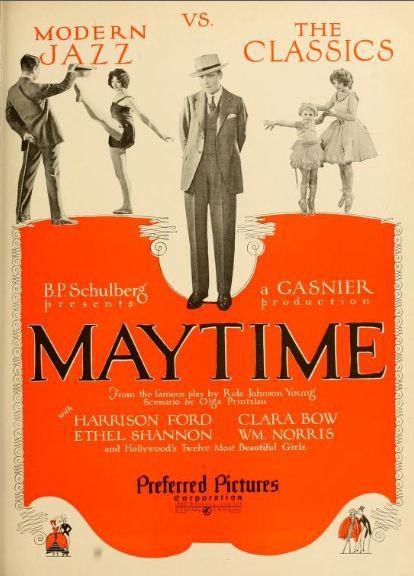
A definitive 6.4/10 rating for a film that redefined the boundaries of cult cinema. Maytime remains a cornerstone of transgressive art.
The 1923 cinematic adaptation of Maytime stands as a towering testament to the silent era's ability to articulate the profoundest depths of human melancholy without the crutch of spoken dialogue. This is not merely a film; it is a visual symphony of longing, a meticulously crafted exploration of the invisible walls that separate the human heart from its true North. At its core, the narrative grapples with the agonizing friction between individual desire and the crushing weight of dynastic duty, a theme that resonates as loudly today as it did a century ago.
The film’s initial act establishes a pastoral idyll that is quickly poisoned by the realities of the 19th-century social hierarchy. Ottilie, portrayed with a delicate, haunting vulnerability by Betty Francisco, is the focal point of this tragedy. Her performance captures the slow erosion of hope, a transition from the vibrant colors of youth to the grey, monochromatic existence of a woman resigned to her fate. In contrast, the gardener's son, Dick, played by the stalwart Harrison Ford (the silent era’s own leading man of immense gravity), embodies the archetype of the self-made man. His journey from the dirt of the garden to the heights of wealth is a quintessential American arc, yet here it is tinged with the irony that material success cannot buy back lost time.
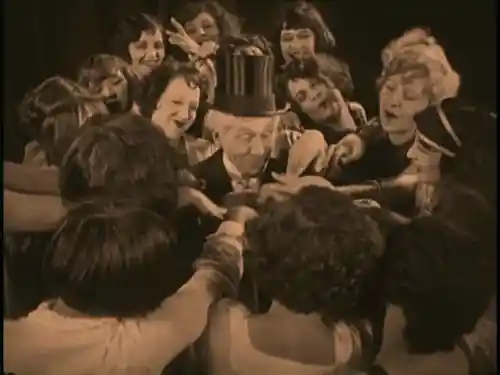
The casting of Robert McKim as the cousin provides a necessary foil. McKim brings a cold, calculating presence to the screen, representing the stagnation of the old guard. His marriage to Ottilie is presented not as a union of souls, but as a transaction of assets. This thematic preoccupation with the commodification of women and the rigidity of class boundaries invites a fascinating comparison to The General's Children, which similarly dissects the collateral damage of patriarchal legacy. However, where that film leans into the political, Maytime remains stubbornly, beautifully personal.
Technically, the film is a marvel of its time. The use of lighting to differentiate between the hopeful past and the cynical present is masterfully executed. The garden scenes are bathed in a soft, ethereal glow, suggesting a paradise that is already slipping through the characters' fingers. As the years progress, the shadows grow longer and more oppressive, reflecting the internal state of Ottilie’s spirit. The direction ensures that every frame feels intentional, a far cry from the more haphazard staging seen in contemporary comedies like Artie, the Millionaire Kid.
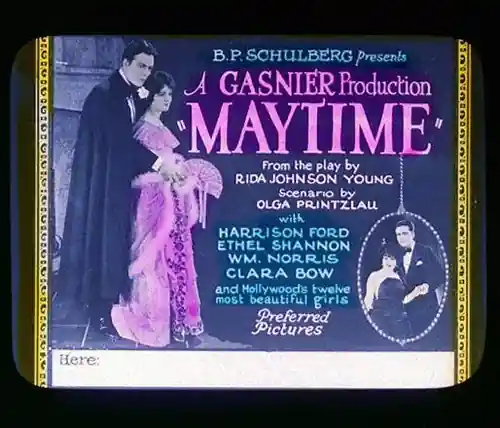
The inclusion of Clara Bow in a supporting role offers a glimpse of the burgeoning flapper energy that would soon dominate the decade. Even in a smaller capacity, her presence injects a kinetic vitality into the proceedings, a stark contrast to the more traditional theatricality of Josef Swickard and Martha Mattox. The ensemble, featuring names like Julie Bishop and Lincoln Stedman, creates a rich tapestry of a society in flux, where the old-world values of the 1800s are beginning to clash with the burgeoning modernity of the early 20th century.
The structural gamble of Maytime—shifting the focus to the grandchildren in the final act—is where the film finds its emotional catharsis. It is a narrative device that could easily feel disjointed, yet here it serves as a necessary balm for the audience’s collective trauma. The meeting of the younger generation, played with a fresh-faced optimism by the same leads or their likenesses, suggests a karmic rebalancing. It echoes the themes of spiritual endurance found in Heart of Gold, though with a more sophisticated grasp of temporal movement.
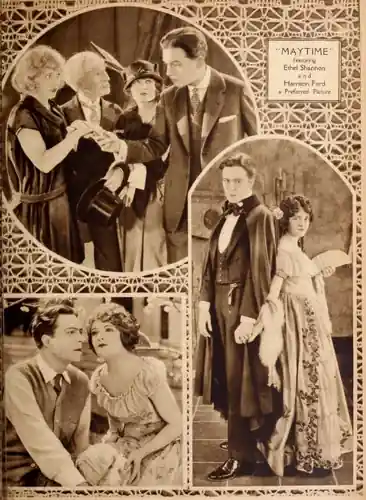
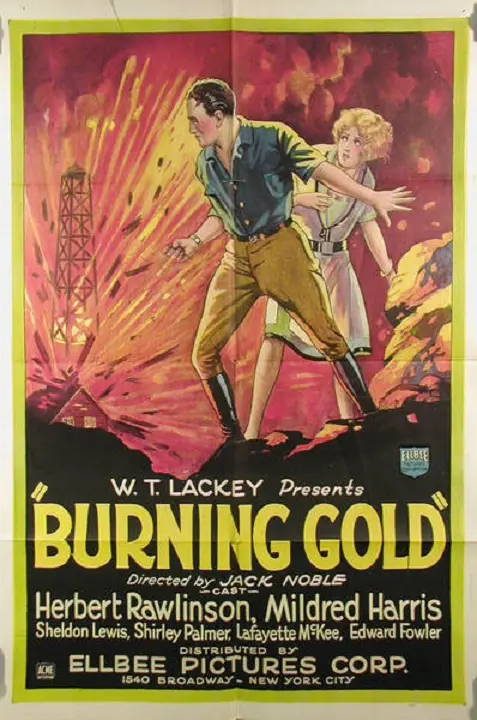
This transition allows the film to comment on the cyclical nature of human experience. While the individual may perish or be broken by their circumstances, the impulse toward love and connection remains an undying force. The grandchildren do not just fall in love; they act as proxies for the unfulfilled desires of their ancestors. This sense of historical continuity is handled with much more grace than the episodic nature of The New Mission of Judex, proving that a single, focused narrative can often carry more weight than a sprawling serial.
When placing Maytime alongside other 1923 releases or earlier works, its sophistication becomes even more apparent. While The Three Musketeers (1921) offered swashbuckling adventure and grand spectacle, Maytime offers an internal spectacle—a landscape of the soul. It lacks the nihilistic edge of Satanas, opting instead for a bittersweet melancholy that feels more authentically human. The screenplay by Olga Printzlau, Cyrus Wood, and Rida Johnson Young avoids the pitfalls of excessive melodrama, grounding the fantastical elements of the 'second chance' in a recognizable emotional reality.
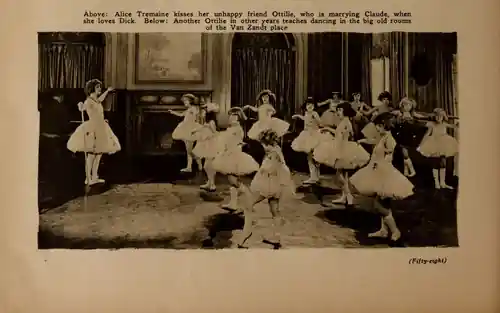
Even compared to the more grounded realism of Hobson's Choice, Maytime feels distinct in its poetic aspirations. It doesn't just want to tell a story about people; it wants to tell a story about Time itself. The gardener's son returning as a wealthy man is a trope as old as literature, yet the film treats his return not as a triumph, but as a tragedy of timing. This nuanced approach to the 'wealth doesn't solve everything' motif is far more complex than the straightforward moralizing of Cleaning Up.
The supporting cast deserves significant praise for populating this world with lived-in characters. Edna Tichenor and William Norris provide the necessary texture to the social gatherings, their performances acting as a barometer for the changing cultural winds. The presence of Wallace MacDonald and Ethel Shannon further enriches the narrative, ensuring that the central romance doesn't exist in a vacuum but is part of a larger, breathing community. These actors manage to convey a sense of history and interiority that is often missing from the more action-oriented fare like The Vengeance Trail.
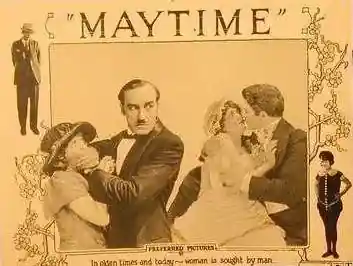
Furthermore, the film’s exploration of female agency—or the lack thereof—is particularly striking. Ottilie’s forced marriage is not depicted as a minor inconvenience but as a spiritual death sentence. This aligns the film with the darker psychological explorations of Lulu (1918), although Maytime wraps its critique in a more aesthetically pleasing, romantic package. The contrast between her domestic confinement and the literal gardens of her youth serves as a powerful visual metaphor for the stifling of her natural self.
As the film reaches its final movements, the audience is left with a profound sense of the 'what if.' It is a film that lingers in the mind, much like the faded scent of dried flowers. It lacks the breezy, ephemeral nature of The Perfect '36' or the whimsical escapism of A Tropical Eggs-pedition. Instead, it occupies a space of high art, challenging its viewers to confront the ways in which they might be complicit in their own unhappiness or the unhappiness of others.
The film’s conclusion, while offering a form of resolution, does not erase the decades of pain endured by the protagonists. It is a sophisticated ending that acknowledges that while the 'maytime' of one’s life may pass, its influence remains immortal. This level of narrative maturity is what elevates the 1923 Maytime above its contemporaries. It is a work of immense beauty and even greater sorrow, a silent masterpiece that speaks volumes about the enduring power of the human spirit to seek out light, even in the deepest shadows of social obligation.
Ultimately, Maytime is a essential viewing for any serious student of cinema. It provides a bridge between the theatrical traditions of the past and the burgeoning psychological realism of the future. It is as much a document of its time as Unknown Switzerland is a document of its place, but its emotional geography is universal. Whether it is the grit of Her Man or the existential weight of La forza della coscienza, Maytime holds its own, offering a lyrical, devastating, and ultimately hopeful vision of what it means to love against the odds.
IMDb —
1922
Community
Log in to comment.