DbcultAccessing Vault...
5.9/10
Senior Film Conservator
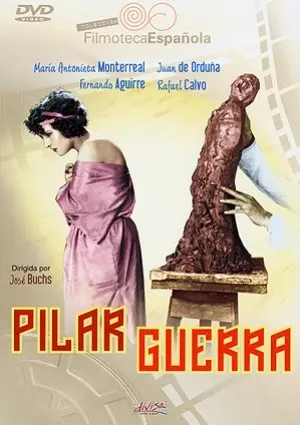
A definitive 5.9/10 rating for a film that redefined the boundaries of cult cinema. Pilar Guerra remains a cornerstone of transgressive art.
Should you spend your evening with a century-old silent film like Pilar Guerra? Short answer: Yes, but only if you are willing to look past the grain and see the sharp political teeth beneath the melodrama.
This film is specifically for historians of European cinema and fans of social realism; it is certainly not for those who require high-octane pacing or modern visual effects to remain engaged.
1) This film works because it uses the mundane tools of bureaucracy—like a schoolteacher’s transfer—as weapons of emotional torture, making the stakes feel grounded and terrifyingly real.
2) This film fails because the third act relies on a series of convenient coincidences that undermine the gritty realism established in the opening scenes.
3) You should watch it if you want to understand the 'Caciquismo' system of 1920s Spain through a lens that is both romantic and deeply critical of local power structures.
Director José Buchs does something fascinating with Pilar Guerra. He doesn't just present a story of star-crossed lovers; he presents a story of state-sponsored harassment. The mayor of Aráceli doesn't use a sword or a gun to keep Pilar and Luciano apart. He uses his pen. The scene where Pilar receives her transfer notice is framed with a cold, clinical eye. We see the document before we see her face. This highlights a brutal truth of the era: an individual's life could be uprooted by the whim of a local official.
This administrative cruelty makes the film feel surprisingly modern. While While London Sleeps deals with more overt shadows, Pilar Guerra finds its darkness in the bright sunlight of a Spanish village. The villainy here is institutional. It’s a quiet, suffocating kind of evil that feels more relatable than the mustache-twirling antagonists of other silent-era dramas like Tyrant Fear.
Flora Rossini delivers a performance that is remarkably restrained for 1926. In an era where 'acting' often meant wild gesticulation and bulging eyes, Rossini uses her posture to convey Pilar’s inner world. When she is told she must leave her school, she doesn't collapse. She stiffens. It is a moment of quiet rebellion that resonates more than any monologue could. It’s a stark contrast to the more theatrical approach seen in Sandra.
Rafael Calvo, playing the mayor, is the perfect foil. He embodies the 'Cacique'—the local political boss—with a heavy-set, immovable presence. He doesn't need to shout; his mere presence in the frame seems to shrink the world around the other characters. There is a specific moment where he sits at his desk, backlight catching the smoke from his cigar, looking less like a father and more like a stone monument to the status quo. It is a chilling image of patriarchal control.
The cinematography in Pilar Guerra serves a dual purpose. It captures the beauty of the Spanish countryside, but it also uses that landscape to emphasize isolation. When Luciano is sent away, the wide shots of the winding roads don't represent adventure; they represent the insurmountable distance between him and his love. The camera work here is more purposeful than the somewhat static framing found in Riding for a King.
Buchs uses light to distinguish between the public and private spheres. The classroom is flooded with natural light, representing Pilar’s honesty and her role as an educator. In contrast, the mayor’s office is often shrouded in shadow, suggesting the backroom deals and corruption that define his rule. This visual storytelling is essential in a film where dialogue is limited to intertitles. It shows a director who understood that cinema is, first and foremost, a visual medium.
Is Pilar Guerra worth watching today? Short answer: Yes, it is a vital artifact for anyone interested in how cinema was used to critique social hierarchies. It provides a window into a specific time and place in Spanish history that few other films from the 1920s managed to capture with such sincerity. While it may lack the technical polish of contemporary Hollywood imports like Never Touched Me, its emotional core is far more robust.
If there is one major flaw, it is the resolution. The film builds up such a powerful critique of systemic corruption that the 'happy ending' feels slightly unearned. It suggests that the power of love can overcome the power of the state, which, while romantic, feels like a retreat from the harsh reality the film spent eighty minutes establishing. I would argue that a more tragic ending would have cemented this as a true masterpiece of social realism. Instead, it settles for being a very good melodrama.
Compare this to Brothers Divided, which handles its internal conflicts with a bit more grit. In Pilar Guerra, the shift from political critique to romantic resolution is jarring. It works. But it’s flawed. The transition feels like Buchs was afraid to leave his audience in total despair, choosing a crowd-pleasing finale over thematic consistency.
Pros:
- Strong, understated performance by Flora Rossini.
- Authentic location shooting that captures the essence of 1920s rural Spain.
- A unique focus on the intersection of professional life and personal romance.
Cons:
- Pacing issues in the second act during the separation sequence.
- Some intertitles are overly long and disrupt the visual flow.
- The mayor’s change of heart (if applicable in your interpretation) feels rushed.
Pilar Guerra is a fascinating relic that manages to transcend its age through sheer conviction. While it may not have the budget of Paris or the mythical weight of Titanenkampf, it possesses a localized, grounded power that is rare for the silent era. It is a film about the dignity of work and the persistence of the heart. It isn't a masterpiece of technique, but it is a masterpiece of empathy. If you can handle the silence, the reward is a deeply moving experience that proves some things—like the arrogance of power and the stubbornness of love—never truly change.
IMDb 6.7
1926
Community
Log in to comment.