DbcultAccessing Vault...
Cult Review
Senior Film Conservator
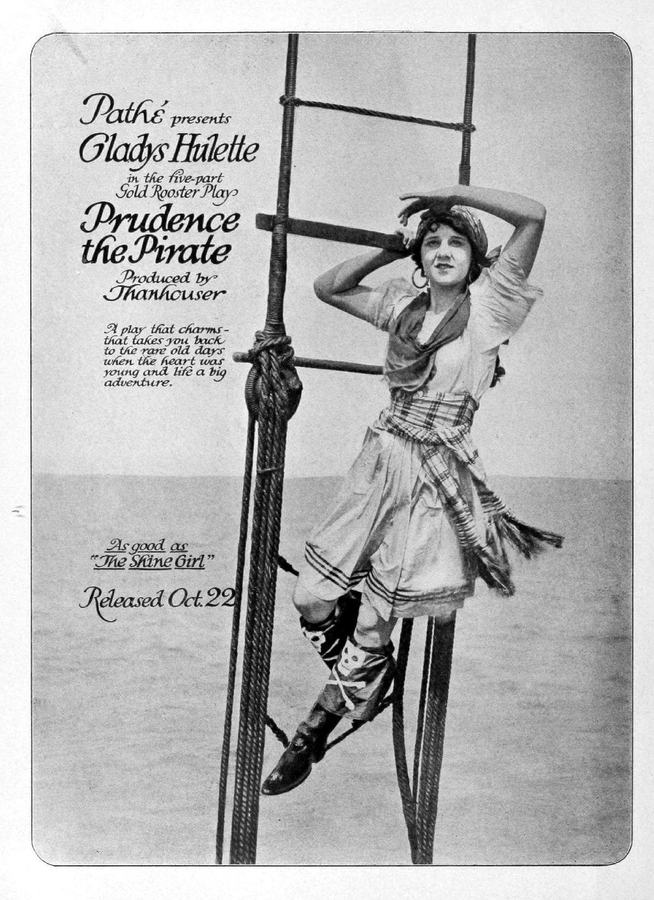
In the cinematic landscape of 1916, where moralizing melodramas like I Accuse often dominated the cultural zeitgeist, William Parke’s Prudence, the Pirate emerges as a strikingly irreverent anomaly. It is a film that treats the stifling atmosphere of the American aristocracy not as a sanctuary to be preserved, but as a cage to be rattled. Gladys Hulette, portraying the eponymous Prudence, delivers a performance that transcends the typical 'ingenue' constraints of the era. She isn't merely a girl looking for adventure; she is a kinetic force of nature, a proto-feminist icon who perceives the rigidity of her aunt’s parlor as a form of spiritual slow-death.
The film’s premise—a wealthy girl hiring a boat to play at being a buccaneer—might sound like a frivolous escapade, yet Agnes Christine Johnston’s screenplay imbues it with a sharp, satirical edge. Johnston, one of the most prolific female writers of the silent era, understood the inherent comedy in the collision between high-born vanity and the gritty, unwashed reality of the sea. Unlike the somber, fate-driven narratives found in Deti veka, Prudence, the Pirate revels in the agency of its protagonist. Prudence doesn't wait for a hero to rescue her from her boredom; she becomes the captain of her own chaotic destiny.
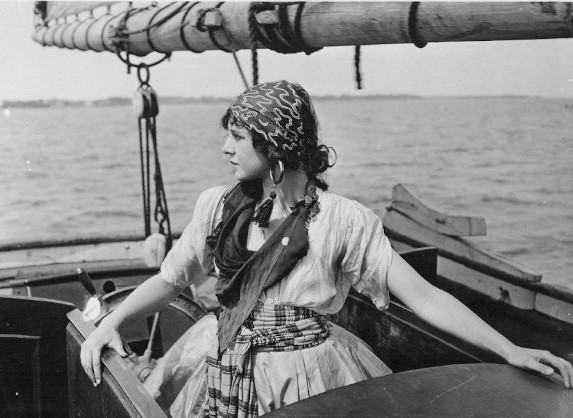
One of the most delightful elements of the film is the relationship between Prudence and the family butler, played with a magnificent, dry wit by Barnett Parker. His character serves as the mythological bridge. By regaling Prudence with tall tales of his supposed past as a cutthroat pirate, he provides the spark that ignites her rebellion. There is a mercurial quality to these scenes; the butler’s lies are the only truth Prudence finds worth living for. It’s a fascinating commentary on the power of storytelling—how a few fabricated yarns about the Spanish Main can dismantle years of finishing-school etiquette.
When Prudence is denied a place on a legitimate yachting trip, the transition from society girl to pirate queen is handled with a brisk, rhythmic editing style. The recruitment of her 'crew' is a highlight of silent comedy. These aren't hardened criminals, but a collection of oddballs and cast-offs who find in Prudence a leader far more compelling than the social structures that discarded them. The film’s pacing here mirrors the serial energy of The New Adventures of J. Rufus Wallingford, prioritizing momentum and visual gags over the slow-burn tension typical of contemporary European imports.
Technically, Prudence, the Pirate is a marvel of its time. The location shooting on the water provides a sense of visceral verisimilitude that studio sets could never replicate. The way the light hits the white sails of the schooner creates a high-contrast aesthetic that feels almost ethereal. While it lacks the grim, documentary-like intensity of Rescue of the Stefansson Arctic Expedition, it utilizes the natural environment to enhance the sense of freedom. The sea is not a threat here, as it often is in maritime cinema, but a playground.
The appearance of Flora Finch as the aunt is a stroke of casting genius. Finch, with her elongated features and peerless ability to project 'Victorian indignation' through a single twitch of her nose, provides the perfect foil to Hulette’s round-faced, bright-eyed enthusiasm. Their dynamic represents the clash between the 19th and 20th centuries. Every time Finch appears on screen, the frame feels tighter, more constrained; every time we return to Prudence on the deck of her ship, the frame seems to expand. It is a masterclass in using character archetypes to drive thematic subtext.
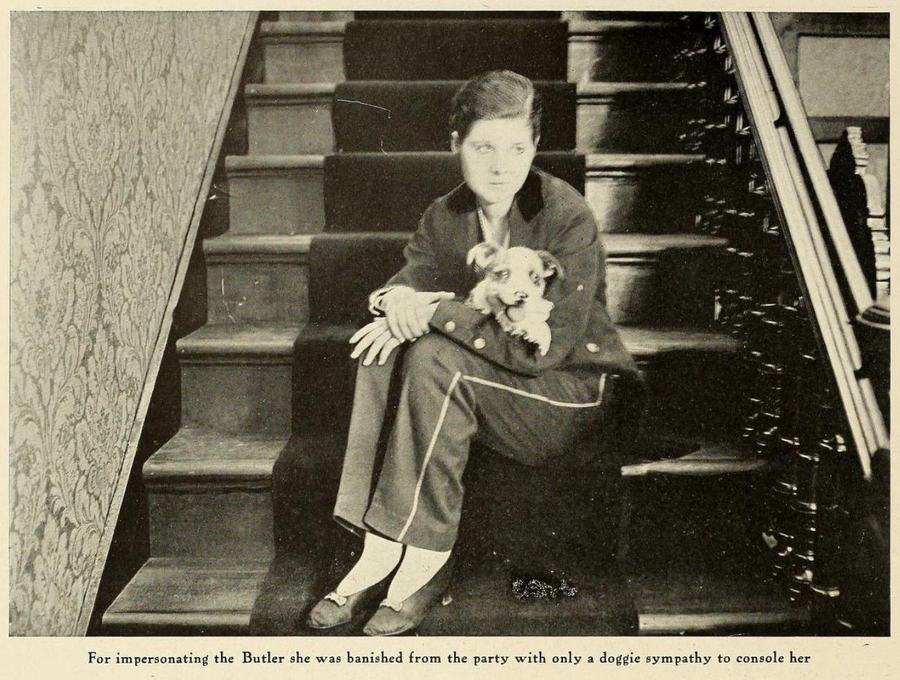
"Prudence doesn't just wear the pirate's hat; she wears the audacity of a generation tired of the parlor room's shadows."
To understand the uniqueness of Prudence, the Pirate, one must look at the landscape of 1916. While The Spell of the Yukon explored the rugged masculinity of the frontier, Parke’s film explores a different kind of frontier—the psychological emancipation of the American woman. There is a levity here that is missing from the heavy-handed romanticism of Rose of the South. Prudence isn't motivated by a tragic love or a lost inheritance; she is motivated by an existential itch that only the salt air can scratch.
Even when the plot veers into more traditional territory—involving a kidnapping and a rescue—the film maintains its parodic tone. It never takes its 'piracy' too seriously, which is its greatest strength. It functions as a meta-commentary on the genre itself. In this regard, it shares a certain DNA with Das rosa Pantöffelchen, which similarly played with social expectations through a lens of lighthearted artifice. However, Prudence feels more grounded in its rebellion. The stakes aren't just about who she will marry, but about whether she will be allowed to be the protagonist of her own life.
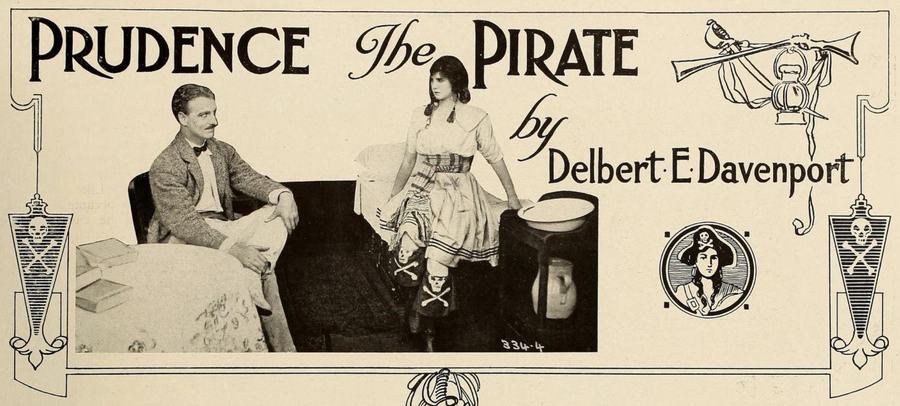
As the film reaches its climax, the resolution is surprisingly satisfying. It avoids the easy trap of having Prudence 'learn her lesson' and return to her embroidery. Instead, the film suggests that the spirit of the pirate is something that, once unleashed, cannot be easily recorked. The final shots possess a luminous quality, a celebratory end to a journey that began in a dusty drawing room. It stands in stark contrast to the somber endings of films like The Last Chapter or the tragic inevitability of Der letzte Tag.
For modern viewers, Prudence, the Pirate offers more than just archival interest. It is a vibrant, funny, and visually engaging piece of work that highlights the versatility of Gladys Hulette. In an era where many silent films feel like static stage plays, William Parke’s direction is fluid and cinematic. He understands that the camera is not just an observer, but a participant in Prudence’s joy. The film’s refusal to conform to the melodrama of Her Sister's Rival or the formal rigidity of La marcia nuziale makes it a essential viewing for anyone interested in the evolution of the comedy-adventure genre.
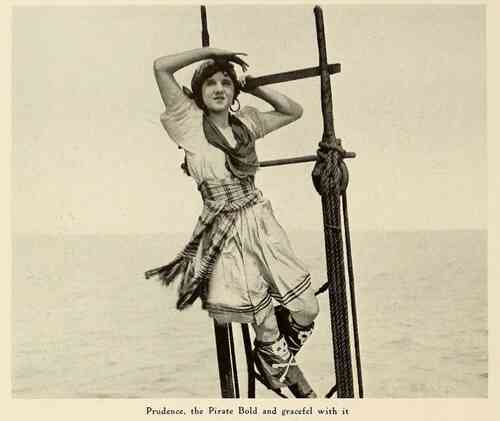
Ultimately, Prudence, the Pirate is a testament to the power of whimsy as a form of resistance. It reminds us that sometimes, the most radical thing a person can do is refuse to be bored. Whether she is dodging her aunt's scolding or navigating a schooner through a gale, Prudence remains an indelible figure of cinematic history—a girl who saw the Jolly Roger not as a symbol of death, but as a banner of life.
A sparkling gem of the Thanhouser Film Corporation. Prudence, the Pirate is a masterclass in silent-era characterization and a delightfully subversive take on the nautical adventure. It is essential viewing for those who prefer their historical cinema with a side of salt and a healthy dose of rebellion.
IMDb —
1926
Community
Log in to comment.