DbcultAccessing Vault...
5.6/10
Senior Film Conservator
A definitive 5.6/10 rating for a film that redefined the boundaries of cult cinema. Queen of the Turf remains a cornerstone of transgressive art.
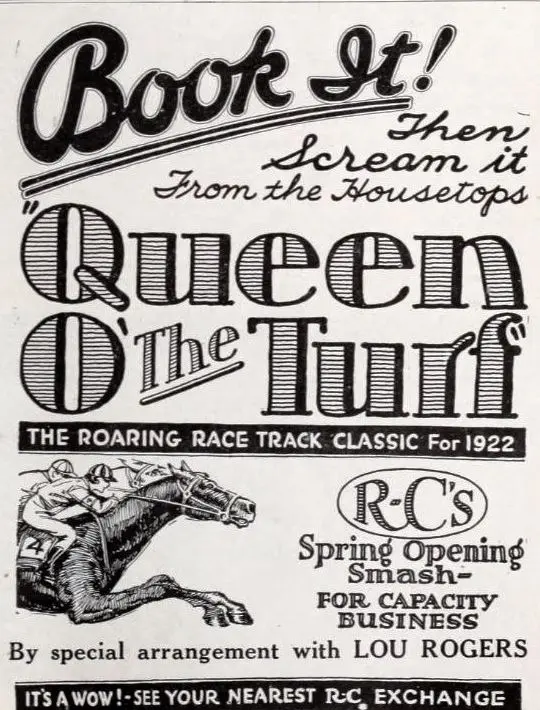
Stepping into the world of Queen of the Turf is akin to unearthing a forgotten gem from the nascent years of Australian cinema. This 1921 silent film, a collaborative effort from writers John Cosgrove and John Wells, and directed by Cosgrove himself, presents a fascinating glimpse into a burgeoning national film industry grappling with its identity, yet already keen to champion uniquely Australian narratives and characters. What immediately strikes the modern viewer, beyond the technical limitations of its era, is the film's audacious spirit, particularly embodied in its protagonist, Bobbie Morton. She is not merely a character; she is a force of nature, a testament to the pioneering spirit often celebrated in Australian mythology, but here, given a distinctly feminine, yet no less formidable, form.
Bobbie Morton, portrayed with vibrant energy by Kennaquhair, stands as a truly remarkable figure for her time. In an era where female roles in cinema often leaned towards damsels in distress or romantic foils, Bobbie shatters these molds with an almost casual defiance. She is a champion horsewoman, an assertion not just of skill, but of dominion over a domain traditionally — and often fiercely — held by men. Her comfort and competence on horseback are not merely plot devices; they are integral to her character, symbolizing her independence, her strength, and her inherent connection to the rugged Australian landscape. This isn't a woman who merely observes the world of horse racing; she actively participates, often outshining her male counterparts, earning respect through sheer talent and unwavering courage. One cannot help but draw parallels to other strong female characters who emerged in cinema, though perhaps a decade or two later, yet Bobbie's portrayal feels remarkably contemporary in its assertion of female agency. Her refusal to be confined by societal expectations, her ability to hold her own in a man's world, positions her as a proto-feminist icon within the historical context of Australian film.
The film doesn't shy away from showcasing Bobbie's physical prowess and mental acuity. She isn't just a pretty face in a saddle; she possesses a keen intellect and an unyielding moral compass that drives the narrative forward. Her 'gutsy heroine' status, as the plot synopsis suggests, is earned through actions, not just declarations. This active participation in her own destiny sets her apart from many contemporary cinematic heroines who were often relegated to reactive roles. Her character arc is not about finding a man to save her, but about asserting her own capabilities and principles in a world that often seeks to undermine them. This makes Queen of the Turf a compelling watch, even today, offering a valuable insight into the evolving representation of women on screen.
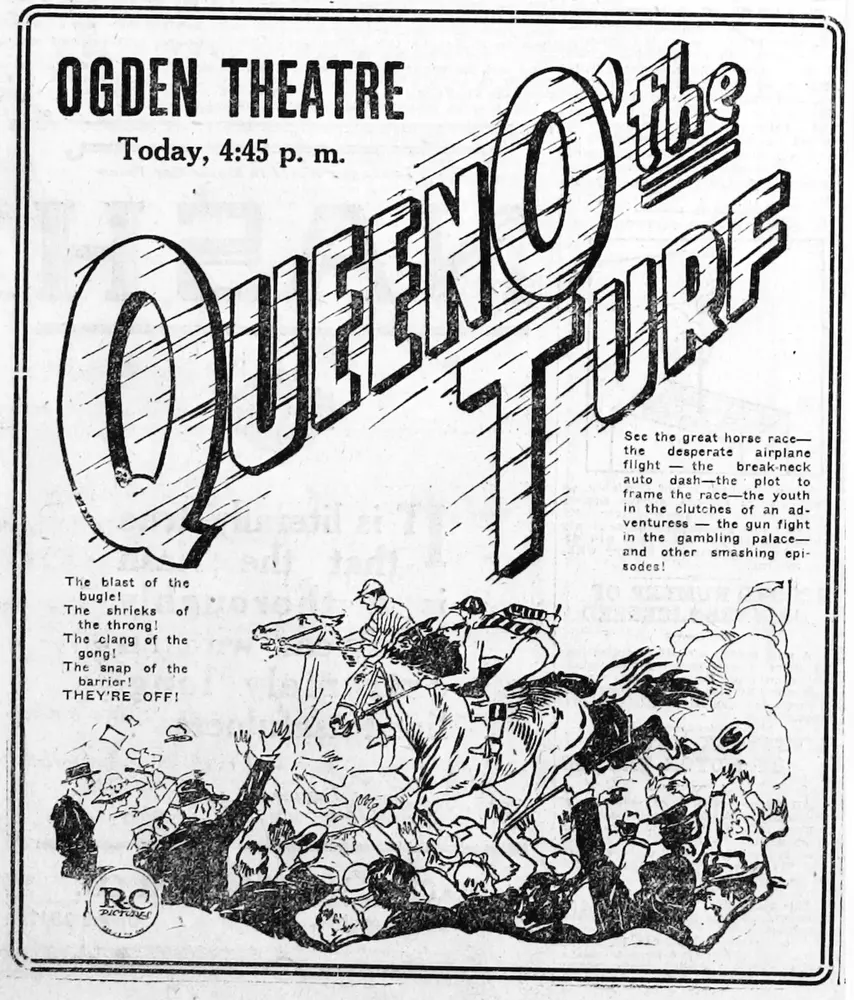
At the heart of Queen of the Turf lies a classic narrative struggle: the battle against corruption. The insidious race-rigging scam forms the central conflict, providing both tension and a moral imperative for Bobbie's actions. This plot device, while common in many genres, takes on a particular resonance here, as it threatens the very integrity of a sport that, for many, represents purity of competition and a connection to the land. The film effectively builds suspense as Bobbie, with her sharp instincts and intimate knowledge of the racing world, begins to uncover the nefarious dealings. The stakes feel genuinely high, not just for the characters involved, but for the honor of the sport itself.
The portrayal of this scam is handled with a surprising degree of sophistication for an early silent film. The machinations of the villains, their whispered conversations and furtive glances, effectively convey their deceit without needing extensive intertitles. The visual storytelling, a cornerstone of silent cinema, is employed deftly to illustrate the unfolding conspiracy. Bobbie’s journey to expose the truth is fraught with peril, placing her in direct opposition to powerful, unscrupulous individuals. This theme of an individual fighting systemic corruption is timeless, and Queen of the Turf executes it with a compelling blend of drama and adventure. It reminds one of the moral quandaries explored in films like The Curse of Greed, where the dark underbelly of human ambition similarly drives the narrative's tension, though Queen of the Turf infuses it with a distinctly Australian flavour of frontier justice.
Adding another layer of complexity to Bobbie’s already eventful life is the presence of an amorous squatter. This subplot, while seemingly a romantic diversion, serves a crucial purpose in further defining Bobbie’s character. His advances, which she must consistently fend off, underscore her self-reliance and her refusal to be defined by romantic entanglements alone. It’s not a story of a woman seeking a partner, but of a woman asserting her autonomy in the face of unwanted attention. The squatter, played by Robert MacKinnon, represents a certain type of rugged, perhaps somewhat boorish, masculinity prevalent in the Australian outback narratives. His pursuit of Bobbie, while perhaps intended to add a dash of romantic tension, instead highlights Bobbie’s agency and her ability to navigate social situations with equal parts grace and steel.
This element of the plot, rather than detracting from the central drama of the race-rigging, actually amplifies Bobbie’s multifaceted personality. It demonstrates that her challenges are not limited to the professional sphere but extend to her personal life, where she must constantly negotiate expectations and maintain her independence. It’s a subtle yet effective way of portraying a well-rounded character who is not singularly focused on one goal, but rather living a full, complex life amidst the unfolding drama. In a way, it echoes the spirit of independent women found in stories like The Wildcat, where female protagonists similarly navigate personal affections while pursuing their own formidable objectives.
Queen of the Turf is more than just an entertaining story; it's a significant cultural artifact. Produced in 1921, it belongs to a fascinating period in Australian film history, a time of prolific output and experimentation before the dominance of Hollywood became absolute. The film showcases a distinctly Australian sensibility, from its setting in the vast, untamed landscape to its characters who embody a certain national archetype of resilience and resourcefulness. The cinematography, though rudimentary by today's standards, effectively captures the grandeur of the racing scenes and the open country, immersing the viewer in the environment.
The film's production values, while perhaps modest compared to its American or European contemporaries, are testament to the ingenuity and determination of its creators. The practicalities of filming horse races, especially in an era without sophisticated special effects, would have presented considerable challenges, yet the film manages to convey the excitement and speed of the track. The acting, as is often the case with silent films, relies heavily on exaggerated gestures and facial expressions, yet the cast, including Robert MacKinnon, Tommy Denman, Gerald Harcourt, and Agnes Vernon, delivers performances that are both earnest and engaging, particularly Kennaquhair's nuanced portrayal of Bobbie Morton.
The collaborative writing effort of John Cosgrove and John Wells, with Cosgrove also at the helm as director, merits particular attention. Their screenplay demonstrates a clear understanding of dramatic structure and character development, crafting a narrative that, despite its silent film format, feels remarkably rich and engaging. The pacing is well-handled, balancing the excitement of the races with the tension of the conspiracy and the lighter moments of romantic pursuit. Their ability to weave together these disparate plot threads into a coherent and compelling whole speaks volumes about their storytelling acumen.
Cosgrove's direction, while perhaps not groundbreaking in a purely stylistic sense, is effective in serving the story. He understands how to use the camera to convey emotion and action, making the most of the resources available to him. The film feels cohesive, a testament to a clear directorial vision. In an era where many films were rushed into production, Queen of the Turf exhibits a thoughtful approach to filmmaking, aiming for both entertainment and a certain level of thematic depth. Their work here can be seen as foundational, contributing to the growing repertoire of Australian narratives on screen, much like the efforts seen in other early productions attempting to define a national cinematic voice, such as The Spirit of Cabin Mine.
Beyond its historical significance, Queen of the Turf resonates with several enduring themes that ensure its relevance even today. The most prominent, of course, is the theme of justice prevailing over corruption. Bobbie Morton’s relentless pursuit of the truth, often at personal risk, is a powerful reminder of the importance of integrity in all facets of life. This universal struggle against wrongdoing gives the film a timeless appeal, transcending its specific period setting and technological constraints.
Another powerful theme is that of female empowerment and independence. Bobbie’s character challenges the gender norms of her era in a way that feels surprisingly modern. She is not defined by her relationships with men, but by her skills, her courage, and her moral fortitude. Her ability to operate, and indeed excel, in a male-dominated world offers a compelling vision of female strength and self-determination. This makes the film a valuable touchstone for discussions on the evolution of female representation in cinema, standing proudly alongside other early depictions of resilient women, even those from different cultural contexts like Agnes Arnau und ihre drei Freier, which also explored female agency in romantic choices.
The film also subtly explores the theme of the Australian identity. The vast landscapes, the rugged characters, and the emphasis on fair play all contribute to a distinctly Australian flavour. It speaks to a nascent nation finding its voice, celebrating its unique characteristics and the spirit of its people. The horse, an animal deeply intertwined with Australia's colonial and pastoral history, serves as a powerful symbol throughout the film, representing freedom, strength, and the untamed spirit of the land itself. The racing scenes are not just about competition; they are a celebration of skill, animal grace, and the vibrant culture surrounding the sport.
In an age dominated by CGI and complex soundscapes, it’s easy to overlook the charm and narrative power of silent films. However, Queen of the Turf serves as a powerful reminder of the enduring art of visual storytelling. It’s a film that, despite its age, manages to captivate with its spirited protagonist, engaging plot, and timeless themes. It stands as a significant piece of Australian cinematic heritage, showcasing the talents of its cast and crew and offering a window into the social attitudes and aspirations of its time.
For enthusiasts of classic cinema, especially those with an interest in early Australian productions, Queen of the Turf is an essential viewing. It’s a film that not only entertains but also educates, providing valuable insight into the roots of a national film industry and the evolution of cinematic storytelling. Bobbie Morton remains a character whose strength and independence continue to inspire, making her truly the 'Queen of the Turf' in more ways than one. Its narrative simplicity belies a depth of character and thematic resonance that many modern films struggle to achieve. It’s a testament to the power of a well-told story, regardless of the technological era in which it was conceived. Much like enduring tales of adventure and self-discovery such as Robinson Crusoe, it speaks to the human spirit's capacity for resilience against adversity. This film, though a relic of a bygone era, continues to gallop through the annals of cinema, leaving a distinctive and indelible mark.
IMDb 6.9
1932
Community
Log in to comment.