DbcultAccessing Vault...
Cult Review
Senior Film Conservator
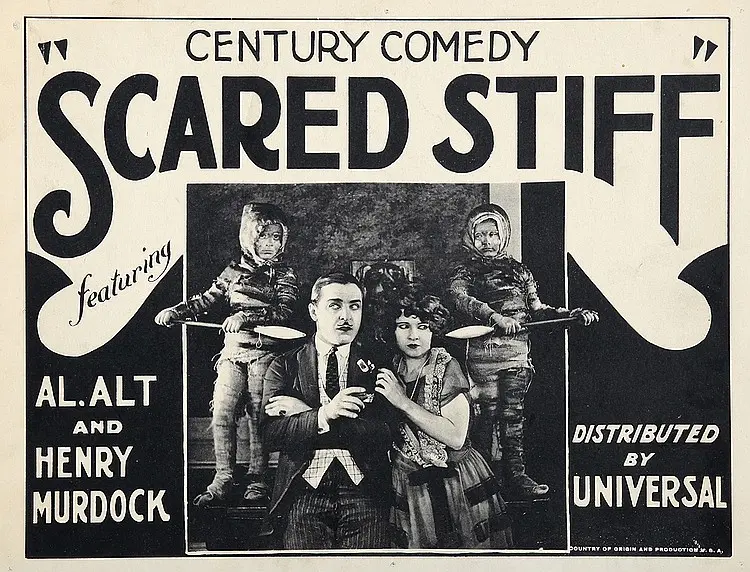
In the pantheon of silent-era slapstick, certain films exist as frenetic blueprints for the evolution of physical comedy. Albert Herman’s 1924 effort, Scared Stiff, is one such relic—a work that oscillates between the puerile joy of destruction and the eerie tension of the "old dark house" trope. While modern audiences might initially perceive the film as a simple sequence of gags, a closer inspection reveals a sophisticated understanding of spatial dynamics and the inherent absurdity of the human condition when faced with both the oversized physical object and the invisible spectral threat.
The film opens not with a whisper, but with the rumbling thud of a push-ball. This object, larger than a grown man, serves as the central motif for the first act. Henry Murdock and Al Alt, playing the quintessential collegiate ne'er-do-wells, utilize this sphere to dismantle the rigid structures of their environment. There is a visceral quality to these scenes; the way the ball interacts with the storefronts and the panicked citizenry suggests a rejection of the burgeoning urbanization of the 1920s. Unlike the more structured morality found in The Morals of Hilda, Scared Stiff prioritizes the visceral thrill of the wrecking ball over the didactic lessons of the era.
The transition from the university setting to the cabaret marks a significant tonal shift. After being reprimanded by a principal who embodies the stern, unyielding authority of the pre-Depression era, our protagonists find themselves in a space of supposed leisure that quickly sours. The sequence involving the impudent clam-shell is perhaps one of the most surreal moments in Herman’s filmography. It is here that the film’s internal logic begins to fray in the most delightful way. The clam-shell, skipping across the floor and infiltrating the garments of a female patron, acts as a harbinger of the chaos that follows the boys wherever they go.
This scene highlights the impeccable timing of Murdock and Alt. Their chemistry is reminiscent of the kinetic energy showcased in 'Twas Henry's Fault, yet here it is tempered by a sense of desperation. They are no longer just pranksters; they are outcasts. When the proprietor finally ejects them, the film shifts its gaze from the internal mischief of youth to the external responsibilities of the adult world, albeit filtered through a lens of high-octane comedy.
The encounter with Bessie Welch’s character on the curbstone serves as the catalyst for the film's second half. Welch, portraying a damsel in distress with a degree of agency that was becoming more common in the mid-20s, invites the boys into a narrative of inheritance and fraud. The plot point of relatives attempting to scare an heir out of their property was a staple of the time, often explored with more gravity in films like The Hidden Law or the atmospheric Sacred Silence. However, Herman treats the "ghastly things" that occur in the house with a playful cynicism.
The "ghosts" in Scared Stiff are marvels of low-budget ingenuity. Using wires, sheets, and clever lighting, the film constructs a haunted atmosphere that manages to be genuinely unsettling while remaining firmly within the realm of comedy. The boys' reactions—a mixture of wide-eyed terror and accidental bravery—provide the film's emotional core. We see a transition from the destructive impulses of the push-ball sequence to a protective instinct. They are no longer breaking things; they are trying to keep something whole—specifically, the lady’s claim to her home.
Albert Herman’s direction is characterized by a relentless pace. There is little room for the contemplative pauses one might find in Christus. Instead, the frame is constantly occupied by movement. The cinematography during the haunted house sequences utilizes the shadows of the set to create a sense of depth that was often lacking in contemporary comedies. This use of chiaroscuro, though primitive compared to German Expressionism, adds a layer of visual sophistication that elevates the film above mere slapstick.
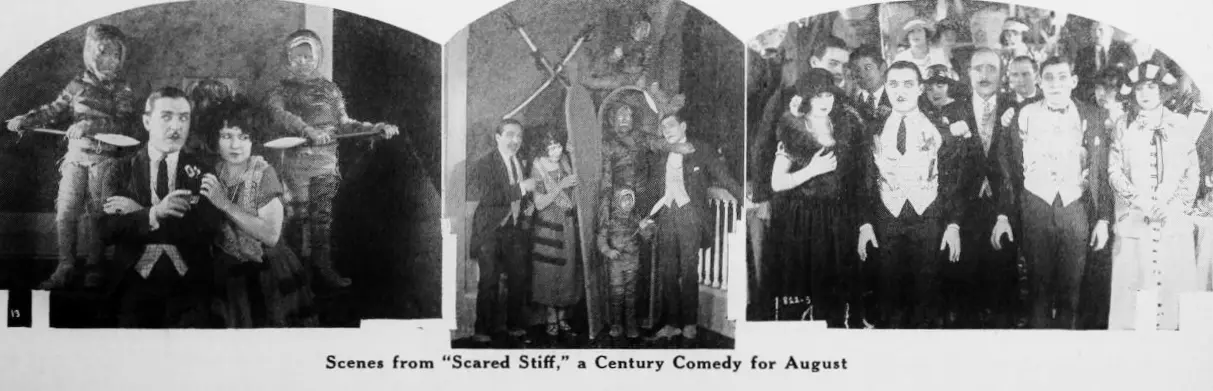
Furthermore, the editing in Scared Stiff is surprisingly tight. The intercutting between the boys' terrified faces and the "supernatural" manifestations creates a rhythmic tension that pays off in the final confrontation. It lacks the melodrama of A Factory Magdalen, opting instead for a brisk, punchy delivery of plot points. This efficiency is what makes the film still watchable a century later; it respects the audience's time while maximizing the impact of every gag.
To fully appreciate Scared Stiff, one must contrast it with the more somber offerings of 1924. While Tainted Money dealt with the corruptive influence of wealth, Herman’s film treats inheritance as a playground for physical comedy. Similarly, where The Crucible of Life sought to find meaning in suffering, Scared Stiff finds meaning in the absurdity of a clam-shell. This tonal divergence is crucial. The film represents a branch of cinema that refused to take the burgeoning medium too seriously, even as it mastered the technical aspects of storytelling.
The film also touches upon themes of loyalty and the underdog, much like The Reclamation. However, instead of a dramatic western setting, we are given the claustrophobic, trap-filled corridors of a Victorian mansion. The stakes feel just as high because the comedy is rooted in the characters' genuine fear. When Murdock and Alt finally uncover the ruse, the catharsis is not just for them, but for the audience who has endured the spectral onslaught alongside them.
In the grand tapestry of silent film, Scared Stiff remains a vibrant, if slightly overlooked, thread. It captures a specific moment in American comedy where the transition from the short-form gag to the feature-length narrative was still being refined. The film’s ability to weave together disparate elements—collegiate mischief, urban satire, and Gothic mystery—is a testament to the creative fluidity of the era. It doesn't possess the epic scale of The Birth of Patriotism, but it offers a more intimate, and ultimately more human, experience.
As the boys sit on the curbstone, their journey from expelled students to accidental heroes is complete. They have navigated a world that is both physically and psychologically daunting. The final victory is not just the preservation of the lady’s home, but the validation of their own chaotic methods. In a world of David Garrick-style theatricality, Scared Stiff stands as a reminder that sometimes, the best way to deal with a ghost—or a clam-shell—is with a well-timed pratfall and a bit of collegiate grit.
Ultimately, this film is a masterclass in the economy of motion. Every frame serves the purpose of either advancing the plot or eliciting a visceral reaction. Whether it is the sheer scale of the push-ball or the minute, annoying movements of the clam-shell, Herman understands that comedy is a matter of scale. By placing his characters in situations where they are consistently outmatched by their environment, he creates a relatable form of heroism that transcends the silent era. It is a film that deserves to be viewed not just as a historical curiosity, but as a living, breathing piece of cinematic machinery that still functions with remarkable precision.
For those looking to explore the fringes of 1920s cinema, away from the heavy-handedness of A World of Folly or the rugged landscapes of Code of the Yukon, Scared Stiff offers a refreshing, anarchic alternative. It is a testament to the power of the gag and the enduring appeal of the underdog in the face of both the mundane and the macabre.
IMDb 5.6
1937
Community
Log in to comment.