DbcultAccessing Vault...
5.5/10
Senior Film Conservator
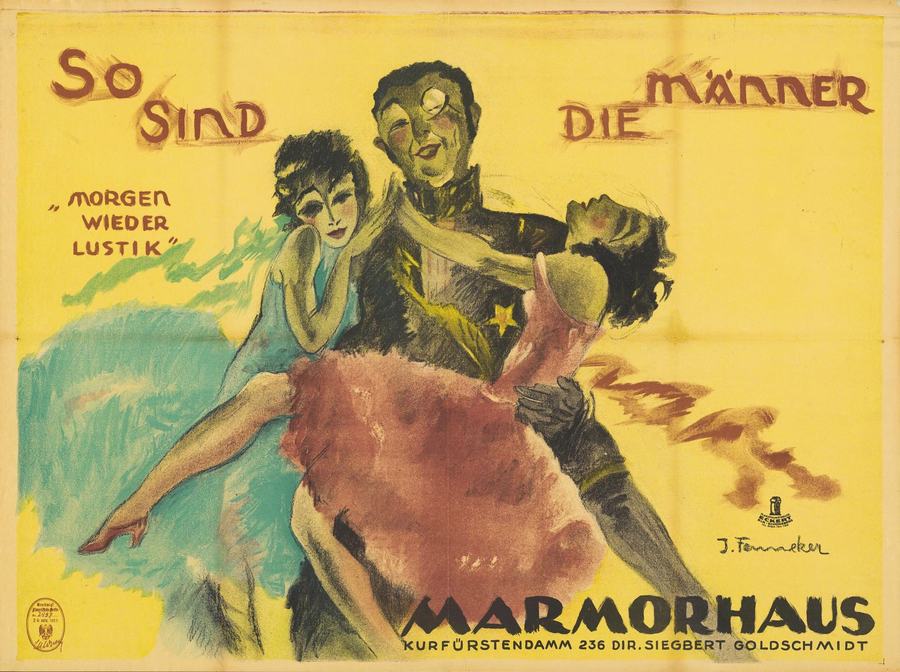
A definitive 5.5/10 rating for a film that redefined the boundaries of cult cinema. So sind die Männer remains a cornerstone of transgressive art.
The year 1923 stands as a pivotal juncture in the evolution of German cinema, a period where the stark, jagged shadows of Expressionism began to harmonize with the burgeoning desire for historical grandeur and social satire. Georg Jacoby’s So sind die Männer (alternatively known as Der kleine Napoleon) emerges from this fertile ground, not merely as a chronicle of a minor Napoleonic figure, but as a vibrant testament to the Weimar Republic's fascination with the decadence of the past. It is a film that breathes through its scenography, utilizing the sprawling majesty of Schloss Wilhelmshöhe to construct a narrative world that feels simultaneously ancient and startlingly modern in its cynicism. While many contemporary films like Die Würghand leaned into the macabre, Jacoby opted for a sun-drenched irony that peeled back the velvet curtains of the Bonaparte dynasty.
At the heart of this visual feast is Jerome Bonaparte, a character who embodies the tension between inherited greatness and innate frivolity. Paul Heidemann’s portrayal of Jerome is nothing short of masterful; he navigates the role with a physical comedy that avoids the pratfalls of slapstick, opting instead for a nuanced absurdity. Jerome’s Westphalia is not a kingdom of iron and blood, but one of silk and fountains. The film’s focus on the Schloss Wilhelmshöhe parks serves as a metaphor for the precariousness of his rule—a beautiful, curated landscape that exists in isolation from the brewing storms of European conflict. The camera lingers on the water features and the meticulously groomed gardens, creating an atmosphere that feels almost claustrophobic in its beauty, much like the domestic tensions found in The Sign on the Door.
The cinematography, handled with a sophisticated sense of depth and scale, captures the grand garden parties not as mere background noise, but as the primary engine of the plot. These gatherings are where the true politics of the era take place—not in smoky rooms, but amidst the rustle of crinolines and the clinking of champagne flutes. The lexical diversity of the visual language here is immense; every frame is packed with detail, from the intricate lace of the costumes to the sprawling vistas of the Kassel landscape. Jacoby understands that to satirize power, one must first depict its seductive allure, a technique that elevates the film above standard historical reenactments.
For the modern cinephile, So sind die Männer holds an almost mythic status due to the presence of a young Marlene Dietrich. In her role as Kathrin, the lady's maid, we see the embryonic stages of a screen persona that would eventually redefine Hollywood glamour. While she is not the central focus of the narrative, her presence is magnetic, a sharp contrast to the more traditional performances of the era. There is a specific scene—a fleeting moment in the garden—where Dietrich’s gaze pierces through the silent film artifice, hinting at the sophisticated nonchalance she would later perfect. Her inclusion links this film to the wider tradition of discovery, much like the early breakthroughs seen in Oliver Twist or the domestic dramas of Through the Back Door.
The ensemble cast, including Harry Liedtke and Jakob Tiedtke, provides a robust framework for this satirical dance. Liedtke, a staple of the era's romantic comedies like The Girl in the Taxi, brings a level of charm that balances Heidemann’s more eccentric Jerome. The interactions between these characters are choreographed with the precision of a ballet, where every glance and gesture contributes to a larger commentary on the superficiality of the Napoleonic court. The script by Robert Liebmann and Georg Jacoby avoids the heavy-handed moralizing often found in silent epics, opting instead for a playful, almost subversive tone that questions the very nature of masculine authority—as the title so pointedly suggests.
Technically, the film is a marvel of its time. The lighting design avoids the flat illumination common in early cinema, instead utilizing the natural light of the outdoor locations to create a sense of temporal reality. The transition from the high-key brightness of the garden parties to the more intimate, candle-lit interiors of the castle mirrors the narrative’s shift between public persona and private desire. This sophisticated use of light and shadow places the film in conversation with more experimental works like The Third Eye, though Jacoby remains firmly rooted in the tradition of the historical Grossfilm.
The editing pace is surprisingly brisk for a 1923 production. Jacoby employs cross-cutting to heighten the comedic tension during Jerome’s various romantic pursuits, creating a rhythmic flow that keeps the viewer engaged despite the lack of spoken dialogue. This kinetic energy is reminiscent of the adventurous spirit found in Ship Ahoy, yet it is applied here to the drawing-room comedy and the royal promenade. The film’s ability to maintain this momentum over its duration is a testament to the structural integrity of the screenplay and Jacoby’s firm directorial hand.
While So sind die Männer presents itself as a lighthearted romp, it is impossible to ignore the socio-political context of its creation. Germany in 1923 was a nation grappling with hyperinflation and the remnants of a lost war. By looking back at the Napoleonic era—specifically a French-governed German state—Jacoby offers a complex reflection on national identity and the absurdity of foreign occupation. Jerome Bonaparte, the 'Little Napoleon,' becomes a vessel through which the German audience could laugh at the pretensions of power. This subtextual depth elevates the film beyond mere entertainment, aligning it with the thematic seriousness of works like Common Ground or the rugged individualism of The Last of the Duanes.
The film’s exploration of gender roles—implied by the title 'So are the Men'—is equally fascinating. Jerome’s court is a place where masculinity is performative, defined by fashion, flirtation, and the pursuit of pleasure rather than the traditionally 'heroic' traits of the battlefield. This subversion of the Napoleonic mythos is both daring and delightfully irreverent. It suggests a world where the 'great men' of history are often just boys playing in expensive gardens, a theme that resonates through the ages and finds echoes in later satires of the aristocracy.
When compared to the broader landscape of 1920s cinema, So sind die Männer stands out for its refusal to be pigeonholed. It lacks the pastoral sentimentality of Bonnie Annie Laurie and avoids the melodramatic pitfalls of Arms and the Woman. Instead, it occupies a unique space of satirical opulence. It shares some of the lighthearted social observation found in The Sweet Dry and Dry, but with a significantly higher budget and a more grandiose visual ambition. The film’s legacy is often overshadowed by Dietrich’s later collaboration with Josef von Sternberg, but to ignore this early work is to miss a crucial piece of the puzzle of her stardom and the history of German silent film.
The sequence involving the water features at Wilhelmshöhe remains one of the most visually arresting moments in silent cinema. The way Jacoby integrates the natural environment with the artificiality of the courtly costumes creates a surreal, dreamlike quality that anticipates the avant-garde movements of the late 1920s. It is a moment of pure cinematic joy, unburdened by the heavy narrative demands of the historical epic. This focus on the sensory experience of cinema—the movement of water, the flow of fabric, the play of light—makes the film a precursor to the more aesthetically driven works like Peerless Pineapples of the Pacific, albeit in a vastly different context.
Ultimately, So sind die Männer is a film that celebrates the ephemeral. It recognizes that while empires fall and borders shift, the human desire for beauty, laughter, and romance remains constant. The satirical edge never feels mean-spirited; instead, it feels like a knowing wink from Jacoby to his audience. The film suggests that Jerome’s Westphalia, for all its absurdity, was a place of genuine, if fleeting, happiness. This nuanced perspective is what allows the film to remain relevant a century after its release. It is not just a historical document or a curiosity for Dietrich fans; it is a vibrant, breathing work of art that captures the soul of an era.
The interplay between the cast members, the visionary direction of Georg Jacoby, and the sheer scale of the production make this a cornerstone of Weimar cinema. It possesses a certain 'Great Night' energy—a sense that the party might end at any moment, so one must dance all the harder. This tension between the joy of the present and the inevitable collapse of the future is what gives the film its lasting emotional resonance. Like The Great Night or the thematic struggles in The Sting of Victory, it explores the cost of indulgence and the fragility of status. To watch So sind die Männer today is to be transported back to a time when cinema was discovering its power to not just record history, but to reinvent it with style, wit, and a touch of divine madness.
In the pantheon of silent cinema, few films manage to balance such disparate elements as historical satire, romantic comedy, and visual opulence with the grace found here. It is a testament to the collaborative genius of the German film industry in the 1920s, a period that continues to inspire and challenge our understanding of the moving image.
IMDb —
1936
Community
Log in to comment.