DbcultAccessing Vault...
6.3/10
Senior Film Conservator
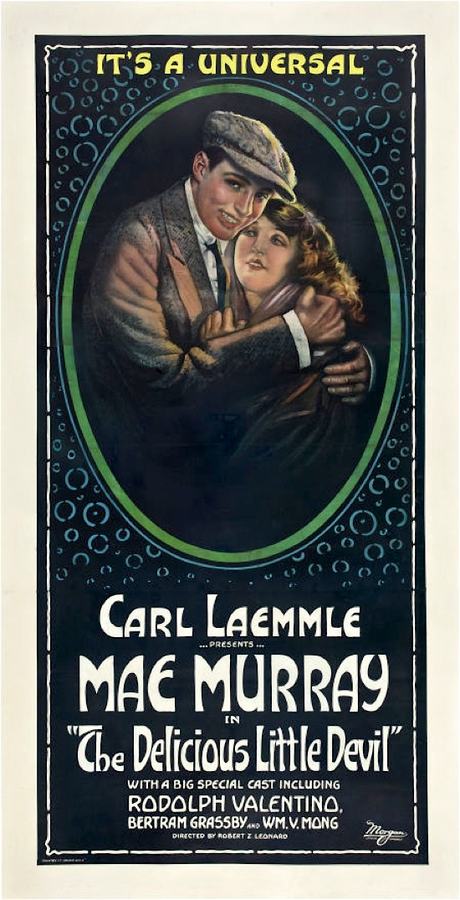
A definitive 6.3/10 rating for a film that redefined the boundaries of cult cinema. The Delicious Little Devil remains a cornerstone of transgressive art.
Stepping back into the cinematic tapestry of 1919, we encounter a shimmering, albeit morally ambiguous, jewel of the silent era: The Delicious Little Devil. This film, starring the incandescent Mae Murray and featuring an early, captivating turn from Rudolph Valentino, is far more than a simple melodrama; it's a vibrant social commentary, a fascinating exploration of class anxieties, and a testament to the burgeoning power of female agency on screen. The narrative, meticulously crafted by Harvey F. Thew and John B. Clymer, delves into themes that resonate with surprising clarity even a century later. It’s a compelling snapshot of an America grappling with its own evolving social mores, where the allure of the stage dancer clashed dramatically with the rigid expectations of established wealth.
At its heart, the film chronicles the trials of Mary McGuire, portrayed with exquisite vivacity by Mae Murray. Mary begins her journey in the precarious world of a hat-check girl, a role that immediately positions her on the fringes of economic security. Her sudden dismissal from this modest post is not just a plot device; it’s a stark reminder of the fragile livelihoods many women navigated in the early 20th century. This abrupt displacement forces Mary into a more audacious, and socially stigmatized, profession: a dancer in a bustling roadhouse. This transition is pivotal, marking her entry into a realm where beauty, performance, and perceived moral looseness intertwine. Murray, celebrated for her "bee-stung lips" and effervescent charm, brings an almost defiant spirit to Mary, refusing to let her circumstances define her inherent worth. Her performances on screen are not merely dance routines; they are declarations of self, imbued with an energy that transcends the often-judgmental gaze of society. Mae Murray's portrayal of Mary McGuire is nothing short of captivating. Her signature 'bee-stung' lips and vivacious expressions were legendary, but it was her ability to convey a spectrum of emotions – from the giddy excitement of new love to the crushing weight of public scorn – that truly cemented her star status. She wasn't just dancing; she was performing defiance, vulnerability, and an unwavering spirit. This era of silent film often demanded grand gestures, but Murray possessed a nuanced charm that made her characters feel remarkably real and relatable. Her physical comedy and dramatic prowess were both on full display, making Mary a character audiences could truly champion.
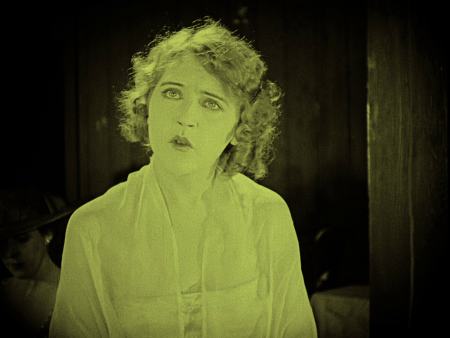
The roadhouse setting itself is a character, a crucible where different strata of society briefly intersect. It’s here that Mary encounters Jimmy Calhoun, the scion of a wealthy industrialist. Richard Cummings, as Jimmy, embodies the youthful idealism and perhaps naiveté often associated with characters from privileged backgrounds. His attraction to Mary is genuine, untainted by the class prejudices that will soon engulf their burgeoning romance. This innocent connection forms the emotional core of the film, setting the stage for the inevitable clash with Jimmy's formidable father. The narrative deftly establishes this contrast: the raw, unvarnished world of Mary versus the gilded, but often suffocating, world of the Calhoun family.
The central conflict erupts with the introduction of Jimmy’s father, a character steeped in the rigid social hierarchies of his time. Believing Mary to be nothing more than a calculating gold-digger, a "delicious little devil" manipulating his son for financial gain, he embarks on a relentless campaign to expose what he perceives as her true nature. This antagonist isn’t a mustache-twirling villain in the traditional sense; rather, he represents the entrenched anxieties of the upper class, fearful of dilution and perceived moral corruption from those deemed beneath them. His actions, while cruel, stem from a deeply ingrained belief system about status and suitability. This dynamic is not unlike the societal pressures explored in films such as The House Built Upon Sand, where social standing dictates destiny, or even the moral quandaries presented in A Fool There Was, though with a different focus on the 'vamp' archetype.
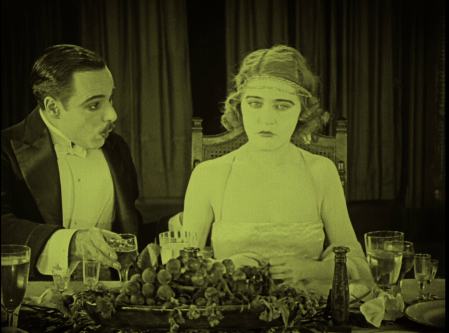
The father's machinations are designed to humiliate Mary, to strip away her dignity and reveal her, in his eyes, as a manipulative charlatan. This is where the film truly shines as a commentary on the power dynamics between wealth and vulnerability. Mary, despite her spirited resilience, is constantly battling against a system rigged against her. The emotional stakes are incredibly high, and Mae Murray masterfully conveys both Mary’s inner strength and her moments of despair. It’s a portrayal that transcends mere melodrama, offering a nuanced look at a woman fighting for her reputation and her love against overwhelming odds. The performance by William V. Mong, as the elder Calhoun, likely contributes significantly to the gravitas of this patriarchal figure, making his opposition feel genuinely formidable. The film’s exploration of class differences is particularly trenchant. The elder Calhoun’s disdain for Mary is palpable, a visceral reaction to the threat he perceives she poses to his family's carefully constructed world. This fear of social dilution, of the 'wrong' kind of person infiltrating the upper echelons, was a widespread anxiety in rapidly industrializing America.
While Mae Murray is undoubtedly the star, Rudolph Valentino’s appearance in The Delicious Little Devil is a cinematic footnote that has grown in significance over time. Playing a dancer in the roadhouse, Valentino, still years away from his iconic breakthrough in The Four Horsemen of the Apocalypse (1921), demonstrates flashes of the magnetic screen presence that would soon captivate millions. His role, though secondary, allows glimpses of the smoldering intensity and graceful physicality that would define his legendary career. For fans of silent film history, seeing Valentino in such an early, unpolished capacity offers a unique perspective on his evolution as a performer. It's a testament to the film's foresight, perhaps inadvertently, in casting such a future icon. Contrast this with the subdued, yet undeniably potent, presence of Rudolph Valentino. Even in this early role, his innate grace and smoldering gaze were evident. While his screen time is limited, every moment he is present, he subtly commands attention, hinting at the unparalleled stardom that lay just around the corner. His role as a fellow dancer, a peer to Mary, allows for a more democratic portrayal of the roadhouse environment, where talent and charisma were the true currency, regardless of prior social standing.
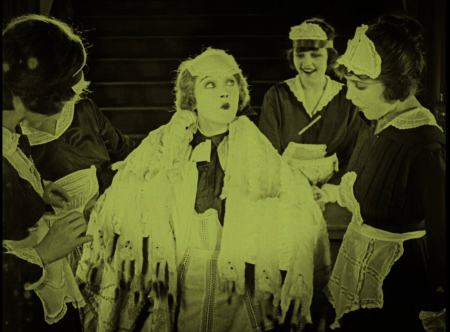
The supporting cast further enriches the film's texture. Actors like Satchel McVea, John George, and Ernie Adams, along with the musical contributions of I.S. McVea's Band, contribute to the authentic atmosphere of the roadhouse and the broader social milieu. Their presence grounds the fantastical elements of melodrama in a believable reality, highlighting the vibrant, diverse tapestry of urban life at the time. Even smaller roles, filled by performers such as Alice Knowland, Dick Sutherland, and Bertram Grassby, add layers to the narrative, creating a sense of a bustling, complex world beyond the central romantic conflict. The film’s ability to populate its world with memorable, if brief, appearances speaks to the strength of its casting and the collaborative spirit of early filmmaking, ensuring a rich, immersive experience.
In an era defined by visual storytelling, the direction of The Delicious Little Devil plays a crucial role in conveying its complex narrative without spoken dialogue. The film relies heavily on expressive acting, dramatic intertitles, and carefully composed shots to communicate emotion and plot. Mae Murray’s physicality, her nuanced facial expressions, and her captivating dance sequences are central to this visual language. The choreography, while perhaps not groundbreaking by today’s standards, was undoubtedly electrifying for contemporary audiences, showcasing Murray’s talent as a dancer and adding to the character’s rebellious allure. The uncredited director skillfully orchestrated these elements, allowing the visual narrative to speak volumes.
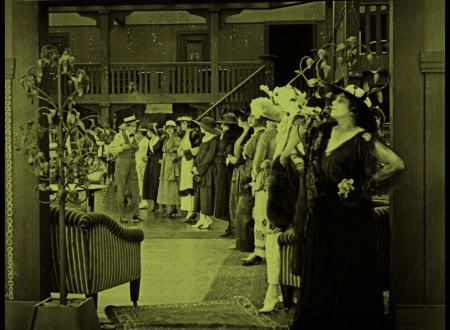
The visual aesthetics of the roadhouse scenes, with their implied music and lively patrons, contrast sharply with the more austere, opulent settings of the Calhoun family estate. This visual juxtaposition reinforces the film’s thematic exploration of class divisions. The costuming, too, plays a significant role, with Mary’s often flamboyant dancer attire standing in stark opposition to the more conservative fashion of the upper crust. Such visual cues were paramount in silent cinema, effectively communicating character, status, and mood without the aid of sound. The filmmakers understood the power of these visual shorthand techniques, creating a rich tapestry of social commentary through mise-en-scène and character presentation.
Beyond the surface melodrama, The Delicious Little Devil delves into enduring themes. Love, in its purest form, is pitted against the corrosive forces of prejudice and social expectation. Mary and Jimmy’s romance is portrayed as a genuine connection, a bond that defies the cynical machinations of the elder Calhoun. The theme of deception is also central, not just in the father’s misguided belief about Mary’s intentions, but potentially in Mary’s own presentation of self. Is she truly a "devil," or is she merely a woman striving for survival and dignity in a harsh world? The film encourages the audience to look beyond superficial appearances and societal labels.
Redemption, or at least the vindication of character, is another powerful undercurrent. Mary’s journey is one of proving her worth, not just to Jimmy’s father, but to herself and to the audience. Her resilience in the face of adversity, her refusal to be broken by the machinations against her, makes her a compelling heroine. This struggle for vindication can be seen echoed in other silent era dramas exploring similar character arcs, such as De Luxe Annie, where a woman's true identity and past are scrutinized, or even the moral awakening in Scandal. The film asks profound questions about perception versus reality, and the arbitrary nature of social judgment. Her journey is not just about finding love, but about asserting her fundamental right to respect and dignity, a struggle that resonates deeply. The societal pressures and moral ambiguities that Mary navigates are also present in the nuanced character studies found in films like The Lifted Veil, which probes deeper psychological states, or even the dramatic confrontations in The House Built Upon Sand, where social structures are rigorously tested by individual desire.
Viewing The Delicious Little Devil today offers invaluable insight into the nascent stages of Hollywood filmmaking. It showcases the dramatic conventions, acting styles, and narrative structures that captivated audiences a century ago. The film’s commercial success would have been driven by the star power of Mae Murray, a colossal figure in her day, and its ability to tap into popular anxieties and desires. The presence of future legend Rudolph Valentino, even in a supporting capacity, adds another layer of historical intrigue, demonstrating the fertile ground from which cinematic giants emerged.
The film’s writers, Harvey F. Thew and John B. Clymer, were instrumental in shaping the narrative landscape of early cinema. Their ability to craft a story that combined romantic drama with social commentary speaks to their skill in understanding audience appetites and contemporary concerns. Their work, along with that of the full cast including Edward Jobson, William H. O'Brien, Bert Woodruff, Ivor McFadden, Gertrude Astor, Martha Mattox, and Harry L. Rattenberry, contributes to a rich, immersive experience that transcends its silent nature.
Comparing it to other films of its era, like The Fugitive, which might explore themes of escape and identity, or Triumph, focusing on overcoming adversity, we see common threads woven through the fabric of early 20th-century storytelling. The examination of moral boundaries and societal judgment in The Liar (1918) or the exploration of identity in Mary's Lamb also find distant echoes here. Even international productions like La muerte civil or Gólyakalifa, despite their different cultural contexts, often grappled with universal human struggles against societal constraints or personal downfall, which are central to the appeal of The Delicious Little Devil. The film’s ability to stand alongside these contemporaries, while maintaining its unique flavor, speaks to its enduring quality.
Furthermore, the depiction of a woman navigating a challenging professional and romantic landscape was a recurring motif. Think of the independent spirit in The Yankee Way, or the dramatic choices in Die toten Augen. Even action-oriented films like The Knockout, while different in genre, share the common thread of individuals fighting against external forces. The intrigue and mystery in films such as Stuart Webbs: Das Panzergewölbe or the psychological depth of The Lifted Veil showcase the diverse storytelling approaches of the era, yet all contribute to the rich cinematic tapestry that The Delicious Little Devil is a part of. It’s a film that, despite its age, continues to offer a compelling narrative, stellar performances, and a profound look at the societal pressures and personal resilience of its time. Its legacy is not just in its historical value but in its timeless depiction of human struggle and triumph against the odds.
Ultimately, The Delicious Little Devil stands as a vibrant example of silent cinema’s capacity for rich character development and biting social critique. Mae Murray's performance is a tour de force, making Mary McGuire a figure of both vulnerability and strength. The film's examination of class, prejudice, and the pursuit of love against societal opposition remains as pertinent today as it was over a hundred years ago. It’s a reminder that the "delicious little devil" isn't just a character but a metaphor for the transformative power of those who dare to defy expectations and carve their own path, leaving an indelible mark on the silver screen and beyond.
IMDb —
1928
Community
Log in to comment.