DbcultAccessing Vault...
Cult Review
Senior Film Conservator
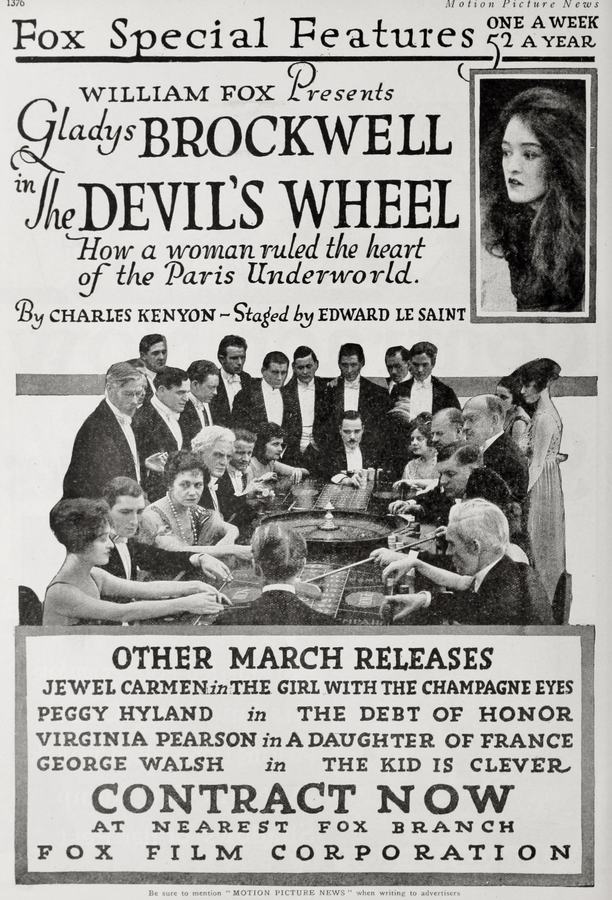
The year 1918 remains a pivotal epoch in the evolution of cinematic grammar, a time when the medium began to shed its stage-bound origins for a more fluid, psychological depth. In this fertile ground, Charles Kenyon sowed the seeds of a narrative both visceral and ethereal: The Devil's Wheel. This production by Fox Film Corporation is not merely a tale of crime and punishment; it is a sophisticated exploration of the malleability of human identity and the cyclical nature of fortune, mirroring the very roulette wheel that serves as its central motif.
The film opens with a sequence of calculated tension. The Marquis Henry De Montfort, portrayed with a fragile nobility by Andrew Robson, possesses a 'system'—a mathematical chimera designed to tame the stochastic whims of the roulette table. In the lexicon of early 20th-century cinema, such a device often serves as a MacGuffin, a catalyst for the darker impulses of the supporting cast. Here, Bertram Grassby’s De Guise embodies the quintessential villain of the era: refined, yet utterly devoid of moral scaffolding. His pursuit of the system is not merely financial; it is an attempt to master fate itself. When the struggle results in the Marquis’s death, the film shifts from a drawing-room drama into something far more subterranean and haunting.
The abduction of Blanche, played with a haunting vulnerability by Lucille Young, introduces the film's most compelling conceit: the amnesiac void. Unlike the more overt espionage themes found in The Eagle's Eye, The Devil's Wheel internalizes its conflict. Blanche’s loss of memory is not just a plot device; it is a visual and narrative cleansing. She becomes a ghost in her own life, a specter that haunts the gambling dens of Paris without the burden of her aristocratic ghost-self.
Enter 'The Stag' (William Scott). In the hierarchy of silent film heroes, The Stag represents the 'noble savage' of the urban jungle. His rescue of Blanche from De Guise is a moment of pure pugilistic cinema, a collision of the high-born and the low-born. The transition of Blanche from the Marquis's daughter to a denizen of the slums is handled with a gritty realism that predates the more stylized explorations of poverty seen in The Yellow Traffic. The chemistry between Young and Scott is palpable, even through the flickering grain of the remaining prints. They form a partnership that is both criminal and tender, a duality that elevates the film above standard melodrama.
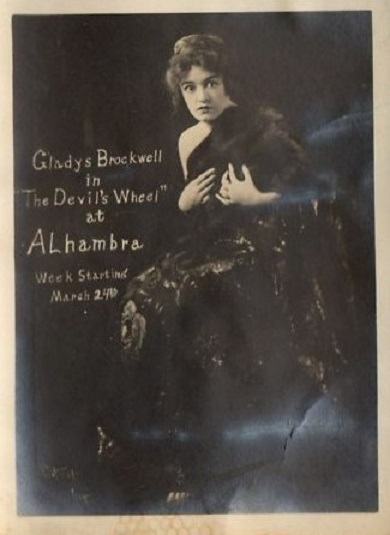
The irony of their ascension is delicious. Using the very system that caused her father’s death, Blanche—oblivious to its origin—conquers the high-society gambling halls that once would have been her natural habitat. This inversion of social order is a recurring theme in Kenyon’s work. While The Page Mystery dealt with the secrets of the elite, The Devil's Wheel allows the marginalized to infiltrate the elite using the elite’s own tools of logic and greed.
One of the most fascinating aspects of 1910s cinema is its fascination with 'pressure on the brain' as a panacea for narrative knots. When Blanche encounters De Guise and the suppressed trauma manifests as a violent outburst, the film pivots into the realm of medical melodrama. The stabbing is a visceral release of years of unconscious resentment. Her subsequent arrest leads to a surgical intervention that is depicted with a quasi-mystical reverence. This 'operation' serves as a literal and metaphorical trepanation of the soul.
This thematic obsession with the physical manifestation of psychological trauma can be seen in other international works of the period, such as the Russian drama Dvoynaya zhizn or the German Professor Nissens seltsamer Tod. However, Kenyon grounds this in a more traditional redemptive arc. The restoration of memory does not just bring back the past; it forces a choice between the high-born identity she lost and the low-born love she found.
Visually, The Devil's Wheel utilizes the chiaroscuro of the Paris slums to great effect. The contrast between the sun-drenched, opulent estates and the murky, smoke-filled gambling dens creates a visual dichotomy that reinforces the film's moral complexity. The cinematography captures the spinning wheel not just as a gambling tool, but as a vortex that draws all characters toward their inevitable reckoning. This visual motif is as potent here as the varied performances in Der neueste Stern vom Variété.
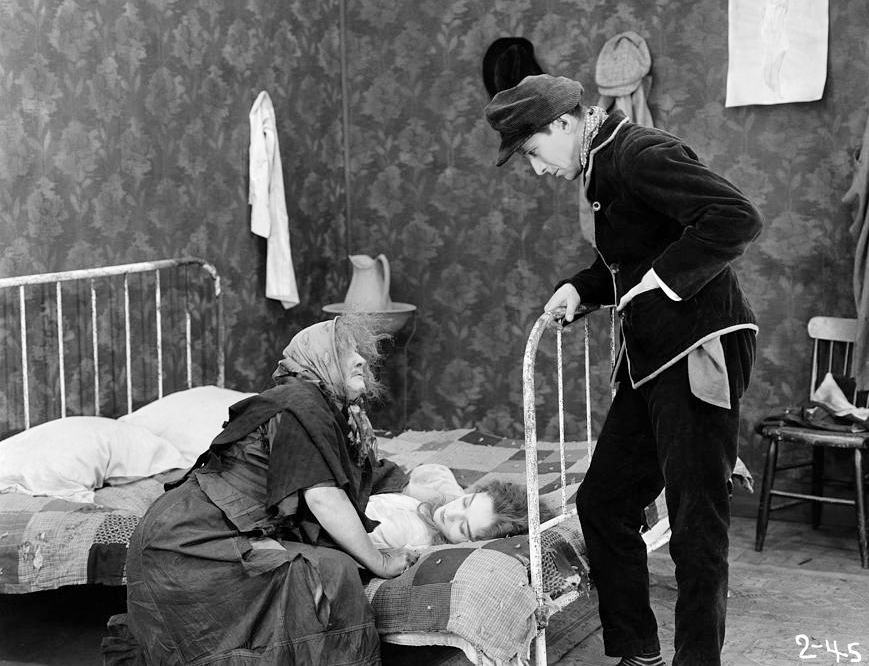
The film’s pacing is relentless. From the initial murder to the final rescue, Kenyon avoids the static compositions that plagued many of his contemporaries. There is a kinetic energy to the chase scenes and the underworld brawls that feels surprisingly modern. The Stag’s final rescue of Blanche from De Guise’s second abduction is a masterclass in silent film tension, utilizing cross-cutting that rivals the work of D.W. Griffith. It lacks the existential dread of The Soul's Cycle, opting instead for a more grounded, triumphant resolution.
While Lucille Young is the undisputed heart of the film, the supporting cast provides a rich tapestry of 1918 character archetypes. Gladys Brockwell and Pietro Buzzi inhabit their roles with a specificity that prevents them from becoming mere caricatures of the Paris underworld. The film shares a certain DNA with The Years of the Locust in its depiction of the hardships faced by those on the fringes of society, though it ultimately leans more toward romance than bleak social commentary.
In comparing it to other international titles like the Italian Ivonne, la bella danzatrice or the Spanish-flavored The Spanish Jade, one notices that The Devil's Wheel is uniquely American in its optimism. Despite the murder, the amnesia, and the kidnapping, the film concludes with the possibility of the 'straight life.' It suggests that the wheel of fate can be stopped by an act of will, a sentiment echoed in Clover's Rebellion.
To watch The Devil's Wheel today is to witness the birth of the modern thriller. It balances the high-stakes intrigue of Les chacals with a deeply personal story of identity. Unlike the meta-narrative of My Wife, the Movie Star or the ephemeral nature of El amor que huye, this film leaves a lasting impression through its structural integrity and emotional resonance.
Verdict: The Devil's Wheel is a staggering achievement of the late silent era. It navigates the treacherous waters of amnesia and class warfare with a grace that few films of the period managed. Lucille Young delivers a performance of remarkable nuance, and Charles Kenyon’s screenplay remains a blueprint for the psychological noir. It is a film that demands to be seen not just as a historical artifact, but as a living, breathing piece of cinematic art that continues to spin its web of intrigue long after the final frame.
IMDb —
1917
Community
Log in to comment.