DbcultAccessing Vault...
Cult Review
Senior Film Conservator
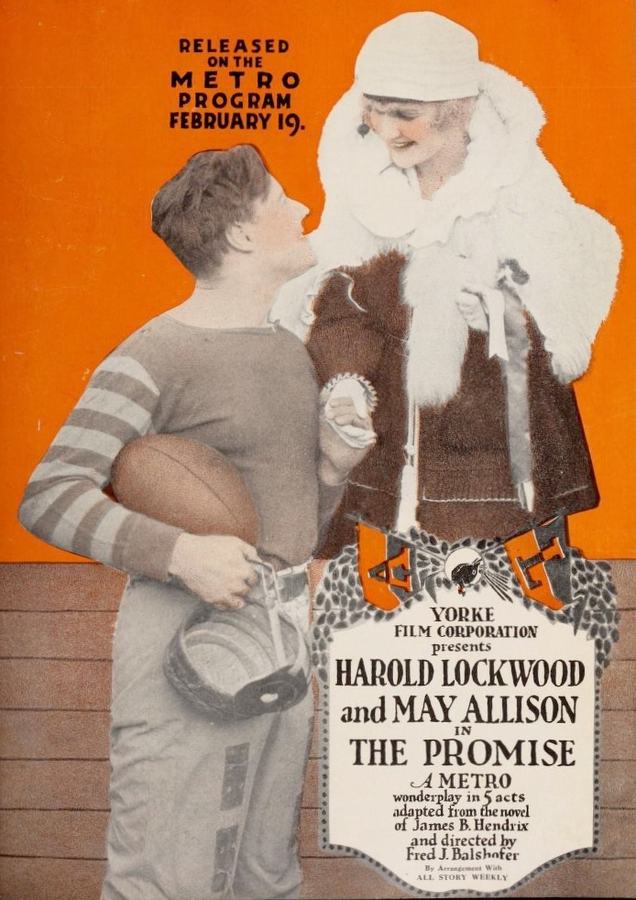
Stepping back into the nascent days of cinematic storytelling, we encounter The Promise, a film from 1917 that, despite its century-old vintage, still pulsates with a raw, earnest energy. In an era when the moving picture was rapidly evolving from novelty to a potent narrative art form, this particular silent drama distinguishes itself through its ambitious scope and its profound exploration of personal transformation. It's more than just a period piece; it’s a vivid snapshot of early American cinema’s capacity for grand romanticism, moral quandaries, and breathtaking frontier spectacle. For those of us who appreciate the foundational works of film, The Promise offers a compelling journey not just into a bygone cinematic style, but into the very heart of human resilience and the complex tapestry of duty and desire.
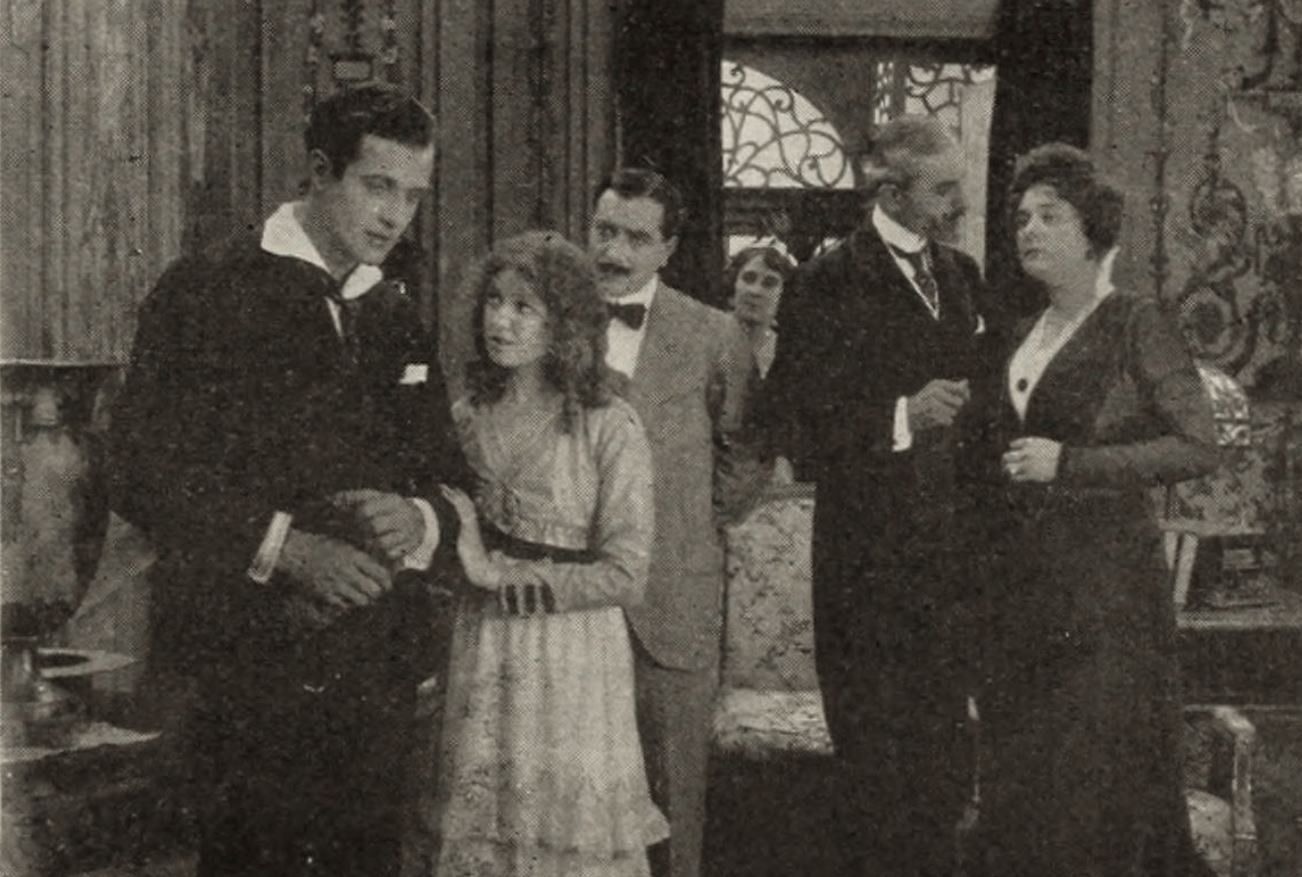
Our narrative begins in the gilded cages of urban leisure, introducing us to Bill Carmody (portrayed with a compelling blend of youthful naiveté and burgeoning strength by Harold Lockwood), a scion of privilege whose existence seems to drift aimlessly across Broadway’s opulent restaurants. Bill embodies a familiar archetype: the well-meaning but ultimately feckless young man, ensnared by comfort and lacking direction. His initial misstep—a catastrophic lapse of memory leading to the non-delivery of crucial bonds—plunges his family into financial turmoil and, more significantly, shatters his relationship with the spirited Ethel Manton (the captivating May Allison). This moment of profound failure acts as the catalyst for his radical decision: to abandon his comfortable, yet suffocating, life and forge his own path, to "make good" on his own terms. This isn't merely a geographical relocation; it's a profound spiritual migration, a self-imposed exile designed to strip away the veneer of inherited status and expose the true character beneath. The irony, of course, is that he carries the very emblem of his disgrace, the forgotten bonds, mistakenly believing them to be Ethel’s cherished letters. This subtle narrative device underscores his deep-seated affection for Ethel, even as his actions have inadvertently pushed her away, setting the stage for a dramatic revelation later on.
The westward journey itself is fraught with peril, a stark contrast to the cushioned existence Bill has left behind. A harrowing train wreck serves as a brutal initiation into the unforgiving wilderness. It is here, amidst the chaos and splintered steel, that Bill's dormant heroism awakens. He single-handedly saves the life of D.S. Appleton (played by John Steppling), a formidable lumber baron, a man whose discerning eye sees beyond Bill’s disheveled appearance to the inherent goodness and latent potential within. Appleton, a figure of patriarchal authority and unwavering principle, becomes Bill’s unlikely mentor. Recognizing the young man's desire for honest work but respecting his refusal to disclose his identity, Appleton dispatches Bill to the remote and notoriously rigorous logging camp overseen by Buck Moncrossen (the formidable Gibson Gowland). This isn't merely a job placement; it’s a deliberate test, an assignment to a crucible where Appleton believes "stern discipline" will temper Bill's raw spirit into something truly resilient. This phase of the narrative resonates with other tales of urbanites finding themselves in the wilderness, such as the struggles depicted in The Web of Life, though The Promise infuses it with a more explicit redemptive arc.
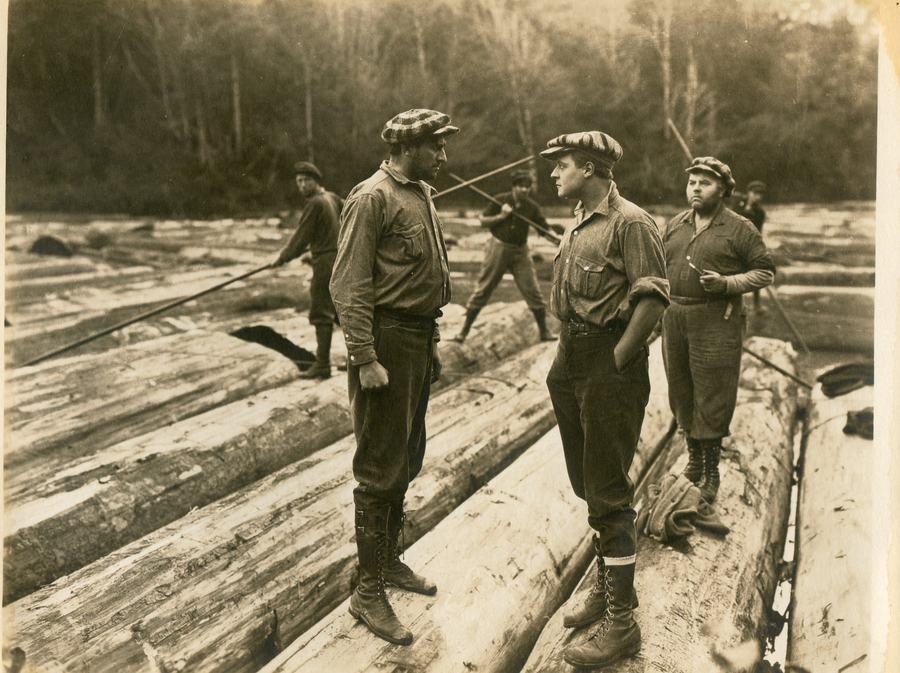
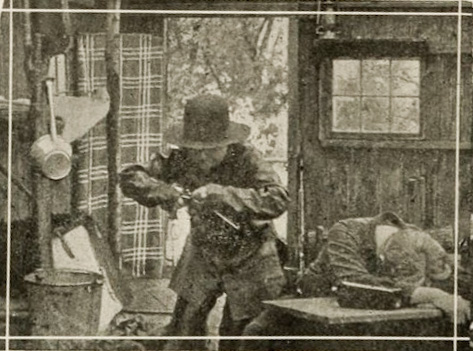
Moncrossen's camp is a harsh, elemental world, a perfect foil for Bill's refined sensibilities. Here, the clash of wills between Bill and the brutish, domineering Moncrossen is inevitable. Bill, no longer the Broadway dilettante, stands his ground, his innate sense of justice and fairness refusing to bend to Moncrossen's tyrannical rule. This confrontation reveals Moncrossen’s true nature: a bully with a cowardly streak, whose hatred for Bill festers and grows with each challenge to his authority. This adversarial relationship forms the dramatic backbone of the film's middle act, elevating it beyond a simple tale of self-improvement into a compelling struggle against injustice and moral corruption in the wild. The dynamic is reminiscent of other frontier narratives where a new arrival challenges an established, corrupt power, though The Promise grounds this conflict in a deeply personal animosity.
Meanwhile, Ethel’s narrative thread runs parallel, a testament to the film's intricate plotting. Disheartened by Bill's apparent abandonment, she succumbs to the allure of St. Ledger (George Fisher), a fortune hunter whose superficial charm masks a mercenary heart. Their cruise to Palm Beach symbolizes a fleeting escape, a momentary diversion from her heartache. However, her brother, Charlie (Paul Willis), remains a steadfast beacon of loyalty to Bill, constantly thwarting St. Ledger’s advances and subtly reminding Ethel of her true affections. Ethel’s eventual disillusionment with the fortune hunter is both predictable and satisfying, paving the way for her own journey north, a fateful invitation from Appleton to inspect his lumber holdings. This convergence of storylines is expertly handled, bringing our protagonists back into proximity, albeit still burdened by misunderstanding.
The introduction of Jeanne (Leota Lorraine), a young Indian woman, adds a crucial layer of complexity and introduces the titular "promise" that drives much of the film's later drama. Moncrossen, in his depravity, takes a lecherous fancy to Jeanne, and it is Bill who, once again, steps in to protect the vulnerable. This act of chivalry further inflames Moncrossen’s already potent hatred, setting the stage for a deadly revenge plot. The spring drive, a visually spectacular and inherently dangerous operation where logs are transported downriver to the mills, becomes the arena for Moncrossen's malevolent scheme. Bill is almost killed when a log jam is dynamited, hurled into the churning river, and presumed drowned by his nemesis. This sequence, undoubtedly a highlight of the film's production, demonstrates the impressive scale and practical effects achievable in early cinema, creating genuine suspense and peril. Much like the dramatic river sequences in The Juggernaut, the raw power of nature is harnessed to amplify the human drama.
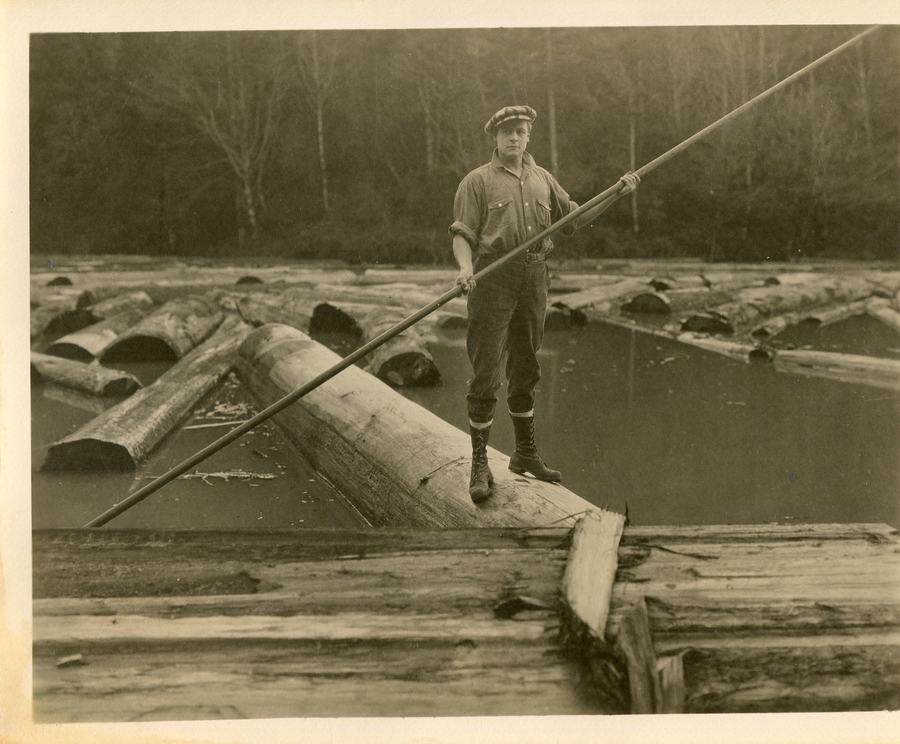
Miraculously, Bill is rescued by Jeanne, who nurses him back to health in her secluded tepee. During his recovery, a deep bond forms between them, culminating in Jeanne’s confession of love and Bill’s solemn promise: that he will come to her aid if Moncrossen ever threatens her again. This pledge, born of gratitude and genuine affection, becomes a pivotal ethical dilemma for Bill. It represents the ultimate test of his newfound integrity and commitment, but also a tragic impediment to his reconciliation with Ethel. His subsequent move to another of Appleton's camps further upriver only delays the inevitable collision of these two intertwined narrative strands.
The fateful reunion between Ethel and Bill at Appleton’s holdings is bittersweet. Their misunderstandings, rather than dissipating with proximity, initially seem to intensify, a testament to the emotional baggage they both carry. Ethel, however, begins to perceive the profound change that has taken place in Bill, the transformation from callow youth to a man of substance and courage. Just as a flicker of hope for their reconciliation ignites, Jeanne arrives, desperate and distraught, reporting Moncrossen’s renewed threats. Without a word of explanation to Ethel, Bill, bound by his solemn oath, departs with Jeanne. This moment is a masterclass in silent film melodrama, relying on visual cues and the audience's understanding of Bill's character to convey the depth of his internal conflict. Ethel’s heartbreak is palpable, her hope cruelly dashed by what appears to be a betrayal. It is only through the intervention of Fallon (Lester Cuneo), a loyal friend of Bill's, who reveals the true nature of the "promise," that Ethel’s despair begins to transform into understanding and renewed admiration. This narrative device, where crucial information is withheld and then dramatically revealed, is a hallmark of the era, ensuring maximum emotional impact.
The film crescendos in a visceral and ultimately cathartic confrontation. Moncrossen, true to his villainous form, imprisons Jeanne’s elderly grandmother, a cruel act designed to lure Bill into a final, deadly showdown. Bill, unwavering in his commitment, confronts Moncrossen, leading to a brutal, almost primal fight to the death. This sequence is a testament to the physical prowess and dramatic intensity of the actors, conveying raw emotion and desperate struggle without a single spoken word. Bill emerges victorious, not just physically, but morally, utterly breaking the spirit of the big bully. It's a symbolic triumph of integrity over depravity, of the reformed man over the irredeemable brute. The resolution of this conflict is deeply satisfying, providing a clear demarcation between good and evil, a common trope in classic cinema, often seen in Westerns like Durand of the Bad Lands or even the stark moralities of The Iron Hand.
Yet, the film refuses to offer a simplistic, wholly conventional happy ending. Jeanne, her heart full of gratitude and love, wishes to go to Bill after the contest, but her wise old grandmother intervenes. In a poignant and culturally significant moment, the grandmother articulates a "divine law" – the immutable truth that "the red shall not mix with the white." This declaration, while jarring to modern sensibilities, reflects the prevailing societal attitudes and racial divides of the early 20th century. It serves as a powerful, if uncomfortable, reminder of the historical context in which the film was made, adding a layer of tragic realism to Jeanne’s sacrifice. It's a moment that elevates the film beyond a mere romance, touching upon deeper, more complex societal structures, similar to the poignant social commentary found in films like Tess of the Storm Country, which often grappled with class and societal barriers. This refusal to simply ignore such a significant social barrier, even in a melodrama, gives the film a certain gravitas and historical authenticity.
With his promise fulfilled and the path cleared by Jeanne's grandmother's wisdom, a complete and heartfelt reconciliation between Ethel and Bill finally unfolds. Their journey, marked by separation, misunderstanding, and personal growth, culminates in a union forged in adversity. The film culminates with the heartwarming news that Bill’s father, having finally learned the truth about the missing bonds and witnessing his son's profound transformation, comes to express his overwhelming joy in Bill’s "regeneration." This final scene neatly ties up the loose ends, offering a satisfying sense of closure and affirming the film’s central theme of redemption. It’s a powerful testament to the idea that true worth is not inherited but forged through trials and tribulations, a message that resonated deeply with audiences then and continues to hold relevance today.
As a piece of early cinema, The Promise stands as a remarkable artifact, showcasing the storytelling prowess and technical ambition of its era. Directed by Fred J. Balshofer, who also co-wrote the screenplay with James B. Hendryx and Richard V. Spencer, the film demonstrates a sophisticated understanding of dramatic pacing and character development, even within the constraints of the silent medium. The performances, particularly Lockwood's nuanced portrayal of Bill's evolution and Allison's expressive depiction of Ethel's emotional turmoil, are compelling. Gibson Gowland as Moncrossen delivers a truly menacing villain, a performance that grounds the conflict in palpable threat. The scenic grandeur of the lumber camps and the action sequences, especially the train wreck and log jam, are executed with an impressive degree of realism for the time, pulling the audience into the rugged world of the American frontier.
The film's exploration of themes like duty, sacrifice, and the transformative power of hardship remains timeless. Bill's journey from indolence to integrity serves as a powerful moral compass, illustrating that true character is forged in the crucible of challenge. The "promise" itself, initially a burden, ultimately becomes the vehicle for his redemption and the catalyst for his true love’s understanding. While the racial attitudes expressed through Jeanne’s grandmother’s dialogue are a challenging aspect for contemporary viewers, they offer invaluable insight into the social fabric of the period, prompting reflection on how far societal norms have, or haven't, evolved. It's a reminder that even in escapist entertainment, reflections of reality, however uncomfortable, can surface.
In conclusion, The Promise is far more than a historical curiosity. It is a robust, emotionally resonant drama that successfully blends adventure, romance, and a profound narrative of personal growth. For aficionados of early American cinema, or anyone seeking a story of redemption told with earnest conviction and impressive scope, this film is an essential viewing. It promises, and delivers, a journey into the heart of a man, and an era, finding its footing amidst the wild frontiers of both land and soul. Its legacy lies not just in its impressive technical achievements for the time, but in its enduring message about the power of personal accountability and the unbreakable bonds of honor. It stands tall among its contemporaries, a testament to the foundational strength of cinematic storytelling, much like the enduring appeal of Davy Crockett in its own rugged way, or the dramatic human struggles explored in Only a Factory Girl, though with a grander, more expansive canvas. A true gem, waiting to be rediscovered by a new generation of film lovers.

IMDb 7.4
1921
Community
Log in to comment.