DbcultAccessing Vault...
Cult Review
Senior Film Conservator
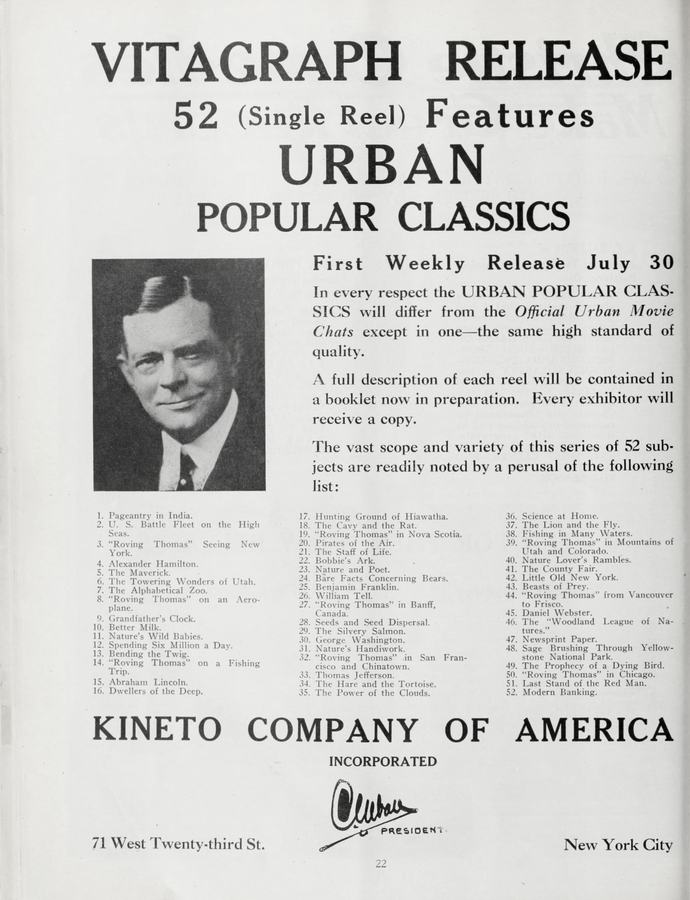
Few artifacts from the silent era possess the harrowing resonance of The Staff of Life. In this 1918 masterpiece, J. Stuart Blackton abandons the whimsical trickery of his earlier career to confront the jagged edges of American industrialism. The film is not merely a story; it is a threnody for the working class, a visual polemic that utilizes the literal and figurative weight of bread to measure the soul of a nation.
The cinematography captures the undulating wheat fields with a reverence that borders on the liturgical. Here, the 'staff of life' is presented in its embryonic state—pure, golden, and full of promise. However, as the scene shifts to the claustrophobic confines of the grain exchange, the aesthetic undergoes a violent transformation. The sea-blue tinting of the night scenes evokes a chilling isolation, contrasting sharply with the dark orange hues of the hearth and the bakery fires. Unlike the more theatrical approach seen in Salome, Blackton opts for a grounded realism that anticipates the Soviet montage movement.
The central conflict mirrors the socio-economic upheavals of the post-WWI landscape. We see the protagonist, portrayed with a haunting vulnerability, navigating a world where her very survival is a pawn in a larger financial game. This thematic preoccupation with the commodification of human life invites a fascinating comparison to To the Highest Bidder, yet Blackton’s work feels more urgent, more tethered to the fundamental biological necessity of food rather than the abstract auctions of romance.
The director’s use of deep focus allows for a layering of narrative information that was revolutionary for its time. In the foreground, we witness the micro-tragedies of a starving family, while the background remains occupied by the indifferent bustle of the city. This technique creates a sense of inescapable systemic pressure. While films like Strike would later perfect the imagery of the oppressed masses, The Staff of Life focuses on the quiet, agonizing erosion of dignity that precedes open revolt.
Consider the sequence in the bakery—a subterranean inferno where the heat seems to radiate through the silver nitrate. The soot-stained faces of the workers are etched with a fatigue that no title card could fully articulate. This visceral depiction of labor stands in stark contrast to the lighthearted escapades found in Are You a Mason? or the whimsical artifice of Prunella. Here, the stakes are existential.
The acting style eschews the broad gesticulations common in 1910s melodrama. Instead, the cast delivers a performance of remarkable restraint. The lead actress utilizes her eyes to convey a spectrum of despair, moving from the hopeful glimmers of a harvest morning to the hollow stare of the dispossessed. Her journey through the urban labyrinth evokes the same sense of fated tragedy found in Dawn, though the catalyst here is economic rather than martial.
The supporting characters, particularly the 'Wheat King' antagonist, are not merely caricatures of villainy. They represent the cold, logical conclusion of a market devoid of empathy. This nuanced characterization elevates the film above mere propaganda. It is a sophisticated critique of how power structures insulate themselves from the consequences of their decisions. Even in the film's more tender moments, there is an underlying tension, a reminder that the 'staff' can easily become a cudgel.
The set design plays a crucial role in establishing the film's dichotomous world. The soaring heights of the skyscrapers, rendered in sharp, intimidating angles, look down upon the crumbling tenements. This verticality emphasizes the hierarchy of the era. When we compare this to the pastoral settings of Le lys du Mont Saint-Michel, the industrial landscape of The Staff of Life feels like a modern necropolis. The shadows are long and oppressive, frequently swallowing the characters whole, suggesting a world where the individual is eclipsed by the machine.
Furthermore, the recurring motif of the scales—used both in the bakery and the courtroom—serves as a constant reminder of the imbalance of justice. It is a visual metaphor that resonates with the same gravitas as the investigative themes in Beatrice Fairfax or the analytical coldness of The Golden Pince-Nez. However, Blackton applies this logic to the very sustenance of the people, making the 'crime' a collective societal failure rather than a singular act of deviance.
As the final reel unfolds, the resolution offers no easy comforts. There is no miraculous restoration of the status quo, for the status quo was the problem to begin with. The film leaves the viewer with a haunting question about the cost of progress. It lacks the cynical bite of Painted Lips, opting instead for a profound, mournful dignity. The ending is a call to awareness, a flickering light in the darkness of the early 20th century.
In the broader context of silent cinema, The Staff of Life occupies a space between the narrative experimentation of Pariserinnen and the moral gravity of The Battle of Love. It is a work of immense technical skill and even greater heart. While other films of the period like The Tale of a Wag or Passa il dramma a Lilliput might have sought to entertain through novelty, Blackton sought to enlighten through truth.
To watch this film today is to witness the birth of social realism in cinema. It is a reminder that the struggles for equity and basic needs are not new, but are woven into the very fabric of our history. Like the solitary rider in When a Man Rides Alone, the film stands as a lone, courageous voice against an indifferent horizon, demanding to be heard, demanding to be seen, and reminding us that bread, in all its simplicity, is the most political substance on earth.

IMDb 6.1
1921
Community
Log in to comment.