DbcultAccessing Vault...
Cult Review
Senior Film Conservator
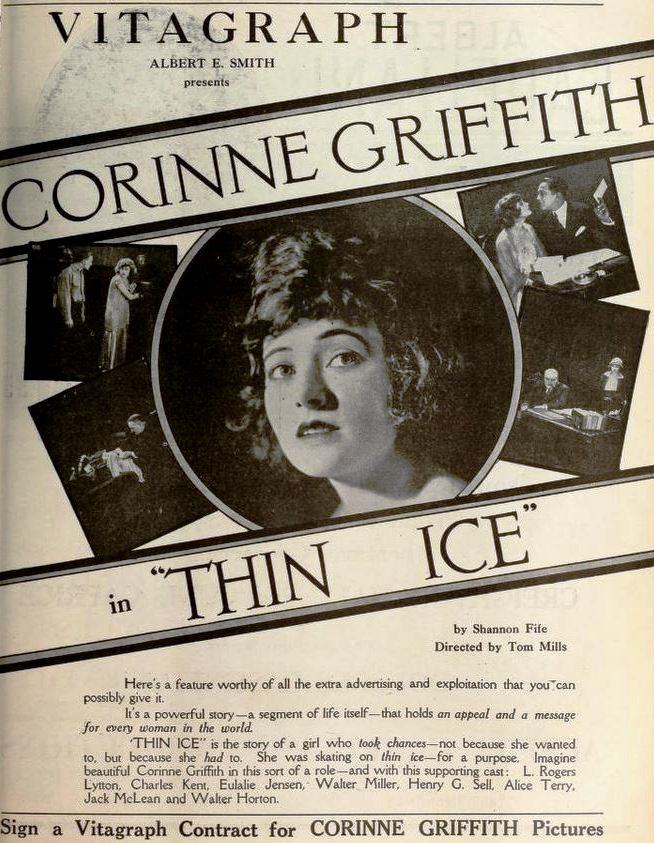
The 1919 cinematic landscape was often characterized by a burgeoning sophistication in narrative structure, and few films from this transitional epoch illustrate the tension between Victorian morality and modern psychological realism as poignantly as Thin Ice. Directed with a keen eye for the claustrophobia of social expectation, the film serves as a vehicle for Corinne Griffith, whose ethereal presence masks a steely resilience. This is not merely a melodrama of the 'damsel in distress' variety; it is a nuanced interrogation of the legal and social structures that bind women to the transgressions of the men in their lives.
At the heart of the film lies a harrowing exploration of the 'sins of the brother.' Alice Winton’s initial sacrifice—signing a promissory note to cover her brother’s theft—sets in motion a domino effect of tragedy. The antagonist, Benjamin Graves, portrayed with a sinister, oily charm by L. Rogers Lytton, represents the predatory nature of early 20th-century capitalism. His stock manipulation isn't just a financial crime; it’s a form of spiritual violence that literally kills Alice’s father. This intersection of corporate greed and personal ruin mirrors themes found in The Man o' War's Man, yet Thin Ice feels significantly more intimate and visceral.
One of the most intellectually stimulating aspects of the script by Shannon Fife and G. Marion Burton is the ideological clash between Alice’s husband, Robert Burton, and District Attorney Jeffrey Miller. Burton, the criminologist, embodies the harsh, deterministic views of the era—the belief that criminality is an inherent, indelible trait. His mantra, "once a thief, always a thief," serves as a looming shadow over Alice’s secret. In contrast, Miller represents the burgeoning reformist movement, attempting to rehabilitate Ned, a petty thief. This philosophical tug-of-war provides a backdrop that elevates the film above standard genre fare like Hooverizing or the more whimsical Nobody Home.
The irony, of course, is that Alice—a woman of impeccable social standing—is forced into the very behavior her husband decries. The sequence in which she burglarizes Miller’s safe is a masterclass in silent suspense. The lighting, utilizing the limited technology of 1919, creates a stark, high-contrast environment that mirrors Alice’s internal fracturing. When Ned catches her, the role reversal is profound. The 'thief' becomes the protector, while the 'virtuous wife' becomes the criminal. This subversion of status is a recurring motif in the era’s best works, such as The Marble Heart, where social facades are systematically stripped away.
Corinne Griffith’s performance in Thin Ice is a revelation of restraint. In an age often criticized for histrionic acting, Griffith employs a subtle gestural vocabulary. Her eyes convey the weight of the promissory note and the terror of Graves’s forged letters with a clarity that requires no title cards. She navigates the transition from a devoted daughter to a blackmailed wife with a grace that explains her moniker as the 'Orchid of the Screen.' Her chemistry with Walter Miller (as Jeffrey Miller) provides a warmth that is conspicuously absent from her interactions with her on-screen husband, highlighting the emotional sterility of a marriage built on rigid judgment rather than empathy.
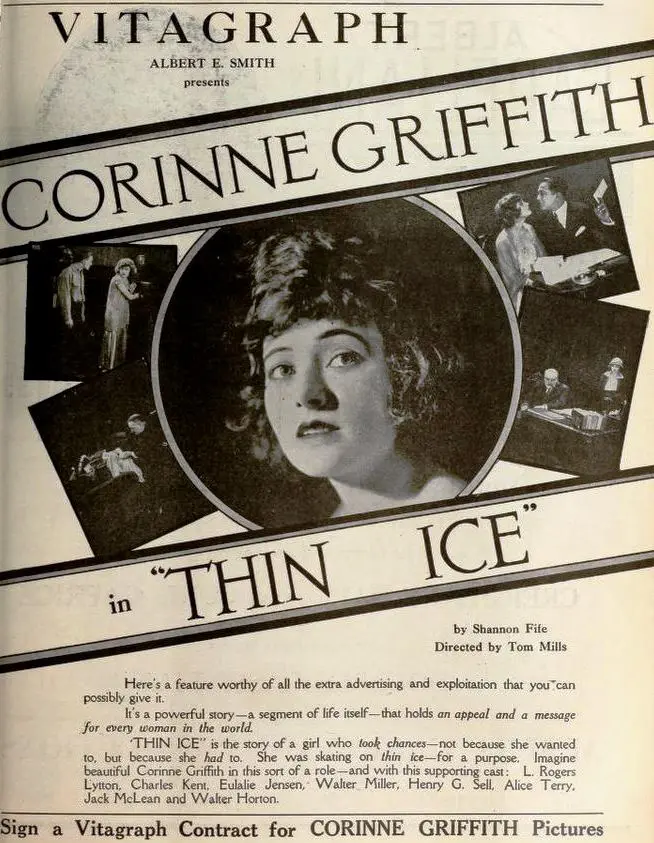
The supporting cast, including Alice Terry and Eulalie Jensen, rounds out a world that feels inhabited and lived-in. Jensen, in particular, as the jilted Rose La Vere, delivers a powerhouse finale. Her entrance at the end of the film—staggering, poisoned, and defiant—is a haunting image that lingers long after the credits roll. It is a moment of raw, unadulterated melodrama that achieves a sense of poetic justice similar to the tragic resolutions in Romeo and Juliet, yet grounded in the grubby reality of early 20th-century urban life.
While the director’s name is often overshadowed by the stars in this period, the staging of Thin Ice suggests a sophisticated understanding of spatial dynamics. The way Graves is positioned in his apartment—surrounded by the trappings of wealth built on the ruins of others—contrasts sharply with the austere, almost clinical environment of the District Attorney’s office. The film uses architecture to signify power; the safe is not just a container for documents, but a repository of life-altering secrets. The cinematography captures the textures of the era, from the heavy drapes of the Winton home to the cold steel of the legal archives, creating a sensory experience that rivals contemporary efforts like The Crystal Gazer or The Key to Yesterday.
The pacing of the film is remarkably modern. It avoids the lethargy common in early features, instead opting for a brisk, almost thriller-like progression. The blackmail plot is introduced with a sense of urgency that propels the viewer through the second act. The forged letters are a brilliant narrative device, playing on the contemporary anxieties regarding female reputation and the ease with which a woman’s social standing could be annihilated by a single malicious act. It’s a theme that resonates with the social critiques found in A Gay Old Dog, though handled here with much more gravity.
Perhaps the most subversive element of Thin Ice is its treatment of Ned. By having the 'criminal' Ned take the fall for Alice, the film directly challenges Robert Burton’s static view of morality. Ned’s act of self-sacrifice is the ultimate refutation of the "once a thief" theory. It suggests that character is not a fixed point but a fluid state, capable of profound transformation under the right circumstances. This humanistic approach to criminology was quite radical for 1919 and places the film in conversation with later social dramas like Moondyne or even the satirical Ruggles of Red Gap, which also deal with the reconstruction of identity.
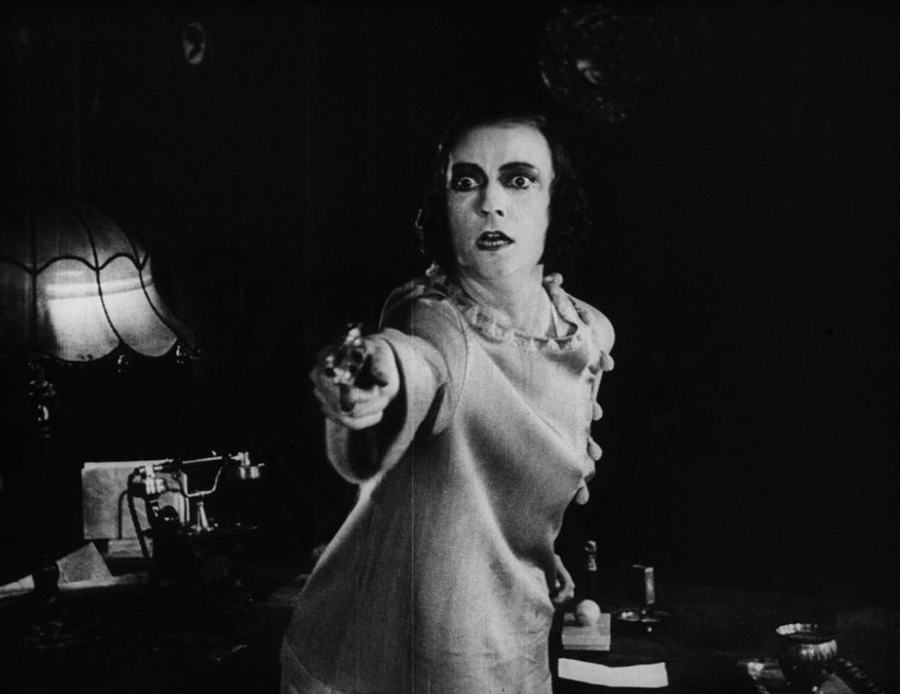
The climax, set in Graves's apartment, is a whirlwind of coincidence and consequence. The discovery of Graves’s body by Alice, followed by the immediate arrival of the police, is a classic noir setup. However, the resolution via Rose La Vere’s confession adds a layer of tragic irony. Rose, who has been destroyed by Graves just as Alice was, becomes the unexpected savior. Her death is a sacrificial act that cleanses the narrative of its toxicity, allowing Alice and her brother to emerge from the 'thin ice' they have been skating on for the duration of the film. It is a resolution that feels earned, avoiding the saccharine 'happy endings' of lesser films like One Day or The Marquis and Miss Sally.
In viewing Thin Ice today, one is struck by its relevance. The themes of financial fraud, the fallibility of the justice system, and the heavy price of family loyalty are timeless. While it shares some stylistic DNA with international contemporaries like the Swedish Stormfågeln or the Hungarian Jó éjt, Muki!, Thin Ice remains a quintessentially American drama of the era—obsessed with the intersection of money, morality, and the law. It is a compelling testament to the power of silent cinema to convey complex ethical dilemmas through visual storytelling and raw emotional honesty. Corinne Griffith’s performance alone makes it an essential watch for any serious student of film history, but the script’s daring critique of penological dogmatism ensures its place as a work of lasting intellectual value.
IMDb —
1928
Community
Log in to comment.