DbcultAccessing Vault...
Cult Review
Senior Film Conservator
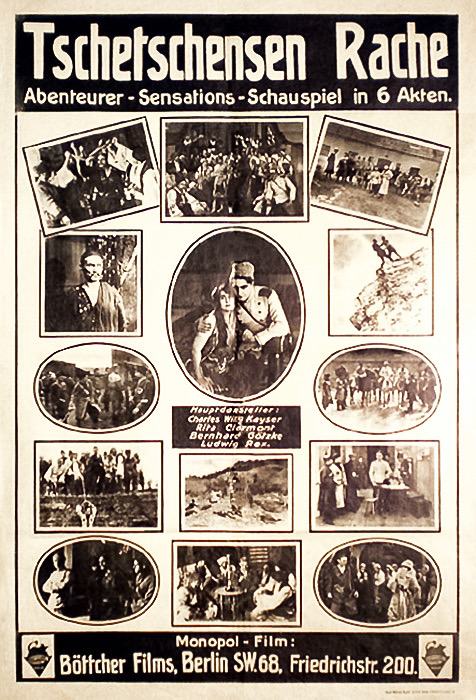
In the pantheon of early German cinema, few artifacts shimmer with the peculiar, dark luminescence of Tschetschensen-Rache. This 1920 production, surfacing during the volatile infancy of the Weimar Republic, serves as a fascinating window into the European fascination with the 'exotic' East—a fascination that was often a surrogate for exploring the internal anxieties of a post-war nation. Directed with a keen eye for shadow and spatial tension, the film transcends its pulpy origins to become a monumental study of human fragility under the weight of archaic social codes.
The narrative architecture of Tschetschensen-Rache is built upon the foundation of the Vendetta. While contemporary audiences might find the pacing deliberate, there is an intentionality to every frame that demands a sophisticated level of engagement. Unlike the more frantic energy found in Jack and the Beanstalk, which targets a sense of wonder, this film aims for the solar plexus of tragedy. The Chechen landscape—recreated with surprising atmospheric fidelity in the studios of Berlin—becomes a character in its own right: jagged, indifferent, and ancient.
Bernhard Goetzke, an actor whose face seemed carved from the very granite of the Expressionist movement, delivers a performance of subterranean power. His presence here echoes his later work in Fritz Lang’s masterpieces, yet in this specific context, his stoicism feels more localized, more grounded in the specific agony of a man bound by blood. When we compare his trajectory to the maritime struggles found in Martin Eden, we see a similar thematic preoccupation with the individual versus the environment, though Goetzke’s struggle is internal and spiritual rather than social and intellectual.
Rita Clermont provides the emotional fulcrum of the film. In an era where female roles were often relegated to the damsel or the vamp, Clermont imbues her character with a quiet, simmering agency. Her interactions with Charles Willy Kayser and Ludwig Rex create a volatile chemistry that drives the middle act. There is a specific scene involving a clandestine meeting that mirrors the psychological claustrophobia of The Mirror, where the characters' reflections—both literal and metaphorical—betray their outward composure.
The cinematography utilizes the chiaroscuro techniques that would eventually define the noir genre. Shadows don’t just fall; they consume. This visual language is particularly effective during the sequences of 'The Revenge,' where the camera lingers on the anticipation of violence rather than the act itself. This restraint elevates the film above the mere sensationalism seen in Amor fatal, positioning it instead as a precursor to the psychological thrillers of the late 1920s.
To understand the gravity of Tschetschensen-Rache, one must look at its contemporaries. It shares a certain DNA with A Fight for Freedom; or, Exiled to Siberia, particularly in its depiction of the vast, unforgiving East as a place where European morality goes to die. However, where the latter focuses on the political dimensions of exile, Schölpert’s script for Tschetschensen-Rache focuses on the biological and cultural imperatives that drive men to madness. It is less about the state and more about the soul.
The inclusion of Gerhard Ritterband, the perennial 'wunderkind' of the era, adds a layer of pathos that prevents the film from becoming too detached. His youthful energy provides a stark contrast to the weary cynicism of the adult cast. This dynamic is somewhat reminiscent of the generational friction in Seventeen, albeit transposed into a world of daggers and blood-oaths rather than adolescent romance.
Technically, the film is a marvel of its period. The tinting and toning—deep ambers for the interiors and cold, sea blues for the nocturnal mountain passes—create a sensory experience that modern digital restoration often struggles to replicate. The use of sea blue (#0E7490) in the night sequences creates an almost hallucinogenic atmosphere, making the viewer feel the biting cold of the Caucasian wind. This aesthetic choice is far more sophisticated than the flat lighting of The Gold Cure.
Furthermore, the editing rhythm reflects a sophisticated understanding of suspense. The cross-cutting between the pursuer and the pursued creates a tightening noose of tension that is almost unbearable. It is a technique that mirrors the desperate momentum of The Struggle, yet here it is applied to a landscape of epic proportions rather than the confines of a domestic drama.
Critics often overlook the socio-political subtext of 1920s 'exotic' films. Tschetschensen-Rache was released at a time when Germany was grappling with its own sense of 'lost honor' following the Treaty of Versailles. The Chechen obsession with retribution likely resonated with an audience feeling the sting of national humiliation. In this sense, the film acts as a cathartic vessel. It allows the viewer to witness the fulfillment of a revenge cycle that was denied to them in reality. This thematic weight is what separates it from lighter fare like The Man in the Moonlight.
The portrayal of the 'Other' is, of course, filtered through a Eurocentric perspective. Yet, there is an unexpected dignity afforded to the Chechen characters. They are not mere villains; they are men of principle, however alien those principles might seem. This nuanced approach is a far cry from the caricatures often found in Miyama no otome, suggesting that the filmmakers were interested in a genuine, if stylized, cultural dialogue.
As we approach the final act, the film’s nihilism becomes more pronounced. There is no easy resolution, no Hollywood sunset. The 'Rache' of the title is a poison that infects everyone it touches. This moral complexity aligns the film with Die goldene Pest, where greed and obsession lead to an inevitable social collapse. In Tschetschensen-Rache, the 'pestilence' is not gold, but the inability to forgive.
The final sequence, featuring a confrontation that is both intimate and operatic, showcases the peak of Goetzke’s physical acting. His movements are slow, deliberate, and heavy with the knowledge of his own doom. It is a haunting image that lingers long after the final intertitle fades. It evokes the same sense of tragic inevitability found in God's Man, where the protagonist is a mere pawn in a much larger, darker game.
To watch Tschetschensen-Rache in the 21st century is to engage with a ghost. It is a fragment of a lost world, yet its themes remain disturbingly relevant. The cycle of violence, the burden of tradition, and the struggle for individual identity are universal. While it may lack the polished sheen of modern blockbusters, it possesses a raw, visceral honesty that is frequently absent from contemporary cinema. It doesn't ask for your sympathy; it demands your witness.
For those who have explored the melancholic depths of Das törichte Herz or the social critiques of Her Price, this film is an essential addition to your cinematic lexicon. It is a testament to the power of silent film to communicate complex emotional truths through nothing more than light, shadow, and the human face. Tschetschensen-Rache is not just a movie; it is a dark orange (#C2410C) flame burning in the heart of film history, illuminating the shadows of our collective past.
Ultimately, the film stands as a monumental achievement of the Weimar era. It bridges the gap between the theatrical past and the cinematic future, offering a vision of the world that is as beautiful as it is terrifying. Whether you are a scholar of German Expressionism or a casual fan of silent drama, the journey into the heart of the Caucasus via this film is one you will not soon forget. Like the protagonist of The Unknown Wife, we are left questioning the masks we wear and the prices we are willing to pay for the sake of our own narratives.
IMDb —
1920
Community
Log in to comment.