DbcultAccessing Vault...
Cult Review
Senior Film Conservator
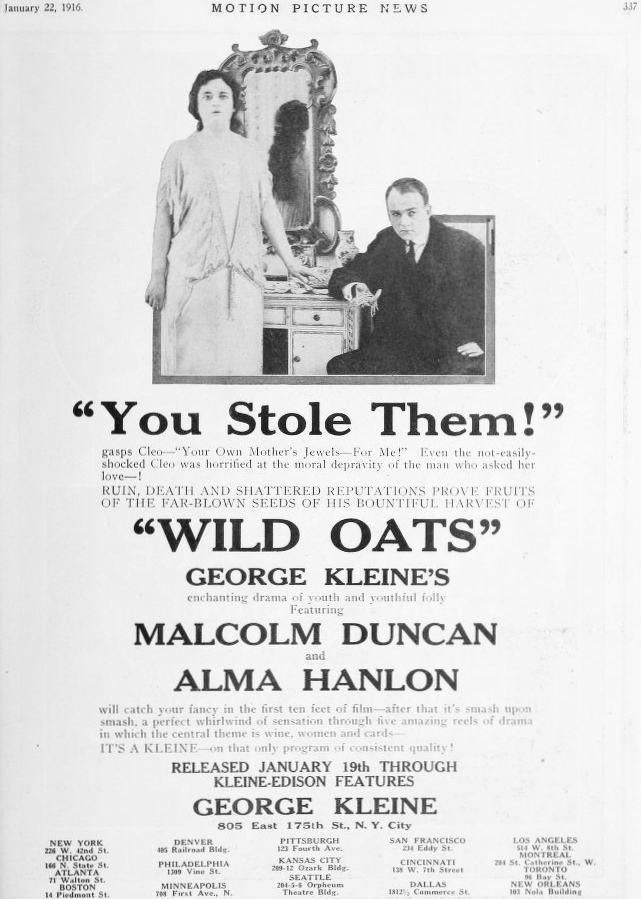
In the soot-smeared twilight of American silent cinema, Wild Oats arrives like a tarnished brass band—loud, reckless, and curiously hypnotic. Campbell Gollan and John White’s screenplay folds urban sin into domestic tragedy, then irons the creases with a moralizing finale that feels stitched by a nervous censor. Yet within these constraints the picture throbs with jagged electricity: gambling dens lit by single swinging bulbs, drawing rooms where brandy trembles in crystal, and railway offices echoing with the scratch of frantic pens.
The plot, a sibling of vice rather than virtue, spirals around Roy Wilson—played by Malcolm Duncan with a matinee gleam that barely masks panic. Roy’s appetites are metropolitan, his debts astronomical, his backbone elastic. Enter Graham Madison, architect-cum-extortionist, sketched by Herbert Heyes with the velvet menace of a man who measures human worth in column inches of unearned interest. Madison’s real estate is the soul; his collateral, a railway contract that could gild or gut two rival firms.
Director Frank Belcher, better known for two-reel comedies, stages the melodrama like a poker game where every card is face-up except the last. He favors diagonal compositions—staircases cleaving frames, corridors tapering toward vanishing points—so that even domestic spaces feel vertiginous. When Roy cracks the wall safe, Belcher cuts between the tumblers’ metallic clack and the grandfather clock’s pendulum: time and access fused in montage.
The film’s visual grammar borrows from German Expressionism yet remains tethered to American realism. Shadows slice across parquet floors, but Broadway marquees flicker outside the window, anchoring the nightmare to 1923 Manhattan. Cinematographer William Anker bathes night exteriors in sodium haze, while interiors glow with amber lamplight that pools like spilled bourbon. The palette—limited yet evocative—anticipates the chiaroscuro of later noir.
Performances oscillate between the stilted and the startling. Ruby Hoffman’s Cleo, all cigarette holder and lacquered bob, injects modernity every time she purrs “Darling, you’re overdrawn.” Alma Hanlon’s Jessie, by contrast, is the perpetual ingénue, eyes wide as trolley tracks; her final smile feels less earned than mandated. Frank Belcher himself cameos as a cardsharp, a wink that almost topples the fourth wall.
Central tension coils around the theft of architectural plans—sheets of vellum that carry the weight of destiny. In 1923, railways were neural pathways of capital; their blueprints, akin to state secrets. By weaponizing filial betrayal, the narrative critiques laissez-faire capitalism decades before the Depression made such critiques fashionable. Madison’s villainy is systemic, not personal; he is merely the invisible hand clutching a lead-filled blackjack.
Yet the screenplay flinches from nihilism. Roy’s eleventh-hour confession arrives swaddled in organ music and dissolving superimpositions of his dead father’s face—an emblem of restorative moralism that neuters the picture’s bite. Contemporary reviewers in Variety balked at this “screeching piety,” and modern viewers may likewise crave the unrepentant doom of London’s underworld or the fatalistic crawl of the law’s long arm.
Still, the film endures as a barometric reading of its era. Flappers, bootleg gin, stock-market bravado—every indulgence that would implode six years later—parade across the screen with heedless swagger. The wardrobe department drapes Cleo in silk kimonos beaded like a night sky; Roy sports Oxford bags that swim around his ankles, a silhouette of privilege unmoored. Even the intertitles swagger: “He gambled with tomorrow—and tomorrow collected with interest.”
Composer Della Connor originally accompanied screenings with a hybrid score—foxtrot for nightclub scenes, tremolo strings for suspense, a Bach chorale during the patriarch’s death. Restored prints presented by the George Eastman Museum feature a new arrangement that interpolates early jazz recordings, bridging silent and sound eras. The result is an aural palimpsest—period authenticity wedded to modern scholarship.
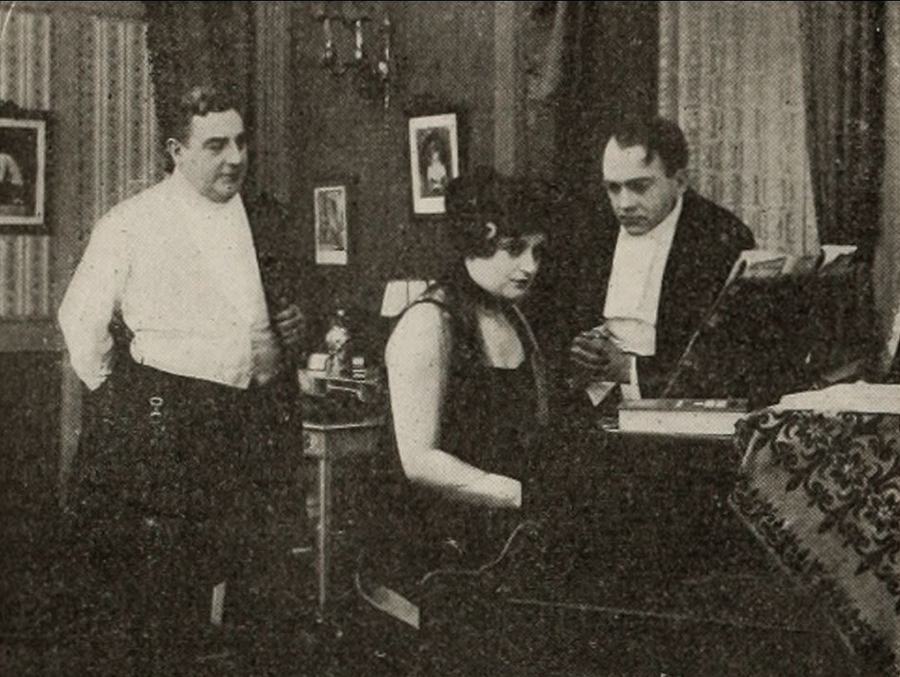
Speaking of restorations, the 2022 4K scan salvages nitrate shards once thought lost. Scratches remain, but stable contrast reveals background details previously swallowed by murk: ticker-tape ribbons on Madison’s office floor, a cameo photograph of McKinley on Wilson’s desk—visual footnotes that enrich context. Color tinting adheres to archivist consensus—amber for interiors, cyan for night, rose for Cleo’s boudoir—though some festival projections opt for a monochrome austerity that amplifies noir antecedents.
Comparative viewing enriches appreciation. Where Paid in Full (1920) moralizes over consumer debt, Wild Oats indicts speculative risk. Half a Rogue (1916) toys with redemptive love; here love is another commodity to leverage. The trajectory anticipates the bureaucratic dread of Bismarck (1924) and the societal culpability probed by I Accuse (1924), though neither matches the propulsive corruption of Madison’s machinations.
Historians cite the picture as a bridge between Griffith’s Victorian parables and the hard-boiled crime cycles of the early sound era. The editing rhythm—an average shot length of 4.2 seconds—presages montage aesthetics codified by Soviet theorists, while the urban mise-en-scène heralds the Warner Bros. social melodramas that would dominate the 1930s. In this light, Belcher’s work is less an antiquated curio than a fossil record of cinematic evolution.
Modern discourse might fault the film’s gender politics: Cleo is both temptress and conscience, denied agency beyond her symbolic function. Jessie, though college-educated in dialogue, does little but weep and wait. Yet within the confines of 1923 these archetypes subvert expectations; Cleo’s refusal of stolen jewels constitutes a moral pivot rare for femme fatales, while Jessie’s final handshake with Carew implies egalitarian consent rather than patriarchal transfer. Progress measured in inches, perhaps, but measurable.
Box-office receipts were modest—$156,000 domestic against a $42,000 budget—yet the picture lingered in second-run theaters owing to its sensational tagline: “He wagered his father’s honor—and lost… his life!” Lobby cards emphasized roulette wheels and collapsing patriarchs, luring both thrill-seekers and moral guardians. Today, the marketing campaign would be meme fodder; then, it ensured a 17-week circulation in Midwestern nickelodeons.
Critics of the time praised Heyes’s “veneer of urbanity stretched thin as onion skin” while dismissing Duncan as “a Keaton without the existential wit.” Contemporary reassessment finds Duncan’s brittle bravado more truthful than the mugging histrionics common in early melodrama; his breakdown outside the parlor door—face contorted, shoulders jerking like a marionette—remains a tour-de-force of silent-era vulnerability.
For home viewing, the Kino Lorber Blu-ray offers the 4K restoration alongside a commentary by historian Dr. Imogen Saito, who contextualizes gambling legislation, women’s property rights, and the shifting perception of white-collar crime. A second disc compiles outtakes—alternate takes of the safe-cracking sequence where Belcher experimented with reverse-motion to imply spectral intervention, an idea later jettisoned for realism’s sake.
Streaming options rotate on Criterion Channel and Kanopy; check availability monthly as rights migrate. A 16mm print occasionally tours repertory houses with live accompaniment—recommended for the tactile crackle of projector gears meshing with piano hammers, a synesthetic echo of the Roaring Twenties.
Bottom line: Wild Oats is neither pristine art nor disposable pulp; it is the celluloid equivalent of bootleg whiskey—rough, alluring, liable to leave a headache of contradictions. Embrace it for its nervy visual style, its brittle snapshot of Jazz-Age anxiety, its inadvertent prophecy of national collapse. Forgive it the preachy coda. In the taxonomy of silent cinema, this wayward gem earns a shelf between cautionary fable and proto-noir, daring viewers to gamble their expectations—and perhaps collect a jackpot of historical insight.
“Debt is a draft drawn on time—and time always demands interest.”
Final toast: raise a glass to the fathers felled by ambition, to the sons shackled by appetite, to the flickering ghosts who still gamble on the edges of the frame. The reels may be brittle, but their warnings remain liquid, seeping through the cracks of every subsequent boom and bust. Watch, shiver, and—if you hear the safe’s tumblers click in the dead of night—remember Roy Wilson’s fate before you place your own wager.
IMDb —
1921
Community
Log in to comment.