Cult Cinema
The Celluloid Covenant: Tracing the Sacred Weirdness and Genre Defiance of Cinema’s Original Outliers
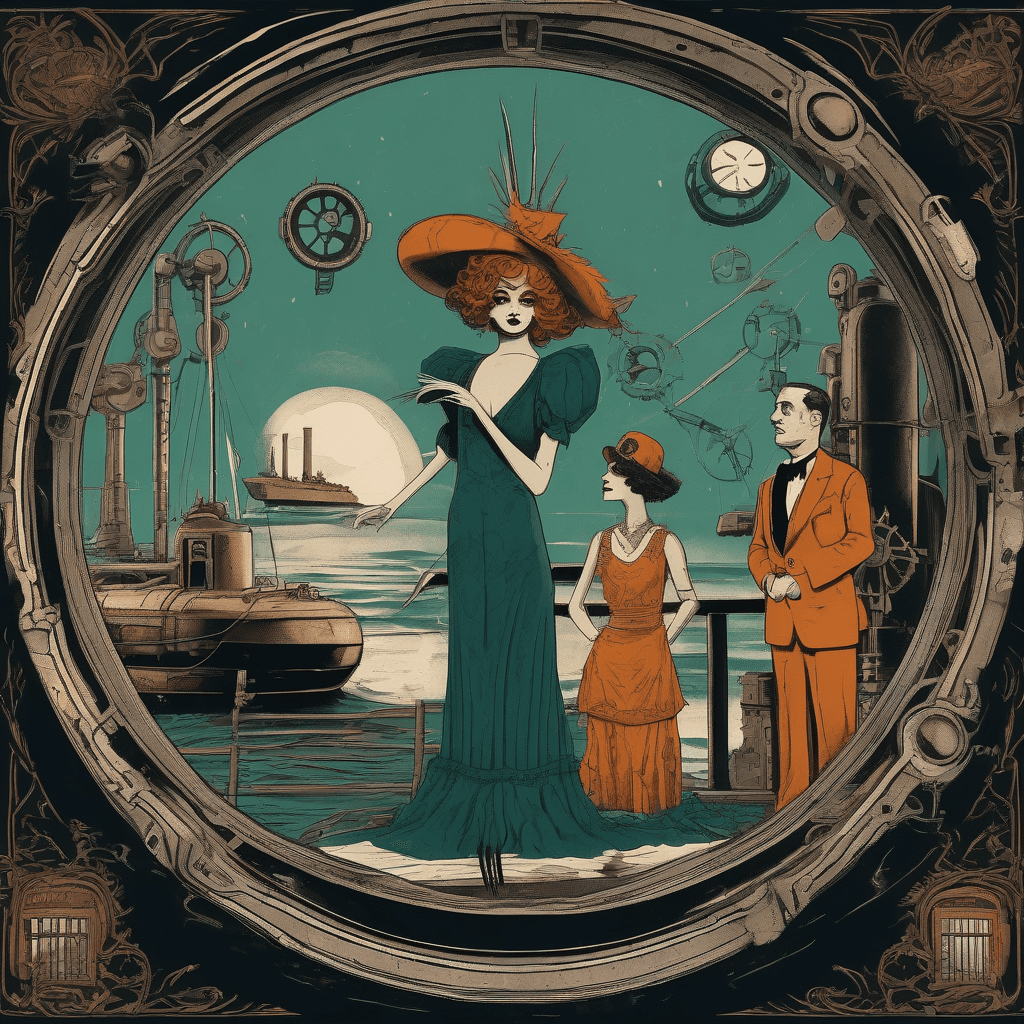
“Discover how the primal transgressions and genre-bending narratives of the silent era forged the enduring DNA of modern cult cinema obsession.”
To understand the modern midnight movie, one must look beyond the neon-soaked 1970s and dive into the flickering, nitrate-scented shadows of the early 20th century. Cult cinema is often defined by its deviance—its refusal to adhere to the sanitized norms of the mainstream—and this spirit was birthed in the experimental, often chaotic landscape of the 1910s and 1920s. Long before the term 'cult' was codified, films like Lady Rose's Daughter and The Isle of Conquest were already exploring themes of social exile, obsessive love, and the crushing weight of legacy, laying the groundwork for the transgressive narratives we celebrate today.
The Primal Weirdness of the Silent Fringe
The DNA of cult cinema is rooted in the 'weird'—the visual and narrative anomalies that disrupt our sense of reality. In the 1920 animation Jumping Beans, we witness a surrealist nightmare where Koko the Clown creates duplicates of himself to attack his own creator. This meta-textual rebellion and visual anarchy predate the psychedelic cinema of the 1960s, proving that the urge to dismantle the fourth wall is as old as the medium itself. Similarly, Buster Keaton’s The Scarecrow utilizes mechanical ingenuity to create a world where every object has a dual purpose, a precursor to the 'maximalist' aesthetic often found in niche genre films.
This obsession with the strange extended to the natural world. Wonders of the Sea (1922) took audiences into the crushing depths using Williamson’s submarine chamber. It wasn't just a documentary; it was an invitation into an alien world, a hallmark of the cult experience where the viewer is transported to a space that feels forbidden or unreachable. This sense of 'otherness' is what binds a cult audience together—the shared knowledge of a world that the 'uninitiated' have yet to see.
Moral Deviance and the Architecture of the Outcast
If cult cinema is a sanctuary for the misfit, then the silent era was its first architect. Films of this period frequently delved into the lives of those on the periphery of 'polite' society. The Octoroon, set in the 1850s Deep South, tackles the horrific complexities of race and freedom, presenting a narrative of a woman caught between two worlds. Such stories of identity and systemic oppression resonate with the cult ethos of championing the marginalized. The 'outcast' is not just a character; they are the soul of the film.
Consider The Darkening Trail, where Yukon Ed faces the betrayal of Ruby McGraw, who falls for a 'no-account' seducer. These melodramas were often darker and more cynical than their contemporary reputations suggest. They explored the 'darkening trail' of the human heart, much like the noir-inflected cult films of the 1940s and 50s. In The Whistle, the narrative turns to cold, hard revenge as a father seeks justice for his son killed in a workplace accident. This raw, primal emotionality is a cornerstone of cult devotion—it bypasses intellectualism and strikes directly at our most basic instincts for justice and retribution.
Genre Mutations: Where Westerns Meet the Macabre
Cult cinema thrives in the margins between genres, where traditional storytelling breaks down and something new and monstrous is born. The Untamed (1920) is a perfect example. While ostensibly a Western, it features 'Whistling Dan,' a man who remains 'untamed' and possesses a temper that borders on the supernatural. This hybridization of the rugged frontiersman and the volatile anti-hero created a blueprint for the 'loner' archetype that would later define the works of directors like Alejandro Jodorowsky or Sergio Leone.
We see similar mutations in The Last Egyptian, where the character Kara, the final member of a royal bloodline, seeks vengeance against an Englishman who dishonored his family. This blend of historical epic, revenge thriller, and orientalist fantasy creates a heady, atmospheric experience that defies easy categorization. When a film refuses to stay in its lane, it invites a specific kind of obsessive analysis from its audience—a desire to map its strange geography and understand its internal logic.
The Sacred and the Profane: Cult Rituals in Early Film
The communal aspect of cult cinema—the 'ritual'—can be traced back to films that explored the spiritual and the taboo. Love Letters (1917) features a protagonist who falls for the leader of an 'oriental cult,' only to discover his duplicity. This fascination with secret societies and hidden knowledge is a recurring theme in the midnight movie circuit. It mirrors the experience of the cult fan themselves: someone who has found a 'secret' film and belongs to a small, devoted group of 'believers.'
Even the more lighthearted fare of the era, such as Timothy Dobbs, That's Me or Lombardi, Ltd., showcased a fascination with identity and the performance of the self. In Her Unwilling Husband, an actress finds herself in a comedy of errors that questions the stability of social roles. Cult cinema loves a masquerade; it loves the idea that we are all playing a part and that the 'truth' is something much weirder and more fluid than what we see on the surface.
International Shadows: The Global Reach of the Fringe
The urge toward the unconventional was not limited to Hollywood. The silent era was a truly global phenomenon, and the seeds of cult obsession were sown across the world. Istanbul'da Bir Facia-i Ask (A Love Tragedy in Istanbul) brought a tragic, localized intensity to the screen, while Votsareniye doma Romanovykh utilized historical footage to create a sense of grand, tragic inevitability. These films remind us that the 'cult' gaze is often a search for something authentic and raw, regardless of its country of origin.
In Italy, films like La gola explored the grotesque through the lens of gluttony and ducal rivalry, while Il mistero dei Montfleury delved into the gothic mysteries that would later become a staple of the Italian 'Giallo' and horror traditions. These early experiments in atmosphere and dread are the direct ancestors of the transgressive masterpieces that populate modern midnight screenings.
The Enduring Legacy of the Nitrate Rebels
What makes a film like Jim the Penman (1921) so fascinating to the modern cult enthusiast? It is the story of a bank clerk who, after forging a check to help a friend, is drawn into a gang of forgers. It is a narrative of moral compromise and the slippery slope into the underworld. This 'fall from grace' is a central pillar of the cult narrative—the idea that the world is a dangerous, unpredictable place where one wrong move can lead to a life of exciting, if perilous, deviance.
Similarly, The Struggle Everlasting presents an allegorical battle between 'Mind,' 'Body,' and 'Soul.' This kind of high-concept, symbolic storytelling is exactly what attracts the 'cult' mind—the desire to decode a film’s hidden meanings and find a personal philosophy within its frames. Whether it is the 'Body' in the form of a barmaid or the 'Soul' as a warning brother, these archetypes provide a rich tapestry for fanatical interpretation.
As we look back at the 50 films that helped define this era—from the shipwrecked romance of The Isle of Conquest to the workplace vengeance of The Whistle—we see a clear through-line to the modern day. These were not just 'old movies'; they were the first salvos in a long-running war against the mundane. They were films that dared to be strange, dared to be sad, and dared to be different.
The 'Celluloid Covenant' is the unspoken agreement between the filmmaker and the audience: a promise that what is on the screen will be something you cannot find anywhere else. It is the reason we still talk about Baree, Son of Kazan and its tale of a man fleeing to the Canadian Northwest after a righteous murder. It is the reason the 'trim ankle' displayed in Midnight at Maxim's still feels like a playful, transgressive wink from a century ago.
In conclusion, the modern cult cinema landscape is a direct descendant of these early, flickering rebels. By embracing the weirdness of Jumping Beans, the social defiance of The Octoroon, and the genre-bending of The Untamed, we honor the original outliers who proved that the screen is not just a mirror, but a portal to the marvelous and the misunderstood. The midnight movie didn't start in the 70s—it started the moment the first reel of nitrate film caught the light and showed us a world we weren't supposed to see.
Community
Comments
Log in to comment.
Loading comments…