
Cult Cinema
The Nitrate Alchemist’s Legacy: Decoding the Primal Anarchy and Niche Devotion of Cinema’s Earliest Misfit Wave
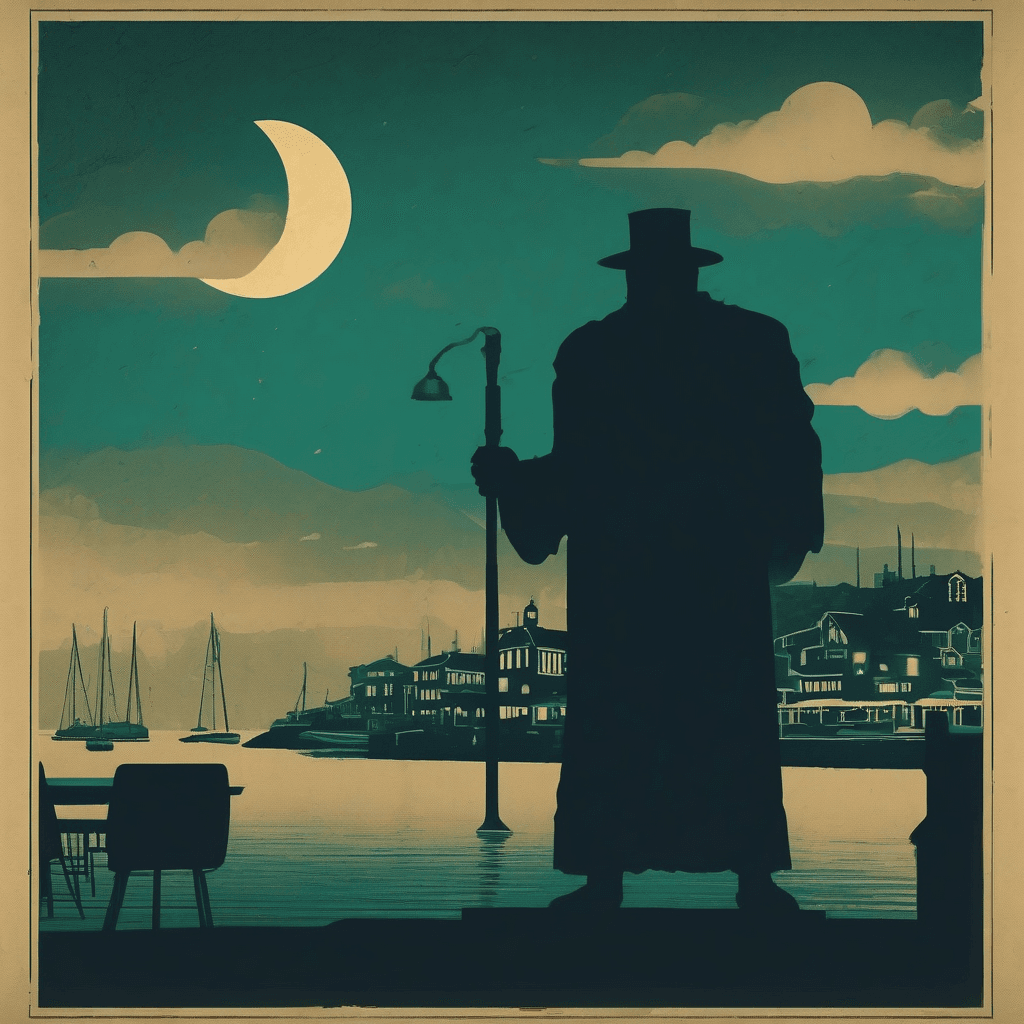
“An exploration of how early silent cinema's outliers, from supernatural golems to gritty harbor dramas, laid the foundation for modern cult film obsession.”
The term cult cinema is often associated with the neon-soaked midnight screenings of the 1970s or the transgressive VHS boom of the 1980s. However, the genetic blueprint of the cinematic outlier was drafted much earlier, in the flickering shadows of the silent era. Long before The Rocky Horror Picture Show or Eraserhead, there were films that defied the burgeoning conventions of Hollywood and European studio systems, creating a space for what we now recognize as the cult aesthetic. These were films that traded in moral ambiguity, visual experimentation, and a raw, primal weirdness that alienated the masses while forging a deep, almost religious bond with the few who sought them out.
The Birth of the Transgressive Image
To understand the roots of cult obsession, one must look at the way early filmmakers handled social taboos. Consider the 1921 short Fièvre. Set in the gritty harbor bars of Marseille, it is a masterclass in atmospheric tension and moral complexity. It doesn't offer the easy resolutions of mainstream melodrama; instead, it presents a world of past lovers, simmering violence, and the crushing weight of the environment. This is the kind of 'poetic realism' that would later influence the noir genre, but in its time, its focus on the low-lives and the heartbroken made it a spiritual ancestor to the cult films that prioritize mood over traditional heroism.
Similarly, A Factory Magdalen tackled the sorrow of betrayal and the harsh realities of the working class with a starkness that felt dangerous. These films didn't just tell stories; they exposed the cracks in the social facade. When we look at cult cinema today, we see that same desire to peel back the layers of polite society. The 'Magdalen' archetype—the fallen woman seeking redemption or simply survival—is a precursor to the transgressive heroines of later underground cinema.
The Supernatural and the Sacred
Cult cinema has always had a flirtation with the occult and the inexplicable. The 1915 version of The Golem, though largely lost to time, remains a titan in the history of the weird. By bringing a Kabbalistic legend to life through the medium of nitrate, the filmmakers tapped into a primal fear and fascination with the 'other.' The image of a clay man animated by ancient mysticism is a foundational stone for the entire 'creature feature' lineage that dominates cult circles.
Even more surreal is the 1920 film The Great Redeemer. In this narrative, the boundary between art and reality dissolves when a prisoner's drawing of Christ’s crucifixion on a cell wall literally comes to life. This kind of visual audacity—the literalization of the spiritual—is exactly the type of genre-bending that defines the cult experience. It asks the audience to accept a reality that is fundamentally broken and rebuilt through the lens of the fantastic. It is a cinematic miracle that mirrors the way cult fans 'resurrect' forgotten films through their devotion.
Genre Mutations and the Western Outlaw
The Western is perhaps the most codified of all American genres, yet the early 20th century saw a series of 'genre mutations' that paved the way for the acid Westerns and revisionist tales of the 1960s. Films like The Red Glove featured a female cowboy, Billie, who fought a succession of 'bad men' on the frontier. Long before the 'final girl' or the action heroine became staples of niche cinema, the silent serials were experimenting with gender roles and physical prowess in ways that challenged the patriarchal status quo.
Then there is The Texan, a film that uses a fable about a tortoise and a hare to dictate the protagonist's behavior. This kind of eccentric character motivation is a hallmark of cult storytelling. When a character like Tex Benton vows to model his life on a turtle or a rabbit, the film moves away from the 'everyman' appeal and into the territory of the idiosyncratic. Cult fans don't want to see themselves reflected in the hero; they want to see someone whose logic is entirely their own, someone who exists on the periphery of normal human behavior.
The Comedy of Chaos
If drama provided the soul of early cult, comedy provided the anarchy. Harold Lloyd's Off the Trolley is a prime example of the 'troublemaker' archetype that would eventually evolve into the counter-culture rebels of the 60s. The chaotic energy of messing with authority figures—cops, conductors, the wealthy—resonates with the anti-establishment heart of the midnight movie. It is a cinema of disruption.
We also see meta-humor and parody emerging in The Fates and Flora Fourflush. By explicitly stating that the film 'must not be taken too seriously' and parodying the 'thrills, perils and mysteries' of the day, it established a self-aware relationship with the audience. This 'camp' sensibility—the ability to enjoy a work while simultaneously acknowledging its tropes—is the very foundation of how modern audiences interact with 'so-bad-it's-good' classics or highly stylized genre homages.
Social Defiance and the Public Gaze
The title Public Be Damned serves as a perfect manifesto for the cult filmmaker. While the film itself dealt with food administration and the speeches of Herbert Hoover, its title reflects a defiant stance against the mainstream. The true cult film is often one that the 'public' initially rejected or ignored. Films like Op hoop van zegen, with its devastating portrayal of a fisherman's wife losing her sons to a negligent shipping company, offered a level of social critique that was too bleak for those seeking escapism. It is a 'cinema of the uncomfortable.'
This discomfort is what creates the bond between the film and its niche audience. When a film like Hate (1922) explores the rivalry between gamblers and chorus girls with such cynicism, it carves out a space for the 'cynical viewer'—the one who finds beauty in the darkness. The 'midnight mindset' is one that looks at the tragedies of The Bondman or the upper-class collapse in Bogatyr dukha and sees a reflection of a world that is inherently unfair and chaotic.
The Geometry of the Misfit
Consider the sheer variety of oddities in the early 1900s: Greek Meets Greek poking fun at modern dance through the lens of ancient Hellenic 'grace,' or Maciste und die Javanerin featuring the strongman Maciste in a mystery involving a Javanese woman. These are not 'standard' narratives; they are collisions of cultures, aesthetics, and physicalities. They represent a 'geometry of the misfit,' where the traditional lines of storytelling are skewed to include the bizarre and the exotic.
Even the biographical films of the era, such as The Life of Lord Byron, focused on the scandalous and the ruinous. By highlighting the poet's ruined reputation and his jealous wife's plots, the film prioritized the 'cult of personality' over historical dryly. It understood that the audience is more interested in the fallen idol than the perfect hero. This is the same impulse that drives our modern obsession with the 'troubled genius' or the 'misunderstood artist' in cult documentaries and biopics.
Conclusion: The Eternal Midnight
The 50 films referenced here—from the Alaskan frontier of Laughing Bill Hyde to the boardroom battles of The Havoc—all contribute to a larger tapestry of cinematic rebellion. They prove that cult cinema was never a modern invention. It is a perennial force, a 'nitrate alchemy' that transforms the base metals of failed mainstream attempts and obscure indie experiments into the gold of niche devotion.
As we look back at The Unveiling Hand or the mysterious Tájfun, we recognize the same spirit that drives today’s film festivals and underground screening rooms. It is the desire to see the unseen, to celebrate the uncelebrated, and to find community in the strange. The silent era’s moral outcasts and genre rebels didn't just make movies; they engineered a way of seeing. They taught us that the most interesting stories are often found 'through the wrong door,' in the places where the light of the mainstream doesn't reach, and where the only thing that matters is the flickering connection between the screen and the devoted soul.
Ultimately, the legacy of the Nitrate Alchemist is a reminder that cinema is at its most powerful when it is at its most unhinged. Whether it is a strongman solving mysteries or a prisoner's drawing coming to life, the primal anarchy of early film continues to dictate the terms of our midnight obsessions. We are all disciples of this first rogue wave, forever searching for the next 'forgotten gem' that will make us feel, if only for a few hours, like we are part of a secret world.
Community
Comments
Log in to comment.
Loading comments…