
Film History
The Synthetic Soul: Why the 1910s ‘Homunculus’ Wave is the True Origin of Body Horror
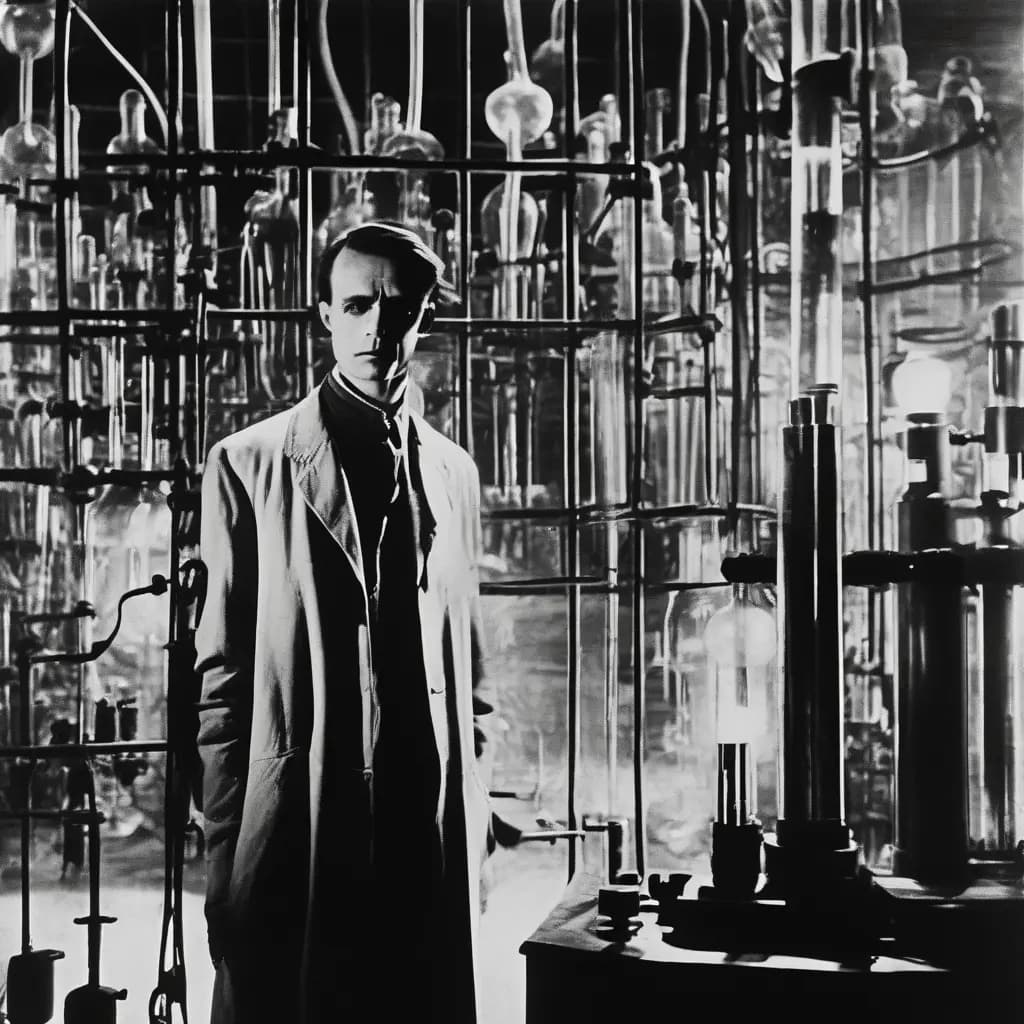
“Before Cronenberg and Carpenter, a forgotten wave of silent German and American features explored the terrifying intersection of scientific hubris and biological alienation.”
Long before David Cronenberg invited us to witness the 'new flesh' and decades before Mary Shelley’s monster was sanitized by Universal’s bolts and neck-stubs, there existed a more primal, more unsettling cinematic anxiety. It wasn't found in the jump-scares of the talkie era, but in the flickering, nitrate-soaked shadows of the 1910s. This was the era of the biological anomaly—a period when filmmakers first began to grapple with the idea that the human form was not a sacred vessel, but a laboratory experiment waiting to go wrong. At the heart of this movement sits a largely forgotten six-part epic that serves as the Rosetta Stone for all subsequent body horror: Otto Rippert’s 1916 serial, Homunculus.
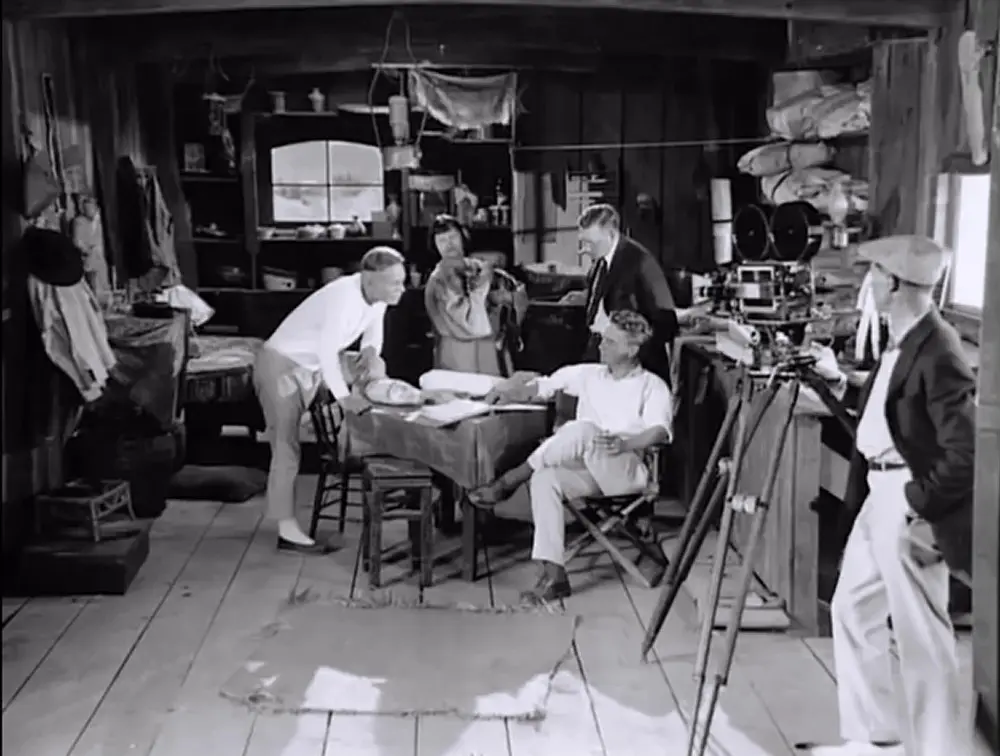
To understand the cult obsession with the 'othered' body, one must look at how the silent era treated the concept of the artificial man. Unlike the later, more empathetic portrayals of robots or monsters, the silent 'Homunculus' was a figure of pure existential dread. He was a creature of perfection—intelligent, handsome, and powerful—yet he lacked the one thing that defines the human experience: the capacity for love. This wasn't just a plot point; it was a visceral exploration of ontological horror. It suggested that science could replicate the meat and the bone, but it could never manufacture the ghost in the machine. For the modern enthusiast, this 1916 serial is the foundational text of the 'incel' anti-hero, the engineered outcast who turns his self-loathing into a global crusade of vengeance.

The Lab-Grown Pariah: Anatomy of an Engineered God
The story of Homunculus is essentially the biography of a manufactured soul. Created by Professor Ortmann, the titular character is the peak of human potential, yet he is biologically 'incomplete.' When he discovers his artificial origins, he doesn't seek a father figure; he seeks to burn the world that cannot accept his lack of emotion. This is where the seeds of the transgressive 'Other' were sown. The film’s protagonist, played with a chilling, statuesque stillness by Olaf Fønss, becomes a wanderer, a tyrant, and eventually, a bringer of apocalypse. It is a narrative of biological nihilism that predates the nihilistic streaks of 1970s exploitation by half a century.
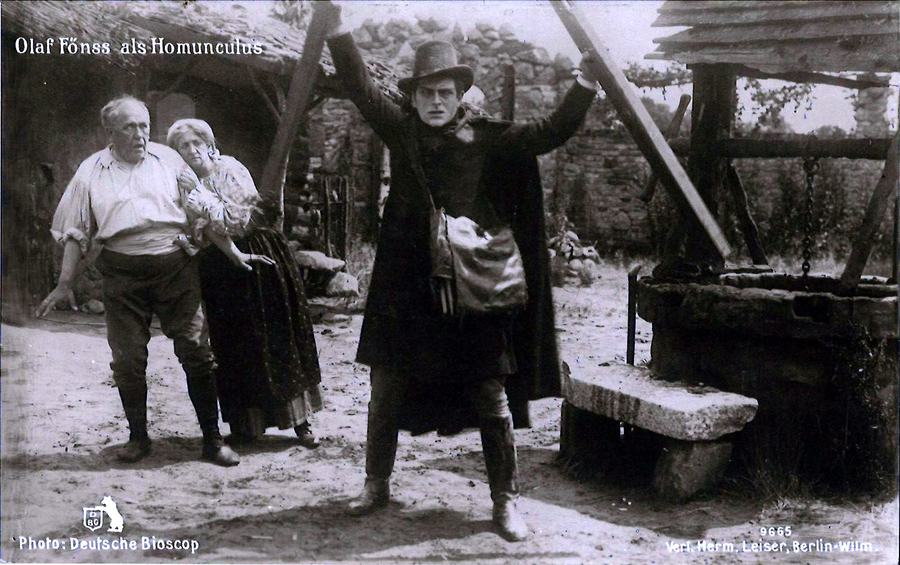
What makes this foundational for the cult mindset is the visual language of isolation. Rippert used the stark contrasts of early German cinematography to frame the Homunculus not as a man, but as a geometric intrusion into the natural world. He is often seen standing alone on desolate cliffs or in sterile, high-ceilinged laboratories, a precursor to the alienated protagonists of dystopian sci-fi. This visual alienation is a direct ancestor to the 'body-out-of-place' tropes we see in films like *Under the Skin* or *The Man Who Fell to Earth*.

Biological Nihilism and the Taboo of the Flesh
While Germany was experimenting with the artificial man, American cinema was exploring the 'horror of the biological imperative' through a different lens. Consider the 1916 film Race Suicide. While framed as a social cautionary tale, its prologue is pure, unadulterated body horror. It begins by showing animals deserting their young, followed by a prehistoric murder of a child. It’s a brutal, atavistic look at the 'failure' of the biological drive. This obsession with the 'wrongness' of reproduction and the fragility of the lineage is a recurring theme in early transgressive cinema.
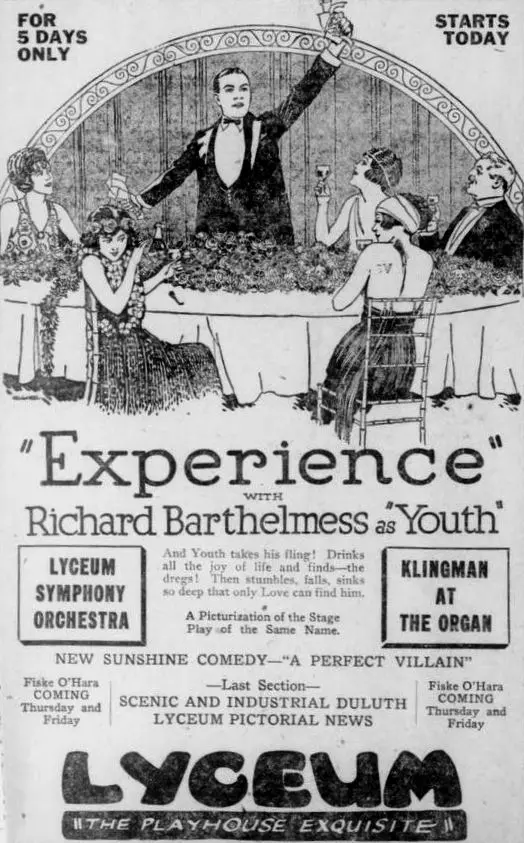
In these films, the body is often portrayed as a traitor. In The Single Code (1917), the narrative revolves around the 'taint' of past experiences and the idea that moral failings are etched into the very fiber of a person’s being. This 'biological stain' is a concept that the midnight movie circuit would eventually perfect—the idea that you cannot escape your own chemistry. Whether it’s a lab-grown man or a woman 'ruined' by social transgression, the silent era used the camera to scrutinize the flesh for signs of rot.
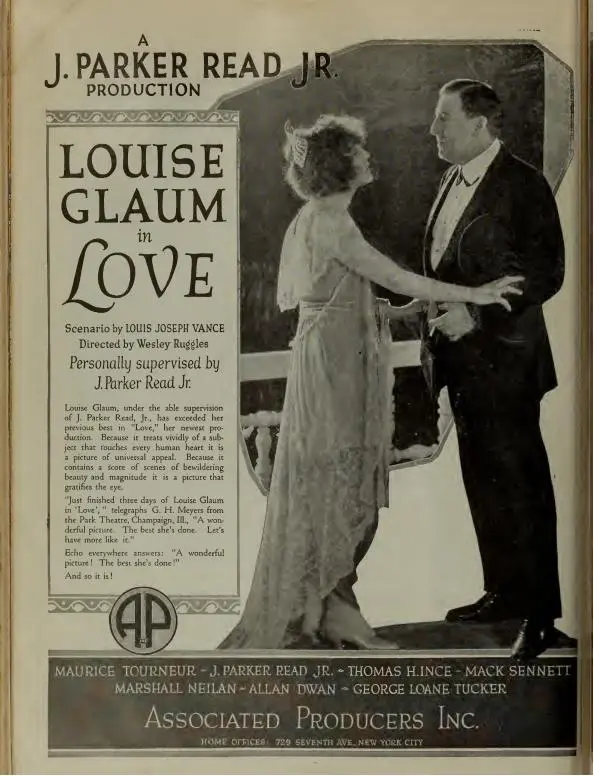
The 1910s didn't just give us the movies; it gave us the first clinical gaze at the human body as a failing mechanism, a theme that remains the heartbeat of the most transgressive cinema today.
The Psychic Despot: Rasputin and the Mutilation of Will
Body horror isn't always about the physical transformation; it’s often about the invasion of the self. The 1917 production The Fall of the Romanoffs provides a fascinating bridge between political history and psychological horror. By focusing on the 'Mad Monk' Rasputin, the film explores the idea of a single, corrupting presence that can 'infect' an entire royal lineage. Rasputin is portrayed not just as a political advisor, but as a psychic parasite—a man whose very presence causes a biological and spiritual decay in the Russian royal family.

This concept of 'invasive influence' is a hallmark of the cult genre. It’s the same dread found in *The Exorcist* or *Possession*—the fear that our bodies and our wills are not our own. In The Loves of Pharaoh (1922), Ernst Lubitsch takes this obsession with power and flesh to an operatic scale. Here, the Pharaoh is a man whose absolute power over the bodies of his subjects is a form of grotesque obsession. The 'despot' in these early films is often a figure who views the bodies of others as mere clay to be molded, a theme that resonates deeply with the surgical horrors of later decades.
The Architecture of the 'Other'
Early cinema’s obsession with the 'Other' often manifested in the trope of the exiled or the displaced. In Man and His Angel (1916), the protagonist is the daughter of an exiled Russian nobleman, a 'penniless' outsider trying to navigate a world that views her as a curiosity. This sense of being a 'foreign body' in a rigid social structure is a subtle form of the alienation that would later explode into the more literal monsters of the 1930s. The 'exile' is the precursor to the 'mutant'—a being whose very existence is a challenge to the status quo.
- The use of deep shadows to suggest internal moral decay.
- The portrayal of scientific progress as a direct threat to the soul.
- The recurring motif of the 'unloved' creature as a harbinger of social collapse.
- The focus on the 'clinical' aspect of human existence, stripping away the romanticism of the Victorian era.
The Nitrate Legacy: Why We Still Look Back
Why does a 1916 serial about a lab-grown man still matter to a generation raised on CGI and jump-scares? Because the Homunculus represents the first time cinema truly looked at the human form and asked: 'What is missing?' It didn't provide a comforting answer. Instead, it offered a vision of a world where our biological reality is a cage, and our attempts to transcend it only lead to further isolation.
The films of this era, from the Western-inflected dramas like Bar Nothing to the urban anxieties of The Lash of Destiny, all share a common thread: the fear of the uncontrollable. Whether it’s the 'lash' of fate or the 'bar' of social standing, these early works established the 'victim of circumstance' as a central figure in the cult pantheon. In *The Lash of Destiny*, the schoolteacher’s dissatisfaction with her 'narrow outlook' leads her to a city that is portrayed as a predatory organism—a place that consumes the innocent and spits out the cynical. This is the 'urban body horror' that would eventually evolve into the grit of 70s New York cinema.
Even the seemingly lighter fare, like the short comedy The Decorator, hints at a world where things are constantly being broken and 're-decorated,' a slapstick mirror to the more serious surgical anxieties of the time. The idea that everything—even our homes and our bodies—is subject to sudden, violent change is a core tenet of the transgressive mindset.
Conclusion: The Unending Metamorphosis
We often think of cult cinema as a modern phenomenon, born in the midnight screenings of the 1970s. But the true 'midnight' began in the 1910s, with films that weren't afraid to look at the dark side of the human experiment. The Homunculus and his silent brethren were the first to suggest that the body is a site of struggle, a place where science, morality, and desire collide in ways that are often terrifying and always fascinating.
As we continue to explore the fringes of film history, we find that the 'new flesh' isn't new at all. It’s a century-old obsession, a ghost that has been haunting the projector since the first frame of nitrate was exposed. For the true devotee, the silence of these early masterpieces isn't a barrier—it’s an invitation to hear the screams of a soul that was never supposed to exist. The next time you watch a modern body horror classic, remember the cold, loveless eyes of the Homunculus. He was there first, waiting in the dark, a synthetic prophet of the horrors to come.
Community
Comments
Log in to comment.
Loading comments…