Summary
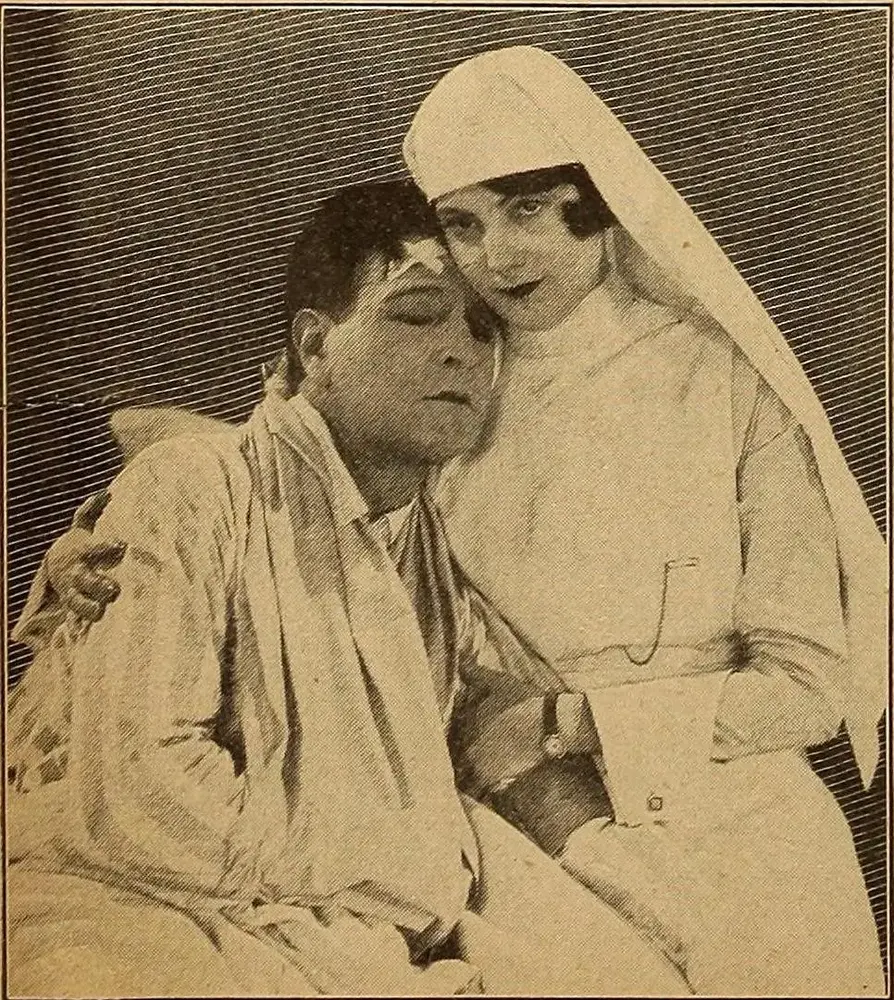
Captain Terrance Connaughton is a man of high honor and low impulse control, a combination that sees him gamble away his entire stable of thoroughbreds to the predatory Algernon Cravens in a single, ill-fated card game. The narrative trajectory shifts from the green felt of the gambling hall to the muddy trenches of the Great War, where Terrance finds a fleeting grace in the arms of Lady Gwendolyn, a military nurse. Their romance is fractured by the chaos of conflict, leaving Terrance to return to a civilian life defined by penury and resentment. In his absence, Cravens has tightened his grip on both Terrance’s legacy and his love, forcing Gwendolyn into a marriage contract contingent on the outcome of the National Derby. The climax hinges on a bizarre metaphysical and physical swap involving two horses, 'Good Luck' and 'Bad Luck,' leading to a finish-line revelation that exposes the literal and figurative coats of paint used to mask the villain's deceit.
Synopsis
Captain Terrance Connaughton loses his stable of horses in a card game with Algernon Cravens. The next day he is wounded and taken to a military hospital where he meets and falls in love with Lady Gwendolyn. An attack on the hospital separates them and, at the end of the war, Terrance returns home penniless. Cravens, the cad, has made Lady Gwen promise to marry him and has entered the horses he won from Terrance in the National Derby. Terrance goes to London to attend the Derby and sees Lady Gwen again. She is less than thrilled with the prospect of marrying Cravens and makes him a sporting proposition; if "Bad Luck" wins the race she will marry him immediately but if "Good Luck" wins, their marriage will never take place, and she and Terrance will be free to resume their romance. "Bad Luck" wins and Cravens comes to claim his bride, but two of the stable-boys discover that Cravens had the distinguishing marks on "Good Luck" painted over, and it was really "Good Luck", of the two nearly-identical horses, that won the race. The jig is up for Cravens.
Review Excerpt
"Short answer: yes, but only if you enjoy the specific brand of logic-defying melodrama common in the late silent era. This film is for those who find comfort in predictable heroics and equestrian set-pieces, but it is certainly not for viewers who require a plot that survives a five-second post-viewing interrogation.The Sporting Lover (1926) is a fascinating artifact of a time when the stakes of a horse race were considered equivalent to the stakes of a human soul. Directed with a workmanlike ef..."