DbcultAccessing Vault...
Cult Review
Senior Film Conservator
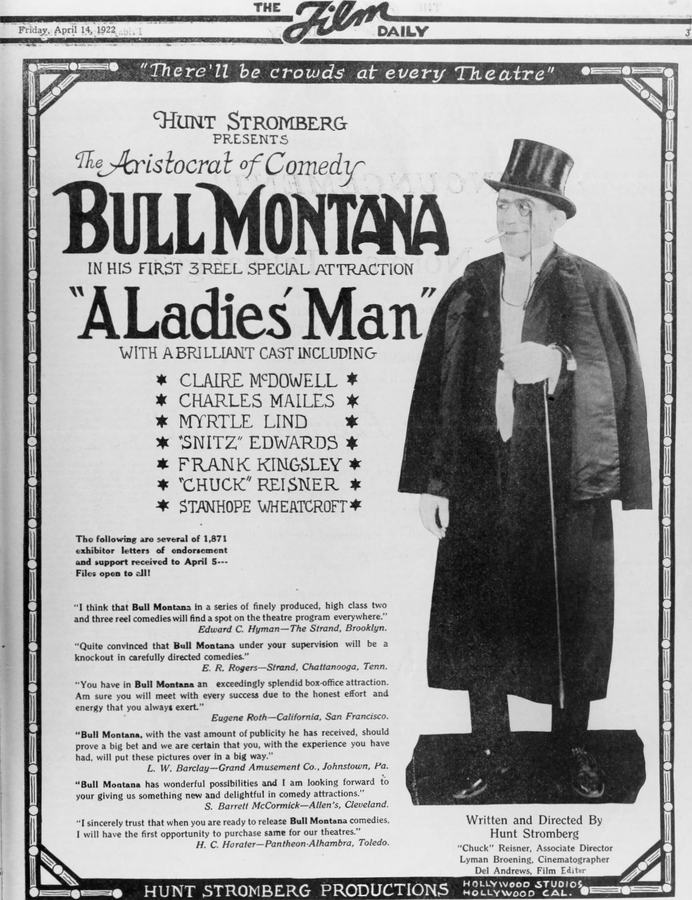
In the pantheon of silent cinema, few films manage to weaponize physical appearance with the surgical precision found in Hunt Stromberg’s 1921 effort, A Ladies Man. While the title suggests a narrative steeped in the tradition of the suave, Valentino-esque heartbreaker, the reality is a deliciously grotesque inversion of societal norms. We are introduced to the concept of 'Little Oswald,' a name that evokes images of porcelain skin and velvet ribbons. However, when the character finally manifests on screen in the form of Bull Montana, the effect is nothing short of a cinematic explosion. Montana, with his rugged, pugilistic features and cauliflower ears, stands as a towering rebuke to the era's obsession with refined masculinity. This isn't just a comedy; it is a visceral critique of the aesthetic hierarchies that governed early 20th-century social structures.
The setup is deceptively simple, mirroring the melodramatic tropes found in works like The Old Nest, where the sanctity of the home is paramount. An aristocratic couple, desperate for an heir, adopts a foundling. But where a film like Where Are My Children? might have delved into the moral complexities of lineage and social responsibility, A Ladies Man pivots toward the picaresque. At age ten, Oswald hears the 'call of worldly adventure'—a phrase that suggests a romanticized journey but leads him instead into the hard-boiled reality of the underworld. This departure is the first crack in the aristocratic facade, suggesting that the 'luxurious home' is less a sanctuary and more a gilded cage.
The core of the film’s humor—and its social commentary—lies in the 'Return of the Native.' The society belles who assemble to pay homage to the long-lost Oswald are not merely characters; they are representatives of a class that views the world through a prism of curated beauty. They expect a Byron, a Keats, or perhaps a refined dandy akin to the characters in Old Wives for New. The tension built during this waiting period is palpable. Stromberg masterfully utilizes the silence of the medium to amplify the collective breath-holding of the socialites. When the door finally opens, the reveal of Bull Montana is a masterclass in visual irony. The checkered suit, the derby lid, and that ubiquitous black cigar are more than just costume choices; they are symbols of a life lived outside the boundaries of 'polite' society.
Bull Montana’s performance is a revelation of physicality. In an era where acting often veered into the theatrical and overly gestural, Montana brings a grounded, almost primitive energy to the screen. He does not attempt to mimic the grace of his foster parents; he dominates the space with a swagger that is both intimidating and hilariously out of place. His 'hard-boiled pals' add another layer to this subterranean invasion. They are the antithesis of the refined guests, bringing with them the grit of the streets and a complete lack of regard for the etiquette of the parlor. This clash of cultures is far more effective than the romantic entanglements seen in The Probation Wife, as it strikes at the heart of class identity.
The screenplay by Rex Taylor and Hunt Stromberg avoids the repetitive beats of standard slapstick. Instead, it leans into the absurdity of the situation. There is a specific kind of melancholy beneath the humor—the realization that 'Little Oswald' can never truly return to the world of his foster parents. He is an alien in his own home. This theme of the outsider is a recurring motif in cinema, often handled with more gravity in films like Hamlet, where the return to the family seat is fraught with existential dread. In A Ladies Man, the dread is replaced by a defiant boisterousness. Oswald isn't haunted by his past; he has been liberated by it.
Consider the supporting cast, particularly Snitz Edwards and William Elmer. These actors were the backbone of the silent era, providing the necessary texture to ground the more outlandish elements of the plot. Edwards, with his unique physiognomy, provides a perfect foil to Montana’s brute strength. Their interactions suggest a world of camaraderie that the aristocratic couples could never understand—a world built on survival rather than social standing. This sense of brotherhood is reminiscent of the bonds in Two Knights, though filtered through a much grittier lens.
Visually, the film utilizes the contrast between the high-ceilinged, brightly lit mansions of the wealthy and the shadowed, cramped spaces of the underworld. This chiaroscuro effect emphasizes the divide between Oswald’s two lives. The cinematography captures the textures of the costumes—the silk of the socialites versus the rough wool of the 'hard-boiled pals'—with a clarity that was quite advanced for 1921. While it may not have the surrealist leanings of House of Cards, its commitment to realism in the depiction of the underworld is noteworthy.
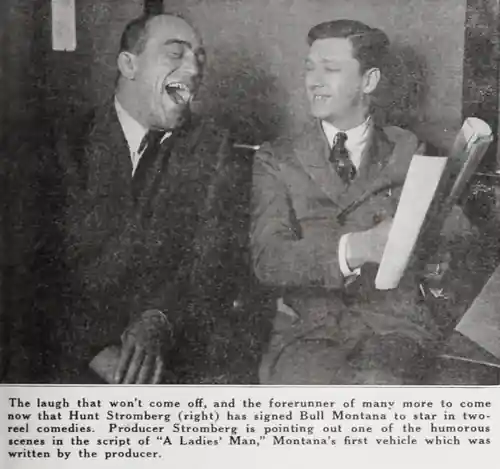
The direction by Stromberg is brisk, never allowing the sentimentality of the 'Mother and Son' reunion to overshadow the comedic potential. He understands that the audience is here to see the disruption of the status quo. Every time the story threatens to become a standard melodrama like Her Code of Honor, he throws in a gag involving Montana’s cigar or his utter confusion at a piece of silverware. It is a relentless deconstruction of the 'gentleman' archetype. The film’s pacing is superior to many of its contemporaries, avoiding the sluggish middle acts that often plague early feature-length comedies like Rosie O'Grady.
One cannot overlook the timing of this film’s release. Post-WWI America was a place of shifting identities and burgeoning class consciousness. The idea that a child of 'unknown parentage' could be raised in wealth, only to return as a product of the streets, touched a nerve. It suggested that environment and innate character were far more powerful than the veneer of upbringing. This exploration of nature vs. nurture is a far cry from the simplistic moralizing of Rablélek or the rigid social structures found in Under galgen. A Ladies Man posits that the 'underworld' isn't just a place of crime, but a place of authenticity, whereas the 'upper world' is a place of performance.
The 'society belles' are particularly scrutinized. Their attraction to the *idea* of Oswald—the romantic foundling—is exposed as shallow. When faced with the *reality* of the man, their collective horror is the film’s sharpest joke. They are 'stage struck' in their own lives, much like the characters in Stage Struck, unable to see past the costumes and the roles people are expected to play. Oswald’s refusal to play the part is his greatest act of rebellion. He is not 'Married in Name Only' to his past; he is fully immersed in his new identity, as seen in the thematic parallels with Married in Name Only.
As the film draws to its conclusion, we are left with a profound sense of the absurdity of human expectations. The 'mystery' of Oswald’s parentage, which might have been the focus of a film like The Page Mystery, is secondary to the mystery of his personality. How did this child become this man? The film doesn't provide easy answers, and that is its strength. It allows Bull Montana to simply *be*, a force of nature that disrupts the quietude of the foster-parents' home. Even the title, A Ladies Man, remains a lingering piece of irony. He is a man the ladies want to see, but not the man they want to keep.
In comparison to other films of the period that dealt with familial loss or the 'wild' nature of man, such as Brother of the Bear, Stromberg’s work is significantly more sophisticated in its use of satire. It doesn't rely on the 'noble savage' trope but rather on the 'uncouth realist.' This is a film that understands the power of the anti-hero long before the term became a staple of cinematic vocabulary. Bull Montana’s Oswald is a precursor to the rough-hewn protagonists of the sound era—men who didn't need to be handsome to be the center of the story.
Ultimately, A Ladies Man is a testament to the versatility of silent film comedy. It proves that you don't need dialogue to convey complex social critiques or to challenge the audience's preconceptions about beauty and class. It remains a fascinating artifact of a time when Hollywood was still experimenting with what a 'hero' could look like. By casting a man known for his ruggedness in a role destined for a dandy, Hunt Stromberg created a piece of cinema that is as relevant today in its critique of celebrity and expectation as it was in 1921. It is a loud, cigar-chomping laugh in the face of high society, and it is glorious.
Final Verdict: A riotous, subversive gem that uses the physicality of Bull Montana to dismantle the pretensions of the Jazz Age. A must-watch for those who prefer their comedy with a side of cauliflower ears and social defiance.
IMDb 8.2
1917
Community
Log in to comment.