DbcultAccessing Vault...
Cult Review
Senior Film Conservator
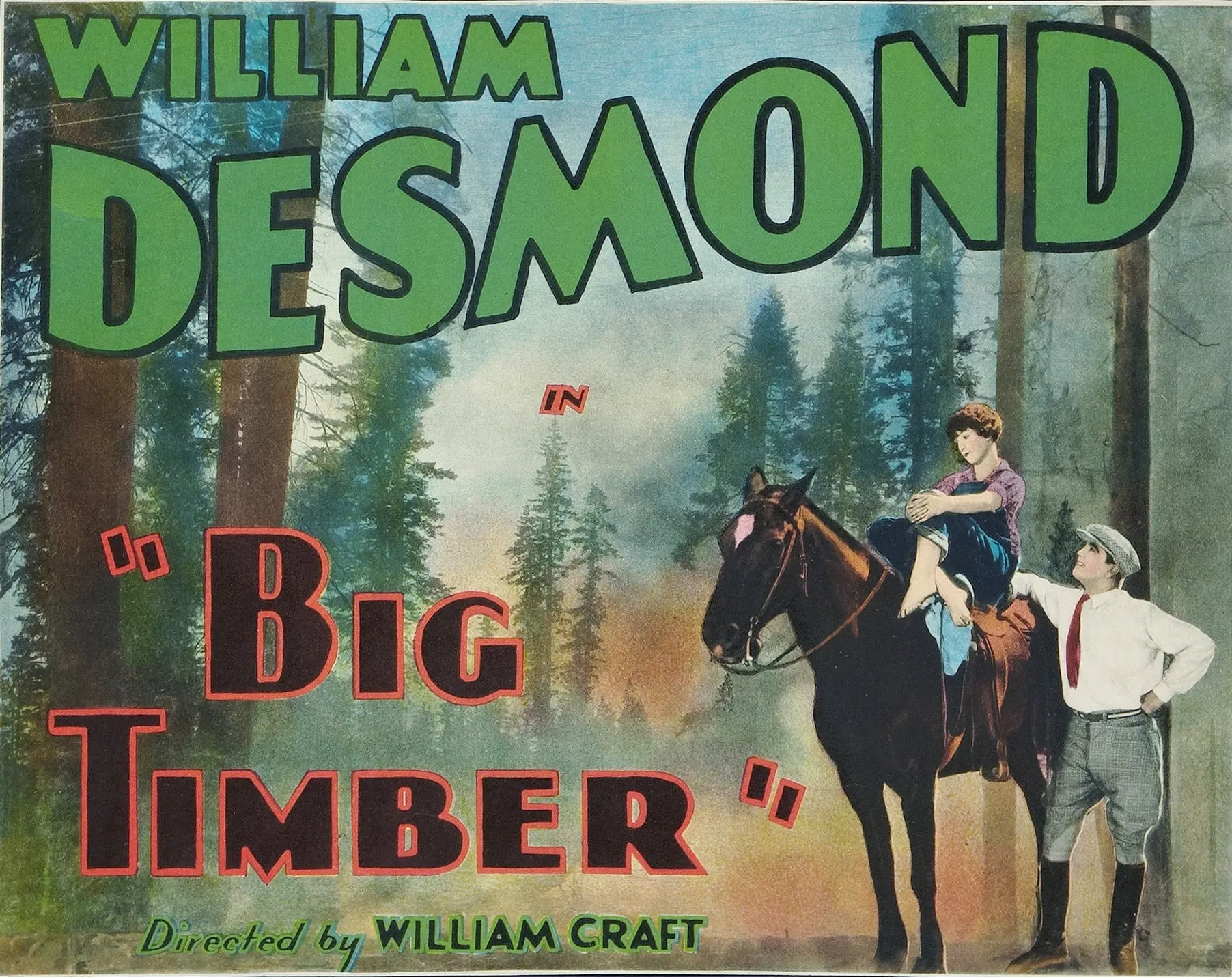
The year 1924 stood at a precipice in cinematic history, a moment where the raw, unbridled energy of the early silent era began to fuse with a more sophisticated, narrative-driven aesthetic. George Melford’s Big Timber is a quintessential specimen of this evolution. It is a film that breathes the resinous air of the Pacific Northwest, casting aside the sterile studio environments of its contemporaries to embrace the rugged, unpredictable textures of the Great Outdoors. Unlike the more domestic explorations found in The Honor of His House, Melford’s work here is expansive, trading drawing-room politics for the sheer lethality of the logging camp.
William Desmond, portraying Walter Sandry, embodies a specific type of American masculinity that was transitioning from the lone cowboy of the 1910s to the industrial leader of the roaring twenties. Sandry is not merely a man with a gun; he is a man with a mortgage, representing the encroachment of legal and financial structures upon the lawless wilderness. His arrival in the timber lands is treated with the gravity of a royal visitation, yet he is immediately met with the cold shoulder of the proletariat. This tension between the owner and the laborer is a recurring motif in the era, often explored with more nuance than modern audiences might expect.
Albert J. Smith’s portrayal of Hampden, the foreman, provides the necessary friction that drives the plot beyond a mere property dispute. Hampden represents the atavistic resistance to change. He is the king of his small, muddy hill, and Sandry’s arrival threatens his hegemony. The way Hampden manipulates the lumberjacks reflects a burgeoning awareness of labor rights and collective action, though the film—true to its time—frames this through the lens of individual villainy rather than systemic critique. While a film like Queens Are Trumps might deal with the social stratifications of the elite, Big Timber finds its drama in the dirt, the sweat, and the sawdust.
“The struggle for the woods is not merely a battle of blades, but a war of wills, where the tallest trees are often the first to fall under the weight of human ambition.”
The climactic fistfight between Sandry and Hampden is a marvel of early action filmmaking. There is a lack of the polished stunt work we see today; instead, there is a heavy, lumbering physicality to the encounter. It feels earned. It is the resolution of a psychological pressure cooker that has been simmering since the opening frame. In many ways, it mirrors the visceral impact of the mystery elements in The White Masks, where the revelation of the antagonist’s true nature leads to an inevitable, explosive confrontation.
If the first two acts of Big Timber are a study in human rivalry, the final act is a masterclass in environmental spectacle. The forest fire sequence is nothing short of harrowing. In an era before sophisticated optical effects or CGI, the production’s reliance on practical pyrotechnics and clever editing creates a sense of genuine peril. The screen is swallowed by smoke, and the orange glow—though silent and monochrome in its original state—is felt through the frantic pacing and the expressive terror of the cast. This is where Melford truly shines as a director, orchestrating a chaotic symphony of destruction that makes the domestic stakes of The Faded Flower seem quaint by comparison.
The fire serves a dual purpose: it is both the great leveler and the ultimate crucible. It burns away the petty grievances of the loggers and the industrial rivalries of the corporations, forcing a moment of singular, human survival. It is in this inferno that Sandry proves his mettle, not as a mortgage holder, but as a protector. The thematic weight of the fire elevates the film from a standard adventure into something more elemental, touching on the same mythic qualities found in The Torch Bearer.
Betty Francisco’s Sally O’Hara is more than a mere prize for the hero. While the script follows the traditional trajectory of the romantic sub-plot, Francisco brings a luminous resilience to the role. She represents the community that Sandry is fighting to preserve. Her chemistry with Desmond is palpable, providing a soft counterpoint to the jagged edges of the logging camp life. In the broader context of 1924 cinema, Sally O’Hara stands alongside the heroines of Alias Mary Brown or Somebody Lied, women who had to navigate a man’s world with wit and emotional intelligence.
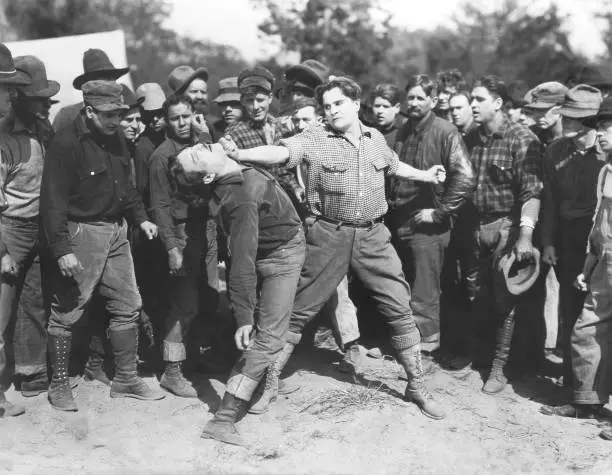
The inclusion of the Universal Ranch Riders adds a layer of authenticity and kinetic energy to the background of the film. These performers were the backbone of the silent Western and adventure genres, bringing a level of physical expertise that grounded the more melodramatic elements of the plot. Their presence ensures that the world of Big Timber feels inhabited and lived-in, rather than just a series of sets.
When analyzing Big Timber, one must consider its narrative economy. Writers Wyndham Gittens and Vingie E. Roe (the latter known for her rugged Western fiction) avoid the convoluted plotting that plagued many contemporary dramas like The City of Masks. Instead, they opt for a linear, propulsive story that mirrors the directness of the timber industry itself. There is a refreshing lack of artifice here. The stakes are clear: land, loyalty, and love.
Even when compared to international works of the same period, such as the German Der Mann ohne Namen - 1. Der Millionendieb, Big Timber feels distinctly American in its obsession with the frontier and the self-made man. While European cinema was often diving into the avant-garde or the psychological, American films like this were perfecting the art of the epic, focusing on the physical conquest of the land. It shares a certain spiritual DNA with La luz, tríptico de la vida moderna, in its attempt to capture the essence of modern life, though Melford’s vision is far more grounded in the dirt and the flame.
The cinematography in Big Timber deserves significant praise. The way the cameras capture the scale of the timber—the literal giants of the forest—creates a sense of awe that is central to the film’s impact. The use of natural light, filtered through the dense canopy, creates a chiaroscuro effect that prefigures the noir aesthetics of the next decade. There is a sequence involving the transport of logs downriver that is edited with a rhythmic precision reminiscent of the best work in During the Plague, emphasizing the danger and the mechanical beauty of the work.
Furthermore, the film avoids the slapstick tendencies that were still prevalent in 1924, such as those found in Be a Little Sport or Once a Mason. Melford maintains a somber, respectful tone toward his subject matter. He treats the logging profession not as a backdrop for comedy, but as a noble, albeit perilous, vocation. This tonal consistency is what allows the final emotional beats to land with such force.
In the grand tapestry of silent cinema, Big Timber may not always receive the scholarly attention of a Murnau or a Griffith, but its importance cannot be understated. It is a vital record of a vanishing world—both the physical world of the old-growth forests and the cinematic world of the practical epic. It captures a moment when the screen was a window into the wild, a place where a man like Walter Sandry could face down both a corrupt foreman and a literal wall of fire to claim his place in the sun.
As we look back from a century’s distance, the film’s themes of environmental stewardship versus industrial exploitation feel remarkably prescient. While the film ultimately sides with the heroic individual, the haunting images of the charred landscape remain in the mind long after the final intertitle. It is a more complex work than it initially appears, possessing a depth of feeling that rivals Winter Has Came or the social observations of Boman på utställningen.
For those seeking to understand the roots of the American action-drama, Big Timber is essential viewing. It is a testament to the power of the silent image to convey scale, emotion, and the eternal struggle between man and the elements. It is, quite simply, a towering achievement in every sense of the word.
IMDb —
1915
Community
Log in to comment.