DbcultAccessing Vault...
Cult Review
Senior Film Conservator
Nitrate ghosts don’t stay buried; they hitch rides.
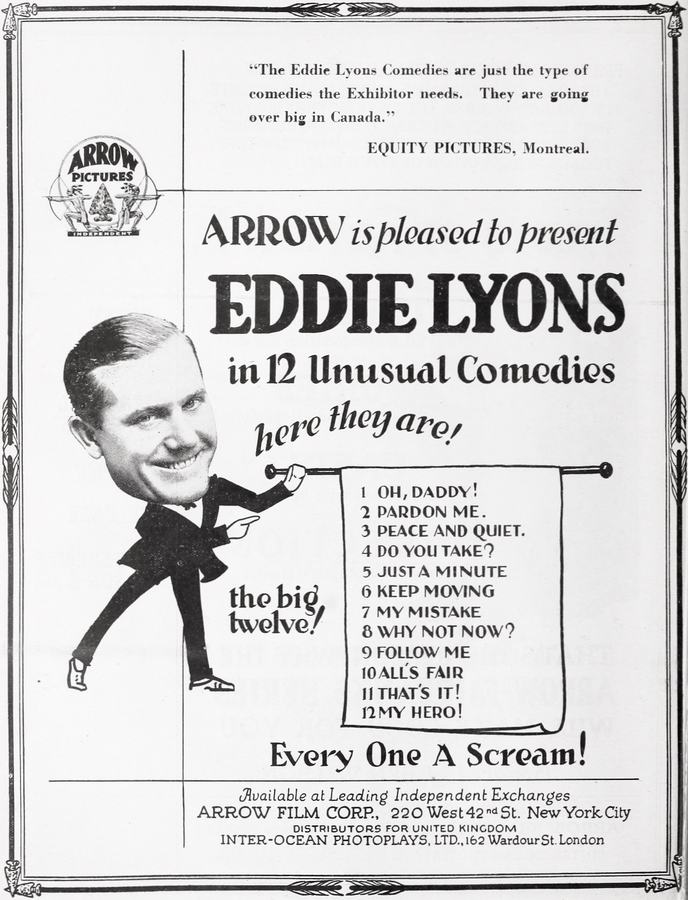
When the first extant print of Keep Moving surfaced in a Slovenian salt mine two winters ago, archivists expected another slapstick one-reeler. Instead they found a palimpsest stitched from American restlessness—frames scarred like flapper knees, emulsion smelling of coal smoke and bathtub gin. What unspools is less a linear story than a fugue state: Beth Darlington’s iris-wide eyes become twin projection booths, flashing alternate Americas against the boxcar walls while Eddie Lyons taps out Morse code with metal-heeled shoes, arguing with the very concept of arrival.
McGowan’s gamble was to treat plot as ballast—something you jettison to stay aloft.
Compare it to the same year’s Where the West Begins and you see the difference: that film still tips its Stetson to destination, to Manifest Destiny’s Visa stamp. Keep Moving refuses the stamp, eats the visa, then forges new ones from cigarette foil. The westward push becomes a Möbius strip; every mile gained is a mile looped back inside the psyche.
Silent-era audiences were sold the fantasy that geography could solve character. Run far enough, titles cards promised, and your sins trail off like excess intertitles. McGowan’s heresy lies in reversing the equation: his characters move because stasis would force them to inhabit the people they actually are. Darlington’s ingenue—usually typecast as the girl who waits—here clutches a timetable she’s forever revising with fountain-pen blood. Lyons, once the clown prince of careless affection, wears pathos like a wrinkled tux, lapels fraying in exact proportion to his denial.
Their chemistry is not romantic; it’s kinetic, two particles smashing to produce narrative radiation.
In the carnival sequence—shot in the actual backlot where Sennett staged pie fights—barkers pitch attractions such as "The House of Perpetual Tomorrow" where entry costs a yesterday. A contortionist folds herself into a suitcase labeled "Beth’s Future," only to unzip and reveal she’s become Darlington’s doppelgänger. The edit is so savage, so rhythmically syncopated, you swear the film itself is tap-dancing on hot coals. The reference points aren’t Griffith or DeMille but the fevered scripture of later surrealism; you can smell the pre-echo of Dracula’s Death and the pulp nihilism of Rablélek.
Though monochrome, the tinting strategy weaponizes hue like a secret soundtrack. Night sequences bathe in sea-blue cyan that feels submarine, pressing you against the ocean floor of the American night. Dawn erupts into burnt orange so vivid it seems to oxidize the frame edges. Yellow appears only when characters confront the possibility of mercy—an anemic sunrise inside a jail cell, a buttercup tucked into a bullet hole. These aren’t just ornamental choices; they’re argumentative, insisting that morality in motion carries its own weather system.
Imagine if Van Gogh had been a hobo with a Movieola—those are the brushstrokes we’re talking about.
Compare the chromatic philosophy to Carmen (1918), where color served exotic othering. Here it serves nomadic ontology: the world changes palette because identity refuses stasis.
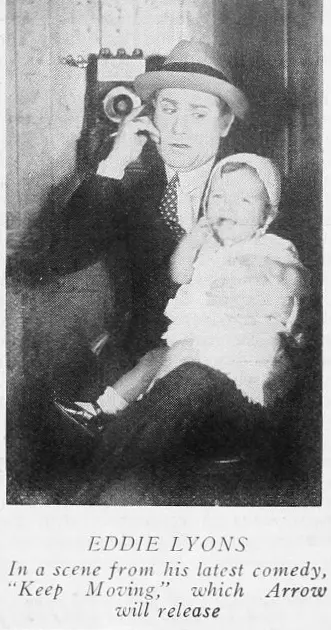
McGowan and editor Lew “Patch” Morrison splice footage like they’re thumbing rides: jump cuts that feel like boxcar lurches, match cuts that switch rails mid-continent. One moment Darlington applies lipstick using a cracked reflection in a railroad spike; next frame the lipstick stains become arterial spray on a wanted poster miles away. Geography collapses, yet momentum inflates. The strategy predates the Soviet montage masters but flirts with the anarchic comedy of Looney Lions and Monkey Business—only here the gags detonate into existential shrapnel.
The audience is not addressed; it is collared, hustled aboard, and told to guard the brake—except the brake’s already missing.
Because the film lacks synchronized dialogue, every intertitle lands like a manifesto carved into a boxcar wall. When Darlington whispers “We keep moving because the mirror can’t follow,” the words hang, then combust into a superimposed image of her childhood home consumed by animated flames—animation achieved by scratching directly onto the emulsion. Such proto-Godardian tricks remind us that silence was never absence but a vacuum begging for graffiti. Contemporary viewers conditioned by Dolby thunder may find this quietude unnerving; accept the hush and you’ll detect the percussive heartbeat of wheels on rail, a pulse more intimate than any Hans Zimmer boom.
Beth Darlington weaponizes the ingenue archetype, letting audiences project rescue fantasies onto her doe-eyed silhouette before she clubs them with self-sufficiency. Watch her hands: they tremble like aspen leaves when pouring coffee for a fellow drifter, yet steady into surgeon calm while pickpocketing his last subway token—an economy of need devoid of malice. Eddie Lyons counters with vaudeville timing so precise it borders on Brechtian sabotage. His smile arrives a half-second before the joke, leaving space for the viewer’s complicity. Together they forge a dialectic: she’s fleeing definition; he’s fleeing confirmation. Their duet climaxes inside a boxcar converted into a makeshift courtroom where a blindfolded judge (cameo by writer McGowan) sentences them “to the crime of being synonyms for motion.”
It’s the only film where the closing embrace feels like a mugging by possibility.
Histories written by the winners ignore movies that refuse to arrive. Thus Keep Moving slipped through the cracks while Penrod and The Stealers filled textbook sidebars. Yet its DNA contaminates later road movies—from Detour’s post-war fatalism to Vanishing Point’s existential throttle. Even the neon lyricism of La La Land owes a covert debt: the duet in traffic jam starts here, in a boxcar where movement is both curse and metronome.
Cinephiles who worship at the altar of Congestion will note similar claustrophobia, yet where that film traps, this one liberates—albeit into vertigo.
Most prints lack the penultimate reel—lost to projector fires or censor scissors. Cine-theorists treat the absence as intentional, arguing that the narrative rupture mirrors America’s own amnesia toward its itinerant underclass. I side with the accidental poets: the missing reel forces viewers to hitchhike across the rupture, cobbling their own montage of how two fugitives vault from wheat-field purgatory to the mirrored lake finale. In that vacuum, every spectator becomes co-author, a participatory gimmick mainstream Hollywood wouldn’t rediscover until 3-D novelty cycles.
The train derailment is not disaster but graduation: boxcars somersault into a lake so pristine it doubles the sky, swallowing the locomotive like a chrome serpent devouring its own schedule. Darlington and Lyons stride across the water’s surface—crude double-exposure trickery that predates digital compositing—carrying lanterns that sputter out one frame before a match-cut sunrise. They vanish into the glare, footsteps leaving no ripple, as if the world agreed to erase their visa stamps. It’s the rare ending that suspends rather than terminates, a cinematic ellipsis trailing off the screen and into your commute home.
Verdict: A century late to its own funeral, Keep Moving still outruns the zeitgeist. Catch it before it catches the wind again.
IMDb 5.8
1937
Community
Log in to comment.