DbcultAccessing Vault...
5.4/10
Senior Film Conservator
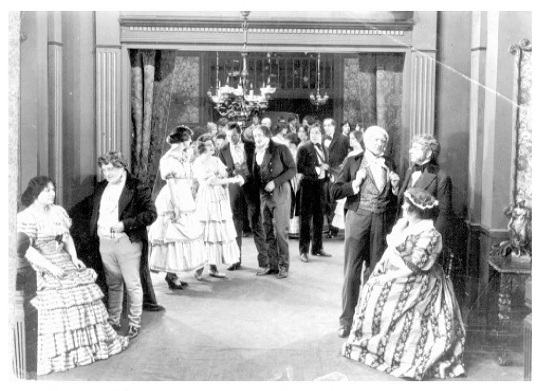
A definitive 5.4/10 rating for a film that redefined the boundaries of cult cinema. Little Women remains a cornerstone of transgressive art.
In the burgeoning landscape of 1917 cinema, the translation of Louisa May Alcott’s *Little Women* to the silver screen represented more than a mere adaptation; it was an exercise in capturing the American zeitgeist through the lens of domesticity. Directed with a surprising degree of sensitivity for the era, this version stands as a testament to the enduring power of character-driven storytelling. While contemporary audiences might be more accustomed to the Technicolor vibrancy of later iterations, there is an ethereal, almost haunting quality to this silent production that strips the narrative down to its emotional marrow.
The film opens with a deliberate pacing, establishing the March residence not just as a setting, but as a living, breathing character. The absence of the father—a thematic weight that mirrors the contemporary anxieties of the Great War era during which this film was released—casts a long shadow over the proceedings. Yet, the vibrancy of the sisters provides a necessary counterpoint. Mary Lincoln’s portrayal of Jo March is a revelation of physical acting; her movements are jerky yet purposeful, embodying the restless spirit of a woman trapped between the pages of her own ambition and the rigid structures of 19th-century New England.
The chemistry between the leads is the gravitational force of the film. Florence Nelson as Meg brings a grounded, maternal grace that balances the more volatile energies of her younger siblings. In contrast, the portrayal of Amy by Daisy Burrell offers a fascinating look at the character's early vanity and eventual refinement. Unlike the psychological density found in Prestuplenie i nakazanie, where the interiority is often suffocating, *Little Women* utilizes the open spaces of the March garden and the cluttered warmth of the attic to externalize the characters' inner lives.
The death of Beth, played with a diaphanous fragility by Vivian Tremayne, is handled with a restraint that modern directors could learn from. In an era where melodrama often bordered on the grotesque, the 1917 film opts for a quietude that is deeply affecting. The use of soft focus and naturalistic lighting during the sickbed scenes creates a sense of sacred space. It reminds one of the somber visual language used in Les Misérables, Part 2: Fantine, where the suffering of the innocent is elevated to a form of cinematic liturgy.
Technically, the film is a marvel of its time. The production design avoids the staginess that plagued many early features. There is a tactile quality to the costumes—the heavy wools, the starched collars, the worn edges of the books Jo treasures. This attention to detail creates a verisimilitude that grounds the more sentimental aspects of the plot. When compared to the stylized artifice of The Dream Girl, this adaptation feels remarkably modern in its commitment to a lived-in reality.
The camera work, though largely static, utilizes the proscenium arch of the frame to create intimate tableaux. The framing of the four sisters around the hearth is an iconic image that has been replicated in every subsequent version, but here it feels fresh, born from the necessity of the silent medium to convey warmth without words. The intertitles are poetic, retaining Alcott’s voice while bridging the gap between the literary and the visual. The film doesn't shy away from the harshness of their poverty, a theme also explored with grit in The Opium Runners, though here the struggle is internal and social rather than criminal.
Mary Lincoln’s Jo is the undisputed heart of the film. Her performance is a masterclass in facial nuance. One can see the wheels of her imagination turning as she scribbles away in the attic. There is a specific scene where she sells her hair—a moment of profound self-abnegation—where Lincoln’s eyes convey a mixture of terror and pride that is truly arresting. This level of nuanced performance is a far cry from the broad strokes seen in The Joe Gans-Battling Nelson Fight, showcasing how much the art of screen acting had evolved by 1917.
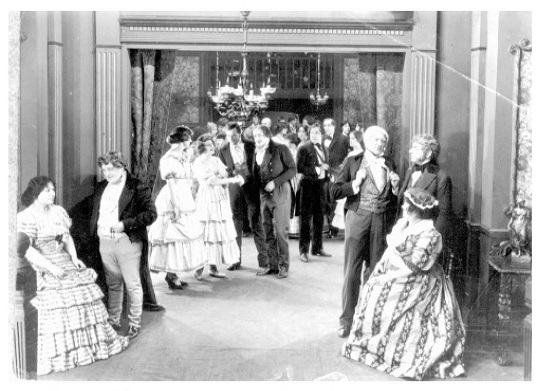
Milton Rosmer as Laurie provides the necessary romantic tension, though his performance is perhaps the most rooted in the theatrical traditions of the time. His interactions with Jo are playful, yet underscored by a palpable sense of longing. The contrast between his wealth and the Marches' modest means is highlighted through subtle visual cues—the cut of his coat versus the mended dresses of the girls. This socioeconomic friction is a recurring motif in silent cinema, often handled with more aggression in films like Sudden Riches, but here it is treated with a gentle, almost wistful touch.
The screenplay, credited to the source material itself, manages to condense a sprawling novel into a coherent cinematic journey without losing the episodic charm that defines the book. It avoids the convoluted plotting found in Fantomas: The Man in Black or the procedural density of The Crime and the Criminal. Instead, it leans into the seasonal structure—the snowy winters of New England and the lush, hopeful springs.
The film’s pacing allows for moments of quiet reflection, a rarity in an era where action was often prioritized. We see the sisters in repose, reading, sewing, and dreaming. These moments of stillness are where the film truly shines, capturing the essence of what it means to be young and full of potential in a world that is often indifferent. The portrayal of the elderly Mr. Laurence and his relationship with Beth is particularly touching, providing a bridge between the generations that feels authentic and earned.
Watching *Little Women* (1917) today is like peering through a dusty window into a vanished world. It lacks the political grandeur of Pyotr Velikiy or the institutional critique of The Governor's Boss, but its focus on the domestic sphere makes it no less significant. It is a film about the small victories of the human spirit—the courage to be kind, the strength to endure loss, and the audacity to dream of a life beyond one's immediate circumstances.
The supporting cast, including Ruby Miller and Lionel d'Aragon, provide a solid foundation for the central quartet. Even the smaller roles are played with a sense of purpose, contributing to the feeling of a fully realized community. This ensemble approach is reminiscent of the collective storytelling seen in Hands Across the Sea, where individual stories weave together to form a larger cultural narrative. The film’s conclusion, while traditional, feels like a necessary resolution to the emotional journey we have undertaken with these characters.
In the pantheon of Alcott adaptations, this 1917 version occupies a unique space. It is not just a historical curiosity; it is a vibrant piece of filmmaking that understands the core of its source material. It captures the bittersweet nature of growing up—the realization that while the family unit may change and disperse, the bonds forged in the crucible of shared experience remain indelible. For those willing to look past the absence of sound and color, there is a profound beauty to be found in this silent sisterhood. It is a cinematic experience that remains as relevant today as it was over a century ago, proving that some stories are truly timeless, transcending the technological limitations of their era to speak directly to the heart.
Whether compared to the dark psychological depths of Lost in Darkness or the moral quandaries of Den Vanærede, *Little Women* stands out for its unwavering optimism. It is a film that celebrates the light even in the midst of darkness, much like the spiritual journey depicted in John Redmond, the Evangelist. It is a reminder of the power of the hearth, the home, and the enduring strength of women who, despite the constraints of their time, managed to carve out lives of meaning and purpose. Even the rugged individualism seen in The Boundary Rider finds a domestic parallel here, as Jo March rides the boundaries of her own social confines with the same tenacity and grit.

IMDb 4.6
1928
Community
Log in to comment.