DbcultAccessing Vault...
Cult Review
Senior Film Conservator
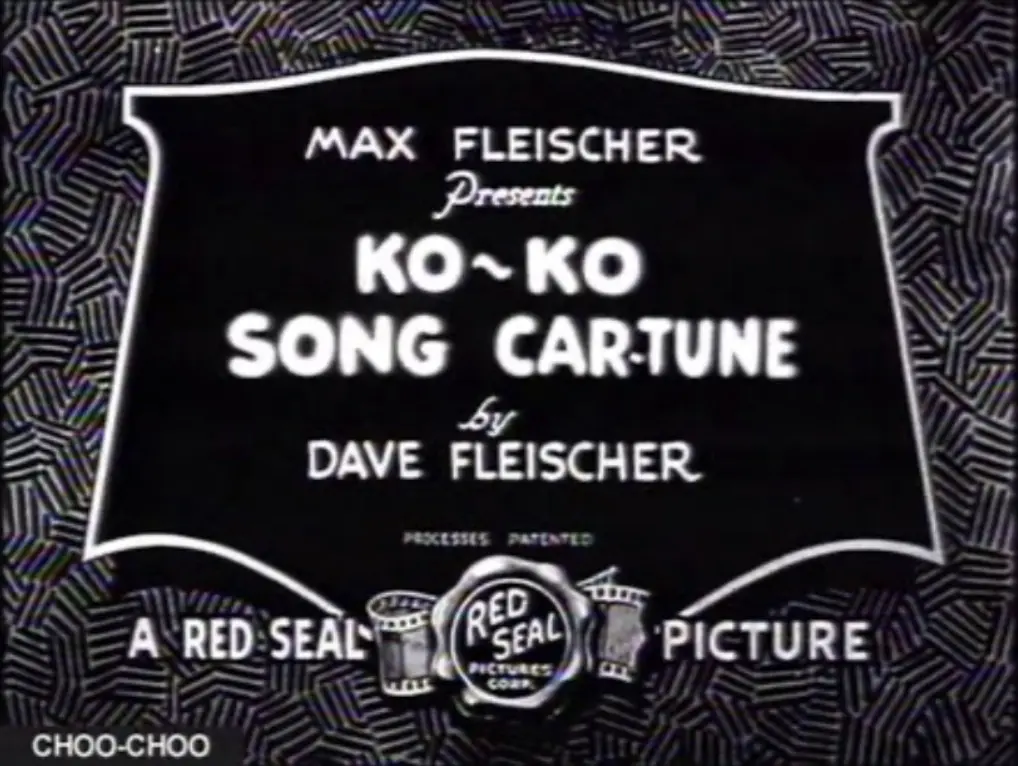
To witness the 1925 rendition of the Nutcracker Suite is to peer through a temporal keyhole into the very moment cinema found its voice. Long before the industry coalesced around the standardized systems of the late 1920s, Dave Fleischer and the proponents of the DeForest Phonofilm system were experimenting with the volatile marriage of light and longitudinal sound waves. This short film is not merely a relic; it is a testament to the audacity of the Fleischer brothers, whose later work would redefine animation, but whose early forays into sound-on-film remains a fertile ground for historical excavation.
In the mid-twenties, the cinematic landscape was a fractured mosaic of competing technologies. While mainstream audiences were still enthralled by the silent pantomime of films like Look Out Below!, the Fleischers were already looking toward a future where the auditory and the visual were inseparable. The Nutcracker Suite utilized the DeForest Phonofilm process, a sound-on-film method that predated the more famous Vitaphone sound-on-disc system. This technological choice allowed for a degree of synchronization that was, at the time, nothing short of miraculous. When we compare the fluidity of this musical short to the static, often cumbersome narrative structures of contemporary dramas like Everyman's Price, the sheer ambition of the project becomes palpable.
Lee de Forest’s invention provided the canvas, but Dave Fleischer provided the kinetic energy. The film operates as a series of vignettes, a curated selection from Tchaikovsky’s opus that serves as a proof of concept for the potential of musical cinema. There is a certain ghostliness to the audio—a crackling, atmospheric layer that reminds the modern viewer of the fragility of early celluloid. Yet, within that static, the melody of the 'Waltz of the Flowers' emerges with a poignant clarity. It is a reminder that cinema was, in its infancy, a medium of pure sensation, often more aligned with the avant-garde than the literal storytelling of John Heriot's Wife.
Dave Fleischer’s directorial hand is evident in the rhythmic pacing of the imagery. While the film lacks the surrealist elasticity of the later Betty Boop or Popeye cartoons, there is an embryonic sense of 'mickey-mousing'—the technique of matching action to music—that would later become a staple of the animation industry. In the 1925 Nutcracker Suite, this is achieved through careful editing and the positioning of performers who seem to breathe in time with the woodwinds. This level of coordination was far more sophisticated than the theatrical staging found in Bella Donna, which relied on the star power of Pola Negri rather than technical innovation.
The visual palette is a study in high-contrast chiaroscuro. The limitations of 1920s film stock necessitated a bold use of light, which perfectly complements the dramatic shifts in Tchaikovsky’s score. One can see parallels between this film’s dreamlike quality and the expressionistic leanings of Der verlorene Schuh, another 1923 masterpiece that utilized fairy tale motifs to explore visual depth. However, where the German film sought to create a static, painterly world, Fleischer’s Nutcracker is obsessed with movement. It is a film that refuses to stand still, much like the bustling energy of Hick Manhattan, but refined through the lens of high culture.
To understand why this film matters, one must consider the cultural climate of 1925. The world was recovering from the Great War, and there was a desperate hunger for beauty and technological progress. Classical music was the bridge between the old world and the new. By bringing the Nutcracker Suite to the silver screen with sound, Fleischer was democratizing the high-art experience of the ballet. It wasn't just about the elite in opera houses anymore; it was about the collective experience of the cinema-goer. This shift in accessibility is mirrored in the way films like Kids and Kidlets attempted to capture the mundane joys of childhood for a mass audience.
Furthermore, the film serves as a fascinating counterpoint to the exoticism prevalent in cinema of the era, such as Minaret Smerti or Eine weisse unter Kannibalen. While those films sought to shock or titillate with 'otherness,' the Nutcracker Suite relied on the universal language of melody. It was an exercise in pure aestheticism, a precursor to the 'Silly Symphonies' that would arrive a few years later. The film’s brevity is its strength; it does not overstay its welcome or delve into the melodrama that often bogged down features like Willy Reilly and His Colleen Bawn.
The tragedy of early sound cinema is the loss of so many foundational works. The 1925 Nutcracker Suite is a rare survivor, a fragment of a larger ambition. When we watch it today, we are seeing a restoration of hope—the hope that art can survive the obsolescence of its medium. The film lacks the narrative complexity of Builders of Castles, but it possesses a sensory depth that those silent dramas could never achieve. It is a work that demands to be heard as much as seen, a revolutionary concept in a time when the 'movies' were still inherently mute.
Consider the scene featuring the 'Russian Dance.' The speed of the film and the staccato of the music create a dizzying effect that feels remarkably modern. It anticipates the fast-paced editing of the MTV era by several decades. This isn't the slow, methodical storytelling of A kölcsönkért csecsemök; it is a visceral assault on the senses. Fleischer understood that sound wasn't just an addition to the image; it was a transformative force that changed how the audience perceived time and space on screen.
In the grand lineage of musical films, the Nutcracker Suite stands as a lonely but proud ancestor. It paved the way for the integration of sound that would eventually lead to the sweeping epics and the intricate musicals of the 1930s. Without these early experiments, the transition to sound might have been even more turbulent. The film’s influence can be felt in the rhythmic soul of Singer Jim McKee, which, despite being a Western, relied heavily on its tonal atmosphere to convey emotion.
Moreover, the film’s focus on a suite—a collection of musical pieces—allowed for a non-linear exploration of mood. This was a departure from the rigid structures of films like Up and Going. Fleischer was teaching the audience how to listen to a movie, how to find the narrative thread in the rise and fall of a violin bow rather than in the dialogue intertitles. It was a sophisticated ask for a 1925 audience, and it remains a sophisticated experience for us today.
Ultimately, the Nutcracker Suite is a triumph of spirit over technical limitation. It is a film that glows with the excitement of discovery. When the Sugar Plum Fairy dances across the screen, accompanied by the shimmering notes of the celesta, we are not just watching a 1925 short; we are witnessing the birth of a new art form. It is as raw and untamed as the naturalism in Wild, yet as meticulously constructed as a Swiss watch. For any serious student of cinema, this film is essential viewing—a haunting, beautiful, and profoundly important piece of the puzzle that is film history.
As the final notes fade into the hiss of the vintage soundtrack, one is left with a sense of awe. The Fleischers didn't just record a performance; they captured the soul of the music and gave it a face. In the dark of the theater, in 1925, that face was the future. Today, it is a cherished memory of a time when everything in cinema was new, and every frame was a gamble against the unknown. The Nutcracker Suite is a masterpiece of the miniature, a small film with a massive legacy that continues to resonate in every beat of every musical that followed in its wake.
IMDb —
1935
Community
Log in to comment.