DbcultAccessing Vault...
Cult Review
Senior Film Conservator
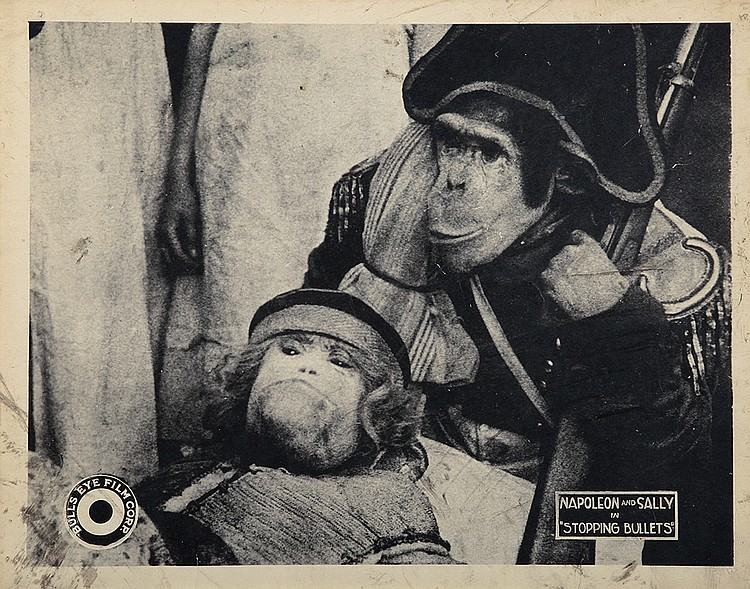
A town painted in gun-smoke chiaroscuro, where every church bell sounds like a shell casing dropped on marble—this is the canvas on which Stopping Bullets sprays its savage graffiti.
Director-writers Sally and Napoleon refuse to genuflect to genre; instead they flay it alive. Neo-western bones jut through expressionist sinew, while cyber-noir circuitry twitches beneath. The result feels like Jacques of the Silver North cross-pollinated with Within the Cup’s claustrophobic mysticism, yet hotter, needier, more inclined to bite.
Color here is not mere palette but ammunition. Burnt umber dusklings smother the horizon, then surrender to tungsten muzzle blooms. Notice how Sally’s copper-jacketed bullets mirror her hair—both streaked with arterial vermilion—while Napoleon’s cobalt greatcoat absorbs moonlight like a bruise that refuses to heal. In the third act, a child’s paper kite drifts across the frame, dyed in canary and sea-blue slashes, a fragile prayer against the coming hail of lead.
Sally’s sharpshooter is a study in kinetic stoicism—eyes narrowed to caliper slits, wrists flicking with metronomic grace. Yet in the bell-tower sequence, when she must plug a rival sniper silhouetted against a stained-glass Madonna, her lower lip trembles a single millimeter: a micro-earthquake that topples empires. Napoleon, by contrast, weaponizes verbosity; his rumbling monologues about “the morality of exit wounds” feel like Casanova’s love letters rewritten by a mortician. Together they generate the kind of erotic friction you’d expect if Her Husband’s Friend took a wrong turn into No-Man’s-Land.
Silence arrives only after firefights, and even then it is perforated by high-frequency sine waves—ghosts of bullets that haven’t yet arrived. Composer unnamed samples cartridge impacts, then stretches them into whale-song. When the kid courier’s heartbeat is mic’d via stethoscope, every thud lands like distant artillery from The Retreat of the Germans, reminding us that war is merely love with louder logistics.
Editors splice 24-fps present-day footage with 16-fps flashbacks, creating staccato ghost-images—memories projected through a zoetrope. One bravura match-cut flings us from a spent casing still spinning on cobblestones to a roulette wheel in Tea for Two: capitalism and carnage as conjoined twins. The film’s midpoint rewinds itself, literally; we watch a bullet suck blood back into a torso, an anti-ontological gag that rivals Oil’s Well That Ends Well’s petroleum surrealism.
Sally’s femininity is neither armor nor Achilles heel; it is the rifling groove that gives her purpose spin. When town elders sneer “guns are a man’s last poetry,” she responds by engraving Emily Dickinson onto a .50-caliber slug—then fires it through the patriarchy’s favorite tavern sign. The recoil knocks her shoulder purple, but the grin she shoots Napoleon is pure solar flare.
Look for the recurring moth that lands on gun barrels—its wings patterned like trench maps. Or the blind piano tuner who insists the town’s last untuned key is Middle-C, “the note of mercy.” When that key is finally struck by a ricocheting bullet, the resulting chord harmonizes with the child’s off-screen scream, producing an accidental requiem worthy of La loca del monasterio.
Is it ethical to trade one innocent life for a ledger of corrupt ones? The film refuses binary answers. Instead it poses that morality itself is a bullet: once fired, its trajectory depends on wind, gravity, and the shooter’s trembling faith. In the penultimate scene, Sally and Napoleon stand beneath a water tower rigged to explode. They could walk away, but they choose to fire upward, perforating the tank so that a cleansing rain of rust and blood drenches the town—a baptism by their own besmirched hands.
Where Was He a Coward? interrogates fear via monochrome stillness, Stopping Bullets answers with polychrome chaos. Charley at the Beach flirts with sunlit absurdity; here, daylight is merely a brighter darkness. And while Europa postlagernd mails its despair across borders, this film hand-delivers it, bullet-courier style.
By the time the end credits flicker like muzzle flashes against black, you realize the title itself is a cruel joke: nobody stops bullets; they merely redirect them. What lingers is not the odor of cordite but the after-image of Sally’s silhouette—spine arched, rifle raised—etched onto your retina like a sunspot you’ll carry for days. In an era when most cinema tickles the mind then excuses itself, Stopping Bullets splits the sternum, rummages around, and leaves you sewing yourself together with spent shell casings for thread. It is vicious, voluptuous, and voraciously vital—an anthem for anyone who has ever wished that love could be holstered next to the heart.
Stream it wherever fearless art hides. Bring bandages.
IMDb —
1919
Community
Log in to comment.