DbcultAccessing Vault...
Cult Review
Senior Film Conservator
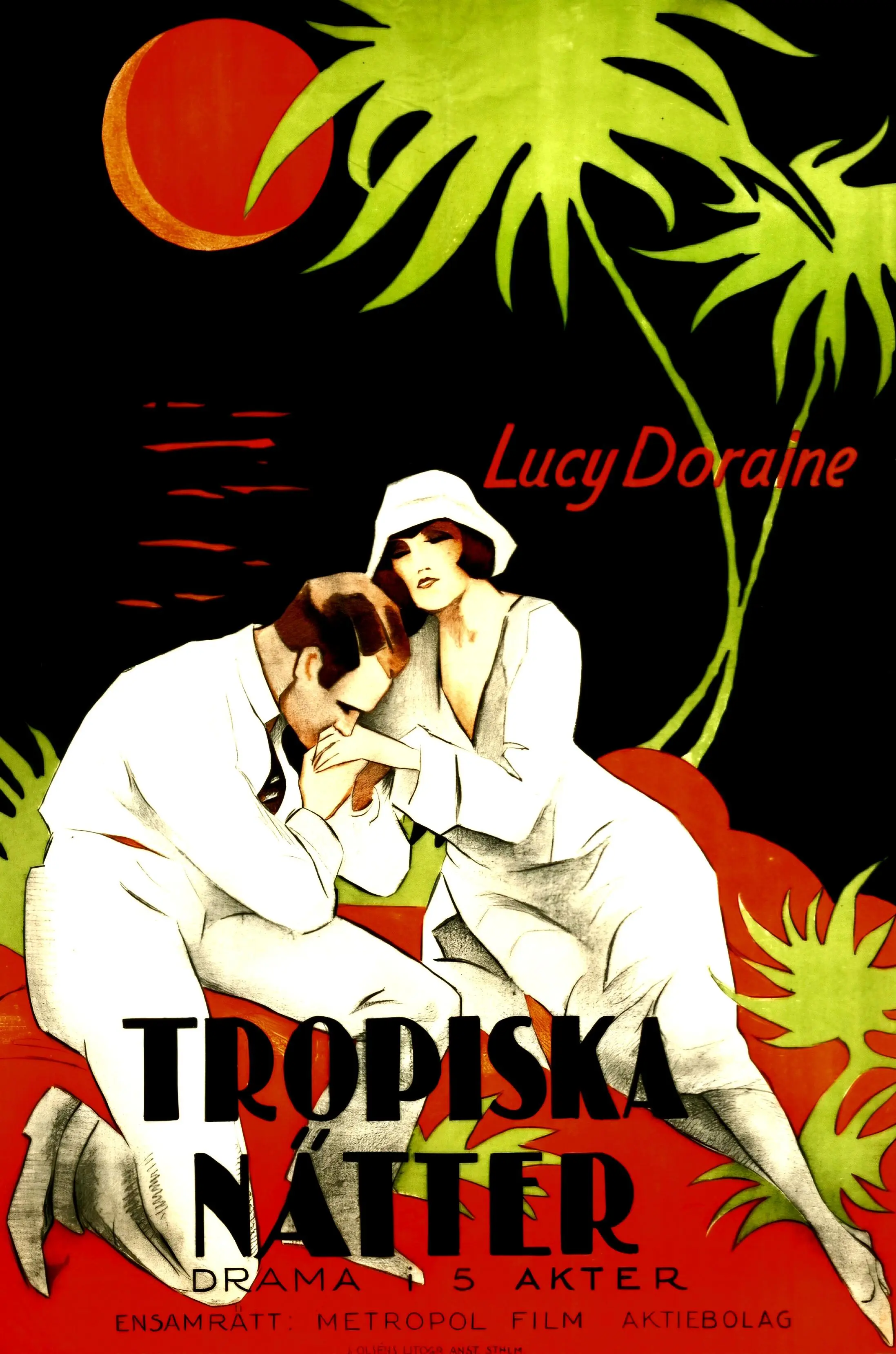
The year 1924 stands as a monumental pillar in the architecture of German cinema, a period where the medium transitioned from mere spectacle to a profound psychological instrument. In the midst of this artistic fever dream, Rudolf Biebrach delivered Um eines Weibes Ehre, a film that, while perhaps less discussed today than the giants of Expressionism, contains within its frames the very soul of the era's anxieties. To watch this film in the modern age is to engage with a ghost—a flickering, silver-nitrate specter that speaks of honor, gender, and the crushing weight of societal expectation with a clarity that remains startlingly visceral.
At the epicenter of this dramatic storm is Lucy Doraine. To understand her impact, one must look past the technical limitations of 1920s orthochromatic film and focus on the sheer luminosity of her performance. Unlike the grandiosity seen in historical epics like Marc'Antonio e Cleopatra, where performance often bordered on the statuesque, Doraine brings a modern, twitchy vulnerability to her role. Her face is a landscape of shifting tectonic plates; a micro-expression of the lip or a slight widening of the eyes conveys more narrative weight than a dozen intertitles.
In Um eines Weibes Ehre, Doraine embodies the 'woman of honor' not as a static virtue, but as a hunted animal. Her performance is a masterclass in the economy of movement. When she shares the screen with Georg H. Schnell, there is a palpable tension—a chemical reaction between Schnell’s rigid, Prussian-coded masculinity and Doraine’s fluid, almost transgressive presence. It is this friction that drives the film forward, elevating it from a standard melodrama to a poignant critique of the very 'honor' its title invokes.
Rudolf Biebrach, a veteran of both the stage and the early screen, demonstrates an evolving cinematographic syntax here. While many films of the early 20s, such as The Tents of Allah, relied heavily on the exoticism of their settings to captivate audiences, Biebrach finds his power in the domestic and the claustrophobic. The interiors in Um eines Weibes Ehre are not just backgrounds; they are psychological extensions of the characters. The heavy drapery, the ornate clocks, and the looming doorways serve to hem the characters in, creating a sense of inevitable doom that is quintessentially Germanic.
The pacing of the film is deliberate, eschewing the frantic energy found in American comedies like Beaches and Peaches or the pulse-pounding stakes of $1,000 Reward. Instead, Biebrach opts for a slow burn, allowing the moral rot of the story to seep into the viewer’s consciousness. There is a specific sequence—a confrontation in a dimly lit study—where the use of light and shadow rivals the best of the Kammerspielfilm movement. The way the light catches Fritz Greiner’s features, turning him into a gargoyle of malice, is a testament to the technical prowess of the UFA-adjacent craftsmen of the period.
Marie Luise Droop’s writing provides the film with its sharpest edges. Droop, a writer of significant intellectual depth, doesn't settle for a black-and-white morality play. While a contemporary American film like The Greatest Question might lean into Griffith-esque sentimentality regarding virtue and providence, Droop’s script is far more cynical. It understands that 'honor' is a currency, and in the hyperinflationary world of the 1920s, that currency is being devalued by the minute.
The dialogue (via intertitles) is sparse but evocative. It lacks the populist charm of Casey at the Bat, choosing instead a register that feels almost liturgical. This heightens the sense of tragedy; we are not watching a mere scandal, but a ritualistic sacrifice. The script cleverly parallels the personal dishonor of the protagonist with the crumbling structures of the old world, a theme also explored in a different context within Os Fidalgos da Casa Mourisca, where the decay of the nobility is central to the narrative arc.
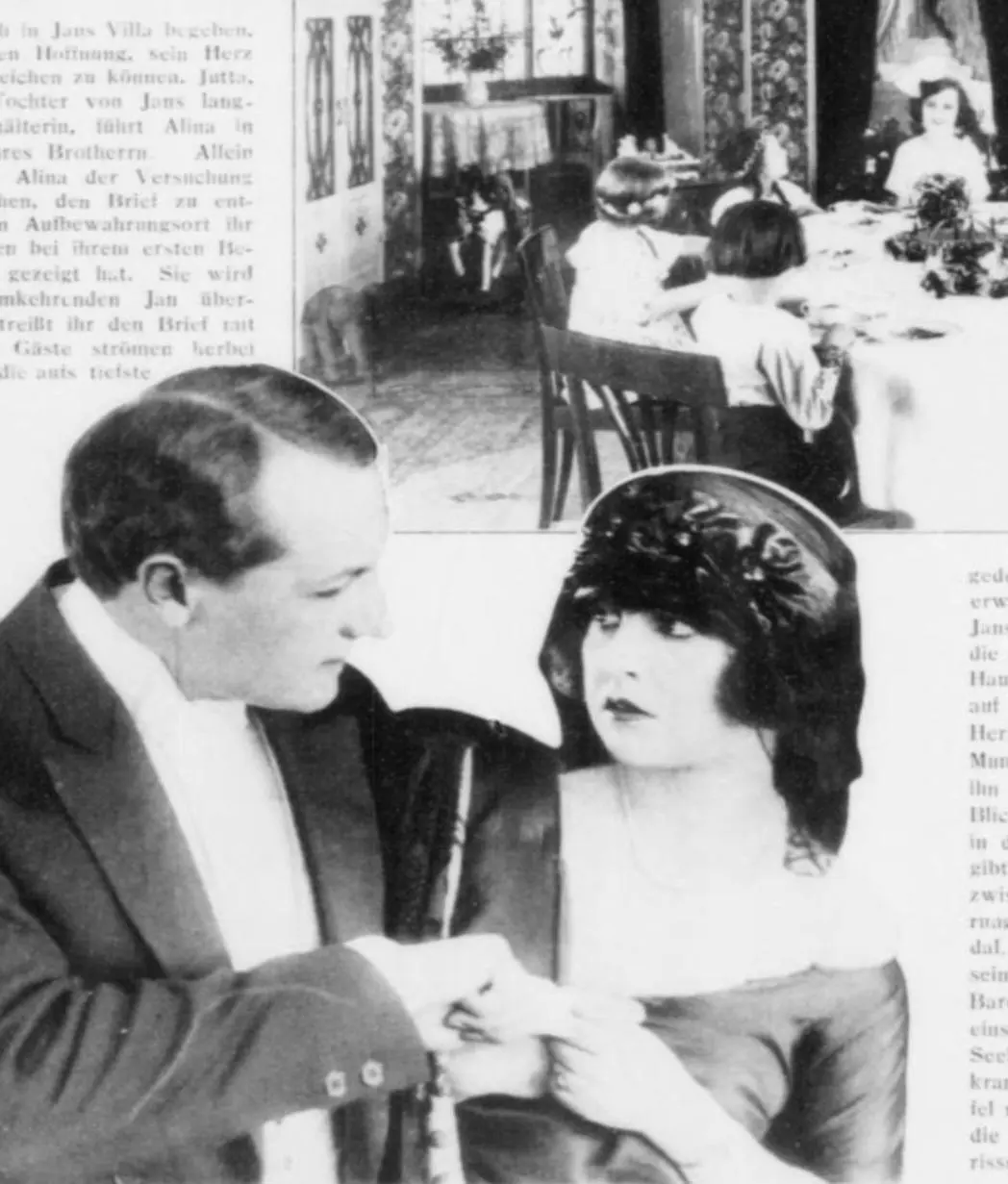
To fully appreciate the gravity of Um eines Weibes Ehre, one must contextualize it within the global cinematic landscape of the time. While Britain was documenting the industrial shift in Britain's Bulwarks, No. 1: Women Munitioners of England, and America was exploring the rugged individualism of the West in Smiling Jim, Germany was looking inward. Biebrach’s film is a spiritual cousin to the domestic dramas of the era, yet it possesses a bite that films like Gimme often lacked. Where Gimme dealt with the friction of marital finances and modern independence, Um eines Weibes Ehre deals with the primal fear of social annihilation.
There is also an interesting point of comparison with The Fourth Musketeer. Both films deal with the concept of the 'outsider' fighting for a place within a rigid hierarchy, but Biebrach’s world is far more unforgiving. There is no swashbuckling rescue here; the only weapons available to Doraine’s character are her silence and her endurance. This stoicism is a far cry from the spirited patriotism of Mary Pickford in Johanna Enlists. In the German context, 'enlisting' isn't for a cause—it’s for survival within a hostile social order.
The cinematography, handled with a keen eye for geometry, frequently uses the 'frame within a frame' technique. We often see characters through windows, through the gaps in staircases, or reflected in tarnished mirrors. This visual motif reinforces the theme of surveillance—the idea that 'honor' is something that is constantly being watched, measured, and judged by an invisible, omnipresent public. It’s a technique that feels much more sophisticated than the straightforward staging of Follow Me.
Furthermore, the film’s exploration of romantic obsession and its fallout mirrors the dark lyricism of Gypsy Love, though Biebrach strips away the folkloric elements to focus on the cold, hard reality of the bourgeois salon. Even when the film attempts moments of levity, they are undercut by a sense of impending loss. This is a world where the sun never quite seems to rise, a perpetual twilight that mirrors the historical 'Interwar' period it inhabited.
The tragedy of many silent films, including several from this era like the historical epic Ashoka, is their relative obscurity in the face of the 'talkie' revolution. However, Um eines Weibes Ehre demands a re-evaluation. It is not merely a relic for historians; it is a living piece of art that challenges the viewer to consider the fragility of their own social standing. The collaboration between Biebrach, Doraine, and Droop created something that transcends the 'melodrama' label. They created a visual essay on the cost of integrity in a world that values appearance over essence.
"In the end, the film leaves us with an image of Lucy Doraine that is impossible to shake. As the final iris-out consumes her face, we are left wondering if the 'honor' she fought for was ever worth the price of her spirit. It is a haunting, essential piece of Weimar cinema that proves that while the technology of film may change, the complexity of the human heart remains as murky and magnificent as ever."
Technical Credits: Directed by Rudolf Biebrach | Written by Marie Luise Droop | Starring Lucy Doraine, Georg H. Schnell, Fritz Greiner, Emil Fenyö, Toni Wittels, Robert Scholz | Produced in Germany, 1924.
IMDb 6.6
1931
Community
Log in to comment.