DbcultAccessing Vault...
6.2/10
Senior Film Conservator
A definitive 6.2/10 rating for a film that redefined the boundaries of cult cinema. Yajikita son'nô no maki remains a cornerstone of transgressive art.
Is Yajikita son'nô no maki a timeless comedic masterpiece or a dusty museum piece? Short answer: It is a fascinating historical artifact that requires a specific palate for silent slapstick and a deep interest in Japanese history.
This film is for the cinephile who enjoys the intersection of political history and low-brow humor. It is absolutely not for the casual viewer who lacks the patience for the rhythmic pacing of 1920s Japanese silent cinema.
1) This film works because it humanizes a period of intense political upheaval through the lens of two idiots.
2) This film fails because its pacing is dictated by the episodic nature of its source material, making it feel disjointed.
3) You should watch it if you are a completionist of Japanese silent cinema or a fan of Denjirō Ōkōchi’s early work.
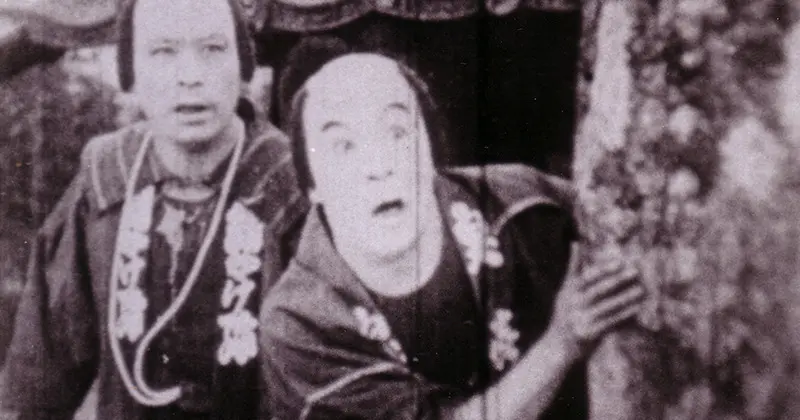
Yajikita son'nô no maki is not your standard period piece. While many films of the era, such as The Princess of India, focused on exoticism or melodrama, Tomiyasu Ikeda chose to ground this story in the dirt and grit of the Bakumatsu era. The choice to place Yaji and Kita—characters usually associated with harmless wandering—into the heart of the Sonno Joi movement was a bold creative pivot. It adds a layer of tension that is often missing from silent comedies. You aren't just laughing at their incompetence; you are fearing for their lives as they stumble into the path of lethal swordsmen.
The film manages to capture the anxiety of a nation on the brink of modernization. This isn't the romanticized Edo period seen in later decades. It is a world of shadows, suspicion, and sudden violence. In one particularly striking scene, the duo's attempt to secure a meal leads them into a secret meeting of revolutionaries. The contrast between their hunger-driven desperation and the high-stakes political fervor of the samurai is where the film finds its unique voice. It is loud without making a sound.
If you are looking for a quick laugh, the answer is no. However, if you want to see the DNA of the modern Jidaigeki, then yes, it is essential viewing. The film serves as a bridge between the traditional stage-influenced cinema of the early 1920s and the more cinematic, kinetic style that would define the 1930s. It lacks the polish of Satan's Rhapsody, but it makes up for it with raw energy and a willingness to mock the very history it portrays.
The performance of Denjirō Ōkōchi is the gravitational center of this film. By 1927, Ōkōchi was already becoming a titan of the screen, and his physical presence here is undeniable. He possesses a specific kind of facial elasticity that allows him to transition from terror to greed in a single frame. Unlike the more static performances found in The Gorgona, Ōkōchi moves with a frantic, nervous energy that feels surprisingly modern. He doesn't just play the character; he inhabits the frantic spirit of an era that was moving too fast for its people.
The supporting cast, including Midori Komatsu and Umeko Sakuragi, provide a necessary anchor. In silent cinema, the ensemble must work in perfect synchronization to maintain the rhythm of the comedy. When the group is forced to flee from a group of government officials, the choreography of the movement is reminiscent of the best Western slapstick, yet it retains a distinctly Japanese sense of space and timing. It is a masterclass in silent ensemble work, even if the print quality of surviving versions makes some of the finer details hard to discern.
Technically, Yajikita son'nô no maki is a product of its time, but that doesn't mean it lacks ambition. The Nikkatsu Uzumasa studio was the pinnacle of Japanese production at the time, and you can see the budget on the screen. The set designs for the inns and mountain passes are remarkably detailed. Compared to the minimalist approach of Sinners, this film feels expansive and lived-in. The camera work, while mostly static, utilizes depth of field to keep the background action relevant—a crucial technique when dealing with the chaotic crowd scenes of the Bakumatsu period.
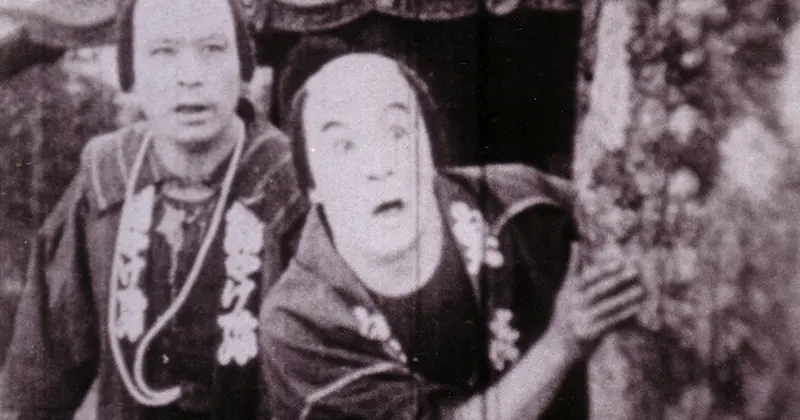
The lighting is particularly noteworthy. While many silent films relied on flat, overhead light, Ikeda uses shadows to heighten the political intrigue. The scenes set at night in the narrow corridors of Kyoto are genuinely atmospheric. They evoke a sense of claustrophobia that mirrors the duo's increasing entrapment in a political game they don't understand. It’s a visual language that predates the noir-inflected samurai films of the 1950s by decades.
One cannot discuss this film without addressing the pacing. It is episodic to a fault. Because it is based on the serialized adventures of Yaji and Kita, the film often feels like a collection of short stories rather than a cohesive narrative arc. This can be exhausting for a modern audience used to the tight three-act structures of films like The Lost City. You have to approach it with the understanding that it was designed to be accompanied by a Benshi—a live narrator who would provide context, jokes, and character voices.
Without the Benshi, some of the comedic beats land with a thud. There are long stretches of dialogue cards that interrupt the flow of the physical comedy. However, if you can settle into the slower, more deliberate rhythm, you begin to appreciate the nuances of the physical performances. It is a film that demands your full attention; you cannot look away to check your phone, or you will miss the subtle visual gag that sets up the next ten minutes of action.
Pros:
- Excellent historical production design that captures the Bakumatsu era.
- A rare successful blend of political satire and low-brow physical comedy.
- Strong physical performances that transcend the limitations of silent film.
- Important historical context for the development of Japanese cinema.
Cons:
- The lack of a surviving Benshi track makes some scenes feel hollow.
- Disjointed narrative structure can be difficult to follow.
- Some comedic tropes haven't aged well and feel overly repetitive.
To understand why this film was such a hit in 1927, one must understand the cultural weight of Yaji and Kita. They are the everymen of Japan. By putting them in a situation where they are surrounded by the 'Sonno' (Imperialists), the film is making a statement about the common man's relationship with power. It suggests that while the elites fight over the soul of the nation, the rest of us are just trying to find a warm bed and a decent meal. This cynical, yet humanistic viewpoint is what keeps the film grounded. It is less about the grand sweep of history and more about the people caught in its gears, much like the characters in Nathan der Weise.
The film also serves as a fascinating comparison to other adventure films of the time, such as Thundergate or The Big Adventure. While those films often sought to provide pure escapism, Yajikita son'nô no maki is deeply concerned with the identity of Japan itself. It uses the past to comment on the present, a tradition that would continue in Japanese cinema for the next century. It’s a messy, loud, and often confusing film, but it is never boring.
Yajikita son'nô no maki is a flawed gem. It is a film that struggles with its own identity—caught between being a broad comedy and a serious historical drama. But in that struggle, it finds a unique energy that is missing from more polished productions like The Leavenworth Case. It is a testament to the creativity of the Nikkatsu studio and the enduring appeal of its lead actors. It works. But it's flawed. If you have any interest in how cinema evolved from stage plays to the epic storytelling of the mid-20th century, you owe it to yourself to track this down. Just don't expect a smooth ride; like Yaji and Kita’s journey, it’s full of bumps, wrong turns, and unexpected delights.

IMDb —
1926
Community
Log in to comment.