
DbcultAccessing Vault...
Deep Dive
Senior Film Conservator
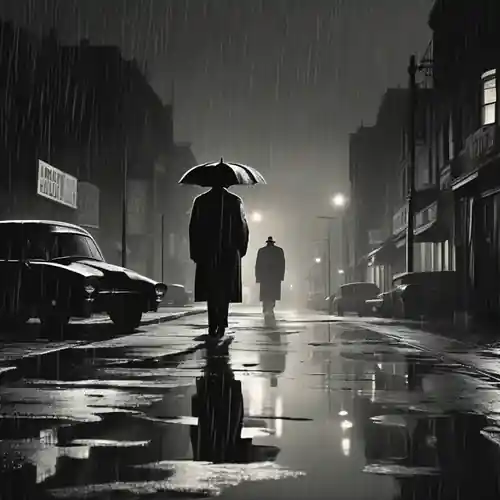
When we talk about the Atomic Age's influence on cinema, the mind often conjures images of colossal mutated insects, glowing-eyed aliens, or square-jawed scientists battling the fallout. We think Them! or The War of the Worlds. But that's a superficial reading, a mere surface tremor. The true, seismic shift the atomic bomb unleashed wasn't just in special effects or B-movie monsters; it was in the very fabric of human psychology, and consequently, in the characters who populated our darkest screens. The pervasive, abstract dread of instant annihilation, the Cold War's suffocating paranoia, and the erosion of traditional moral certainties birthed a new kind of cinematic protagonist: the existential anti-hero. These figures, often morally compromised, deeply alienated, and tragically doomed, laid the unshakeable foundation for what we now recognize as cult cinema's most compelling and enduring archetypes. This isn't about giant lizards; it's about the monster within, and the world that created him.
The 1950s were a decade of stark contradictions. On one hand, a booming post-war economy promised suburban bliss and technological marvels. On the other, the ever-present threat of nuclear war loomed like an invisible guillotine. This wasn't a visible enemy you could fight on a battlefield; it was a silent, existential terror that seeped into the collective consciousness, infecting dreams and eroding faith in progress itself. Filmmakers, consciously or not, began to reflect this profound shift. The clear-cut heroes and villains of earlier eras started to blur, replaced by protagonists who were as much victims of their own internal landscapes as they were of external forces.
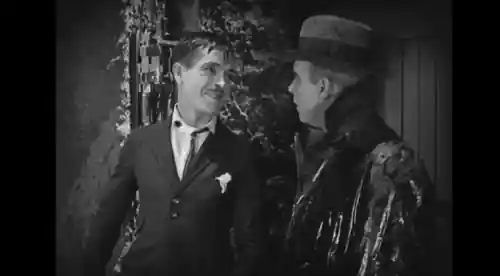
Consider the bleak, desperate cynicism of Kiss Me Deadly (1955). Robert Aldrich's adaptation of Mickey Spillane's Mike Hammer is less a detective story and more a nihilistic descent into a world utterly devoid of hope. Hammer (Ralph Meeker) isn't a hero; he's a brutal, misogynistic private eye chasing a 'Great Whatsit' – a glowing, mysterious box that turns out to be a nuclear device. The film's infamous ending, with the fiery destruction, isn't just a plot device; it's a visceral representation of the atomic threat, not as a distant possibility, but as an imminent, consuming inferno. Hammer's relentless cruelty and lack of moral compass perfectly encapsulate the era's spiritual exhaustion. He doesn't solve a crime so much as he stumbles through a landscape of moral decay, a human embodiment of the mushroom cloud's psychological fallout. This film is a pure distillation of atomic age dread, camouflaged as pulp noir, and its enduring cult status is no accident.
The Atomic Age didn't just give us flawed heroes; it gave us protagonists who were themselves the problem, or at least, fundamentally incapable of solving it. They were often self-destructive, morally ambiguous, and utterly alienated, reflecting a societal anxiety that humanity was hurtling towards its own demise, not at the hands of an external force, but through its own hubris and internal rot. This is where the true anti-hero, the kind cult audiences gravitate towards, began to coalesce.
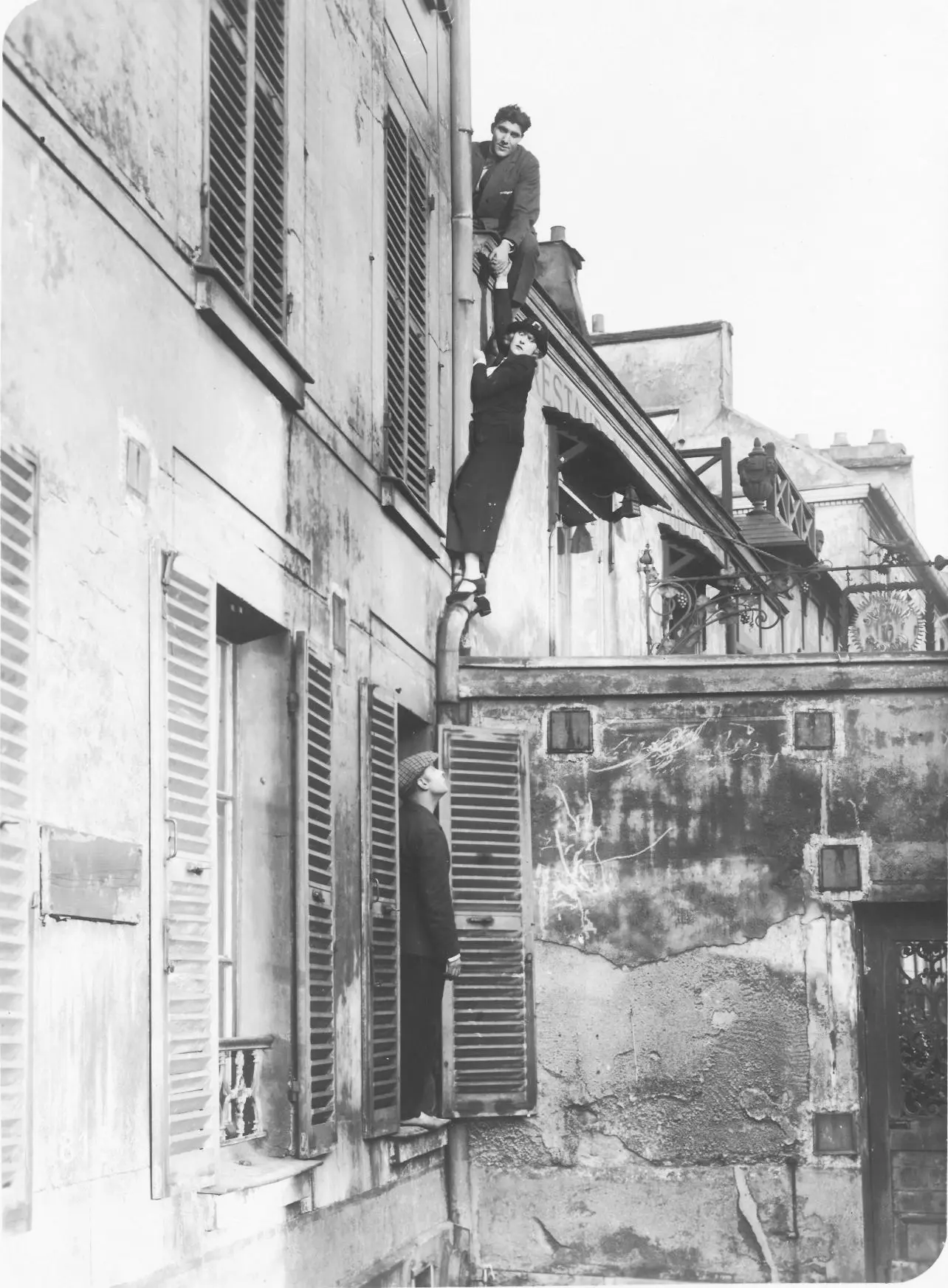
Take Frank Bono in Blast of Silence (1961). Allen Baron's gritty, independent noir follows a hitman returning to his native New York City during Christmas to carry out a contract. Bono is a walking embodiment of existential dread. His inner monologue, delivered in a detached, cynical voice-over by Lionel Stander, paints a picture of profound alienation. He hates everyone, distrusts everything, and finds no joy in life. The festive backdrop of Christmas only intensifies his isolation. He's not a hero seeking redemption; he's a cog in a brutal, indifferent machine, a product of a world where human connection is a liability and violence is a given. His inevitable, downbeat ending isn't a tragedy in the classical sense, but an affirmation of the era's bleak outlook. It’s a film that argues the atom bomb didn't just threaten cities; it scorched souls. And audiences, tired of sanitized heroes, found a dark, uncomfortable truth in Bono's relentless despair.
I'd argue that the true, lasting legacy of the Atomic Age on cult cinema isn't the campy creature features, but the profound, unsettling shift in narrative focus from external evil to the rot within, a rot that audiences, consciously or not, recognized in themselves. This makes films like On the Beach (1959) or Dr. Strangelove (1964) cult touchstones not just for their themes, but for their unflinching portrayal of human folly.
Even the seemingly more overtly 'evil' characters of the period, like Robert Mitchum's chilling Preacher Harry Powell in The Night of the Hunter (1955), take on a new dimension when viewed through this lens. Powell isn't just a religious fanatic; he's a force of malevolent nature, a predator unleashed in a world where traditional institutions (church, family) offer no real sanctuary. His 'love' and 'hate' tattooed knuckles are a grotesque, simplistic morality play in a world that had become infinitely more complex and terrifying. He preys on the innocent, mirroring a fear that the world itself had become a dangerous, unpredictable place where goodness was powerless against an arbitrary, destructive force. This isn't just good vs. evil; it's innocence against an overwhelming, primal darkness that feels like a spiritual extension of the atomic threat.
The Cold War wasn't just about bombs; it was about ideology, espionage, and the terrifying notion that the enemy could be anyone, anywhere. McCarthyism and the Red Scare cultivated an atmosphere of profound distrust, transforming neighbors into potential spies and friends into informers. This political paranoia found fertile ground in cinema, not always in overt spy thrillers, but in films where the threat was insidious, internal, and often indistinguishable from the familiar.
While Invasion of the Body Snatchers (1956) is often cited as the quintessential Cold War paranoia film, its brilliance lies in its ambiguity. Is it about communism, conformity, or simply the terrifying loss of individual identity in a mass society? Its cult appeal stems from this multifaceted dread. But beyond the pods, consider the subtle, yet equally potent paranoia in films like Pickup on South Street (1953). Samuel Fuller's raw, visceral film is ostensibly a crime thriller with a Cold War backdrop – a pickpocket inadvertently steals microfilm from a communist spy. But the film’s true power comes from its depiction of a morally grimy underworld where everyone is out for themselves, and patriotism is just another angle. Richard Widmark's Skip McCoy is a cynical opportunist, initially indifferent to the geopolitical stakes. His eventual, reluctant involvement is born more out of self-preservation and a twisted sense of loyalty than any grand ideological conviction. The film subtly suggests that in a world teetering on the brink, even the 'good guys' are deeply compromised, and the line between hero and villain, citizen and traitor, is perilously thin. Fuller's blunt, unvarnished style perfectly captures the era's unease, making it a masterclass in Cold War paranoia without ever resorting to a single mushroom cloud.
The psychological trauma of the Atomic Age demanded a new visual language. The glossy optimism of earlier Hollywood often gave way to starker, more brutal aesthetics. Cinematography, mise-en-scène, and character blocking became tools to express the internal and external anxieties of a world on edge. Long shadows, claustrophobic urban spaces, desolate landscapes, and a stark realism became the hallmarks of films that resonated with cult audiences.
Film noir, already a genre steeped in cynicism, found new depths in this era. The oppressive urban landscapes of films like Stanley Kubrick's Killer's Kiss (1955) perfectly illustrate this. Shot on a shoestring budget in real New York City locations, the film's stark black and white photography and claustrophobic framing of its doomed characters—a washed-up boxer, a dancer trapped in a violent relationship—create an overwhelming sense of entrapment and hopelessness. The city itself becomes a character, a concrete jungle reflecting the characters' internal prisons. There's no escape, no redemption, just a brutal, relentless grind towards an uncertain future. The film feels less like a story and more like a fever dream, a raw, unfiltered glimpse into the underbelly of atomic-age anxiety.
Ida Lupino’s The Hitch-Hiker (1953) takes this aesthetic of alienation to the desolate highways of the American Southwest. Shot with a raw, documentary-like intensity, it follows two ordinary men whose fishing trip turns into a nightmare when they pick up a psychotic killer. The vast, empty desert becomes a terrifying, indifferent backdrop to their ordeal, emphasizing their utter isolation and vulnerability. The killer, played with chilling intensity by William Talman, is a force of random, inexplicable evil, a human embodiment of the unpredictable terror that could strike at any moment, much like the atomic bomb itself. The film's stark realism, devoid of glamour or easy answers, hit a nerve with audiences who understood that the greatest threats were no longer neatly contained.
The Atomic Age didn't just give us monsters; it gave us the internal monster, the idea that humanity itself was the greatest threat, and that our own anxieties were the real fallout. This is why many seemingly mundane dramas from this era feel profoundly unsettling, why they resonate with cult audiences decades later. These films, often dismissed as cheap thrills or genre exercises, were actually far more honest and potent in reflecting collective anxieties than many prestige pictures. Their raw, unfiltered cynicism bypassed polite society's denial.
Consider The Big Combo (1955), a brutal, unrelenting noir directed by Joseph H. Lewis. It’s a film drenched in violence and sexual perversion, featuring morally repugnant characters on both sides of the law. The film's infamous scene where a mob boss (Richard Conte) tortures a man by making him deaf with a hearing aid is shocking not just for its brutality, but for its cold, calculated sadism. There's no moral center here, only varying shades of corruption and despair. The pervasive sense of imminent doom, the feeling that society itself is collapsing under its own weight of vice and betrayal, is palpable. This isn't just a crime film; it's a social autopsy, revealing the rot beneath the polished surface of 1950s America, a rot that felt alarmingly familiar to audiences grappling with the larger, unseen threats of their time.
These films, with their cynical protagonists and bleak outlooks, spoke to a generation that felt betrayed by promises of a brighter future, a future overshadowed by the mushroom cloud. They validated a sense of unease, a suspicion that the world was fundamentally broken, and that traditional heroism was a relic of a bygone era. The anti-heroes of the Atomic Age were not aspirational; they were reflections. They were us, or at least, the dark corners of ourselves that understood the precariousness of existence. And that, I contend, is precisely why they burrowed deep into the collective subconscious, becoming the enduring cult figures we still dissect and celebrate today. They show us that sometimes, the greatest explosions happen not in the sky, but in the human soul.