
Cult Cinema
The Shadow's Sanctuary: Decoding the Primal Rebellion and Narrative Anarchy of Early Cinema's Forgotten Outliers
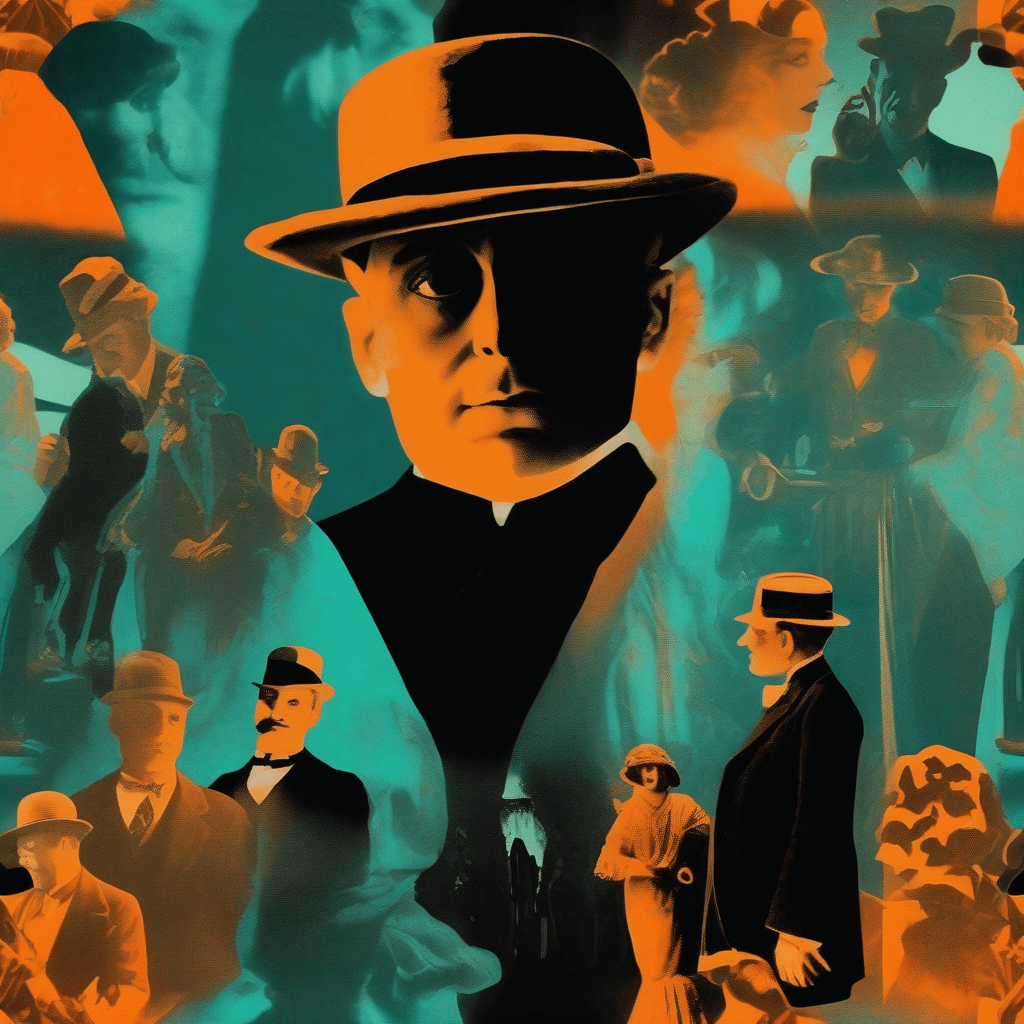
“Discover how the transgressive themes and misfit narratives of the early 20th century laid the foundational DNA for modern cult cinema and niche fandom.”
The term cult cinema is often associated with the midnight movie madness of the 1970s—the high-energy screenings of The Rocky Horror Picture Show or the gritty, transgressive underground of John Waters. However, as any serious film historian will tell you, the genetic code of the cult phenomenon was written long before the advent of the midnight circuit. It was forged in the nitrate flames of the early 20th century, where misfit narratives and narrative anarchy first began to challenge the burgeoning hegemony of the studio system. These early films, many of which have slipped into the shadows of history, represent the true 'primal flicker' of cinematic devotion.
The Genesis of the Cinematic Misfit
At the heart of every cult film lies a character or a concept that refuses to fit into the polite society of the mainstream. In the early era, this was often manifested through stories of identity, class subversion, and radical independence. Consider the thematic resonance of Rich Girl, Poor Girl. The uncanny resemblance between the abused Nora and the bored, privileged Beatrice isn't just a plot device for a romance; it is a proto-cult exploration of the fluidity of self. This desire to 'switch places'—to escape the drudgery of one's social standing—spoke to an audience that felt increasingly alienated by the industrialization of the modern world.
Similarly, in Set Free, we see the character of Roma Wycliffe, a high-spirited girl who rejects the 'lavender-and-old-lace' atmosphere of her aunt's estate to embrace her gypsy heritage. This rejection of traditional domesticity in favor of a nomadic, 'othered' existence is a hallmark of the cult ethos. It celebrates the rebel soul, the individual who looks at the structures of society and chooses to walk a different path. These films provided a template for the cinematic outcasts that would later populate the works of Jodorowsky or Lynch.
Identity, Masquerade, and the Transgressive Self
The early 20th century was obsessed with the mask. Whether it was through literal disguises or social masquerades, the screen became a place where the self could be dismantled and reconstructed. In The ABC of Love, we find Lis dressing in men's clothing to navigate the streets of Paris. While played for comedy, this gender-bending performance contains the seeds of the subversive gender play that would define later cult movements. It suggests that identity is not a fixed point, but a costume to be worn and discarded at will.
This theme of the 'masquerade' extends into the darker corners of the era's output. In The Serpent, a peasant girl transformed into a famous actress uses her new identity to enact a complex revenge. This narrative of the 'transfigured outcast'—the person who returns from the margins to haunt the center—is a recurring motif in cult cinema. It speaks to the power of the marginalized to reclaim their agency through the artifice of performance.
The Architecture of Anarchy: Slapstick and Surrealism
While drama provided the emotional core, it was the early comedies that introduced the narrative anarchy that characterizes the cult experience. Early slapstick was not just about physical humor; it was about the total breakdown of order. Films like Cash Customers or A London Bobby showcase a world where the authorities are incompetent, the laws of physics are suggestions, and chaos is the only constant.
In The Matrimaniac, the frantic energy of an elopement becomes a dizzying chase that defies logic. This 'kinetic madness' is a direct ancestor to the hyper-stylized action and absurdism of modern cult favorites. When we watch Snub and his roommate attempt to escape a 'ferocious landlady' in Cash Customers, we are witnessing the birth of the anti-authoritarian streak that runs through the heart of niche cinema. It is a cinema of the 'little man' fighting back against a world that is fundamentally rigged against him.
The Devil on the Kurfürstendamm
Perhaps no film in the early canon captures the 'weird' spirit of cult cinema better than Kurfürstendamm. The premise—the Devil himself visiting a Berlin street only to find that he is the one being cheated and deceived—is a masterclass in ironic subversion. It flips the moral binary of the time on its head. If the Devil is outmatched by the residents of a single street, then what does that say about the state of human morality? This kind of philosophical transgression is precisely what attracts a cult following; it offers a perspective that is cynical, surreal, and deeply uncomfortable for the mainstream.
This flirtation with the diabolical and the decadent is also evident in Madonnas and Men. By juxtaposing the 'bestial games' of the Roman Coliseum with modern narratives, the film creates a bridge across time, suggesting that the primal urges of humanity remain unchanged. This 'historical haunting'—the idea that the past is always bleeding into the present—is a core component of the Gothic cult aesthetic.
The Darker Rhythms: Crime, Profiteering, and Social Decay
Cult cinema has always been a mirror for the anxieties of its age. In the early 1900s, these anxieties revolved around urban decay, political corruption, and the rise of the criminal underworld. Everyman's Price tackles the issue of food profiteering, a mundane but terrifying reality of the time. By turning a social issue into a crime-comedy hybrid, it created a niche space for social commentary that felt more dangerous than a standard newsreel.
The world of Darkest Russia, with its tales of secret police, forbidden love, and ethnic tension, provided an exotic but relatable backdrop for stories of oppression. The cult appeal here lies in the forbidden knowledge—the glimpse into a world that is supposedly 'hidden' or 'dark.' This fascination with the 'other'—whether it be the 'Darkest Russia' of the East or the 'wild and woolly' West of The Magnificent Meddler—is a driving force behind the collector's mentality of cult fandom.
The Redemption of the Outlaw
The 'outlaw with a heart of gold' is a trope as old as storytelling, but early cinema gave it a specific, gritty texture. In The Redemption of Dave Darcey, we see a crook trying to do right by his followers, only to be dragged back into the violence of rival factions. Similarly, The Last of the Duanes explores the life of a man fleeing the law after an act of vengeance. These characters are not heroes in the traditional sense; they are moral outliers.
The cult audience gravitates toward these figures because they represent a form of authenticity that is absent from the polished 'leading man' archetypes. They are flawed, violent, and often doomed, but they possess a rugged individualism that resonates with those who feel sidelined by the status quo. Whether it is a government sleuth in Detective Craig's Coup or a disgraced son in The Majesty of the Law, the focus is always on the struggle to maintain integrity in a corrupt system.
The Female Gaze and the Radical New Woman
One of the most overlooked aspects of early cult-adjacent cinema is its portrayal of women. Long before the 'final girl' or the 'femme fatale' were codified, early cinema was experimenting with radical female archetypes. Flying Pat features a 'wild flapper' who decides to become the first woman to fly across the Atlantic. This is not just a comedy; it is a manifesto of female autonomy. Patricia Van Nuys is a woman who refuses to be grounded by the expectations of her husband or society.
In How Molly Malone Made Good, we see a young Irish immigrant taking on the male-dominated world of New York journalism through a series of 'test' interviews. This narrative of the 'scrappy underdog'—specifically the female underdog—is a powerful component of early niche cinema. These films were often championed by audiences who saw their own struggles for recognition reflected in the tenacity of these characters. Even in more tragic narratives like Empty Arms, which explores the primal fear of childbirth and the societal pressure to procreate, we see a level of psychological depth that was far ahead of its time.
The Legacy of the Early Underground
Why do we still look back at films like The Adventurer or Darling Mine? It is because they represent a moment when cinema was still figuring out its own boundaries. Before the Hayes Code, before the total dominance of the 'blockbuster' mentality, there was a period of intense experimentation. Les cinq gentlemen maudits, with its African soothsayer predicting death, or Dämon und Mensch, with its attempt to awaken the 'good side' in criminals, show a medium that was willing to engage with the occult, the mystical, and the psychological.
This willingness to be 'weird' is the ultimate legacy of the early era. It created a sacred space for the unconventional. When we watch the 'lime kiln' suitors in Lime Kiln Club Field Day or the misadventures of a penniless husband in My Mistake, we are seeing the ancestors of every cult icon from Divine to Tommy Wiseau. They remind us that cinema at its best is not a polished product, but a raw, flickering expression of our most primal desires, fears, and rebellions.
Conclusion: The Eternal Flicker
Cult cinema is not a genre; it is a relationship. It is the bond between an unconventional film and an audience that sees something of themselves in its 'flaws' and 'excesses.' By unearthing the proto-cult DNA of the early 20th century, we gain a deeper appreciation for the enduring power of the cinematic outlier. These films—from the identity-swapping dramas to the devilish comedies—remind us that as long as there is a mainstream, there will always be a shadow sanctuary where the misfits, the rebels, and the renegades can find a home. The nitrate may be fragile, but the spirit of rebellion it captured is eternal.
Community
Comments
Log in to comment.
Loading comments…