DbcultAccessing Vault...
5.7/10
Senior Film Conservator
A definitive 5.7/10 rating for a film that redefined the boundaries of cult cinema. A Daughter of the Law remains a cornerstone of transgressive art.
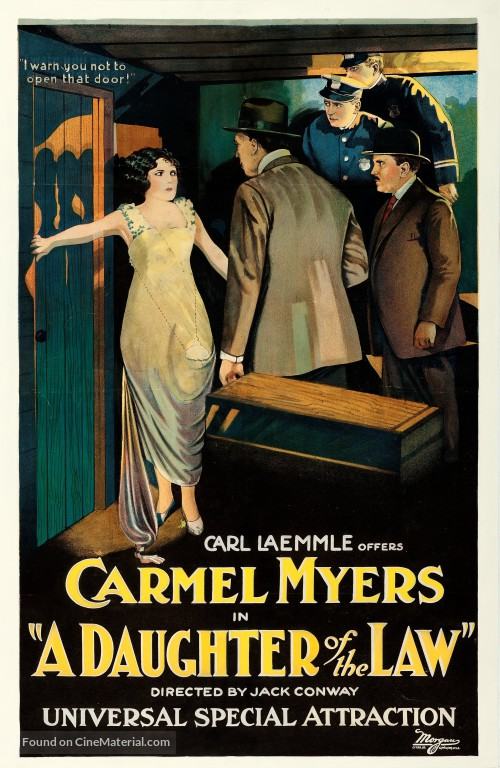
The year 1921 remains a watershed moment in the evolution of the American crime narrative, a period where the stark moralism of the Victorian era began to collide with the burgeoning realism of the jazz age. A Daughter of the Law, directed by the often-underappreciated John B. O'Brien, stands as a quintessential artifact of this transition. It eschews the simplistic melodramatic flourishes found in contemporary works like The Fairy and the Waif, opting instead for a somber meditation on the fragility of the nuclear family when confronted by the corrosive influence of urban decay. The film’s protagonist, Nora (Carmel Myers), is not merely a damsel in distress; she is the ideological anchor of a story that pits the sanctity of the badge against the blood-bonds of brotherhood.
The narrative architecture is built upon a foundation of profound irony. Eddie (Joseph Bennett), the son of a high-ranking police official, chooses a life of larceny, not out of necessity, but seemingly out of a perverse rejection of his father’s rigid authority. This generational conflict provides a psychological depth that was rare for the era. Unlike the thematic explorations in Slaves of Pride, which focused on social standing and vanity, A Daughter of the Law delves into the inherent trauma of a household divided by the very laws it is sworn to uphold. When the father disowns Eddie, we see a manifestation of the patriarchal inflexibility that often defined the period’s cinematic lawmen.
Carmel Myers provides a performance of staggering nuance. In an era where pantomime often veered into the hyperbolic, Myers utilizes a restrained physicality that conveys a world of internal conflict. Her Nora is a woman caught in a pincer movement between her love for her wayward brother and her loyalty to her father’s legacy. This performance is a significant departure from her work in more whimsical or less grounded productions. One might compare her emotional resonance here to the grit seen in Out of the Wreck, though Myers brings a unique vulnerability that makes the film’s high-stakes climax feel earned rather than manufactured.
The supporting cast, including Dick La Reno and Fred Kohler, populates this world with a palpable sense of menace and weariness. Kohler, in particular, embodies the quintessential silent-era antagonist—not a caricature, but a looming threat whose motivations are grounded in the desperate economics of the underworld. The chemistry between the gang members and the law enforcement figures creates a tension that mirrors the societal anxieties of a post-war America grappling with the rise of organized crime. This isn't just a story about a robbery; it's a story about the collapse of the social contract, much like the tensions explored in The Price.
O'Brien’s direction is characterized by a sophisticated use of shadow and space. The interior of the gang’s hideout is rendered with a claustrophobic intensity that contrasts sharply with the austere, almost sterile environment of the police station. This visual dichotomy reinforces the thematic struggle between the chaos of the criminal element and the cold order of the law. The cinematography doesn't just record the action; it interprets it, using lighting to highlight Nora’s isolation during her captivity. While it may lack the epic scale of Armenia, the Cradle of Humanity under the Shadow of Mount Ararat, its intimate focus makes it no less powerful.
The pacing of the film is remarkably modern. The screenplay by Wadsworth Camp and Harvey Gates avoids the episodic pitfalls of many silent features. Every scene serves to tighten the noose around the characters. When Jim, Nora’s boyfriend, attempts to do the 'right thing' by tipping off the police, his actions lead to a catastrophic failure that highlights the unpredictability of justice. This subversion of the 'hero’s journey' is a sophisticated touch that keeps the audience off-balance. It reminds one of the narrative complexities found in On Trial, where the truth is rarely a straight line.
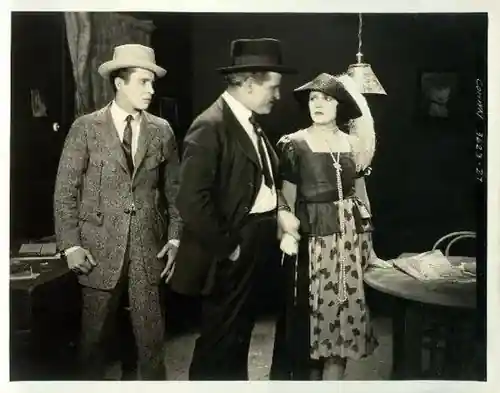
The final act of A Daughter of the Law is a masterclass in suspense. The kidnapping of Nora and the subsequent ransom demand—freedom for the gang in exchange for her life—forces the father into an impossible ethical corner. Does he uphold the law he has dedicated his life to, or does he succumb to the primal need to save his daughter? This dilemma is the heart of the film. It elevates the movie from a standard 'cops and robbers' flick to a genuine tragedy. The resolution, which I shall not spoil, manages to be both satisfying and profoundly unsettling, leaving the viewer to contemplate the true cost of 'justice.'
In comparison to the more straightforward morality of Bull Arizona, O’Brien’s work here is shrouded in ambiguity. There are no easy victories. The scars left on the family unit are permanent, suggesting that even when the law wins, the individuals involved are often left broken. This sense of lingering trauma is a recurring theme in the more serious dramas of the early 20s, such as The Waifs or the somber The Precious Parcel.
Looking back at A Daughter of the Law from a century’s distance, one is struck by its relevance. The themes of familial estrangement, the corruptive nature of criminal association, and the heavy burden of public duty are timeless. While the medium has evolved from silent black-and-white reels to high-definition digital formats, the human core of this story remains unchanged. It serves as a vital link in the chain of cinematic history, bridging the gap between the theatricality of early film and the psychological depth of the noir era that would follow decades later.
The film also serves as a testament to the versatility of its creators. Writers Wadsworth Camp and Harvey Gates were masters of the procedural, and their ability to weave personal stakes into a high-octane plot is evident throughout. For those who enjoy the intricate plotting of The Planter or the character-driven drama of Polly of the Circus, A Daughter of the Law offers a darker, more cynical alternative that is well worth the exploration. It is a film that demands to be seen not just as a historical curiosity, but as a living, breathing piece of art that still has the power to provoke and disturb.
In conclusion, A Daughter of the Law is a harrowing, beautifully executed drama that showcases the best of what the silent era had to offer. It is a film of shadows, both literal and metaphorical, and it remains a high-water mark for the crime genre in the early 1920s. Whether you are a scholar of silent cinema or a casual viewer looking for a story with real emotional weight, this film is an essential watch. It stands tall alongside other complex narratives of the time, such as Doch isterzannoy Pol'shi or the eerie Der Vampyr, proving that the silent screen was capable of expressing the deepest and most difficult aspects of the human experience.
Final Thoughts: A visceral, emotionally resonant masterpiece that proves the law is never as simple as right and wrong when family is on the line. The interplay between Myers and the ensemble cast creates a haunting atmosphere that lingers long after the final frame fades to black. This is cinema at its most raw and honest.
IMDb 8.3
1916
Community
Log in to comment.