DbcultAccessing Vault...
Cult Review
Senior Film Conservator
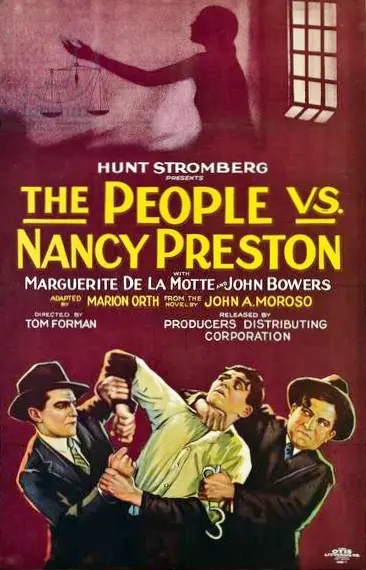
In the pantheon of silent-era social dramas, few films capture the suffocating weight of a criminal record with the same poignant desperation as The People vs. Nancy Preston (1925). Directed with a keen eye for atmospheric tension, this work transcends the typical 'fallen woman' tropes of its era to deliver a scathing indictment of the private detective industry and the cyclical nature of poverty and crime. The film is a masterclass in the architecture of the 'noir' before the term was even coined, utilizing shadows and the relentless pursuit of an antagonist to mirror the internal psychological states of its protagonists. Unlike the more whimsical Kids and Kidlets, this narrative plunges into the viscera of human survival.
The film’s primary engine of conflict is not merely the law, but the obsessive, almost pathological pursuit by an operative known as 'Gloomy Gus.' Played with an unsettling, monolithic intensity, Gus represents the Tierney Detective Agency—a fictionalized surrogate for the real-world Pinkertons who often operated with more zeal than the actual police. This character serves as the antediluvian shadow that haunts Bill Preston from the moment he exits the gates of Sing Sing. The tragedy of Bill is not his lack of willpower, but the impossibility of reform when the state, or its private contractors, refuses to allow the past to remain buried. This relentless hounding, which eventually leads to Bill's demise in a bank robbery, sets a grim tone that rivals the thematic darkness of Everyman's Price.
The cinematography during the urban sequences is particularly noteworthy. The use of low-key lighting and cramped interior sets creates a sense of claustrophobia that underscores Nancy’s plight. As 'Straw Nancy,' Marguerite De La Motte delivers a performance of remarkable lexical diversity in her physical expression. She conveys the weariness of the underworld through a slumped posture and heavy-lidded gazes, yet her eyes retain a spark of maternal ferocity when Bubsy is threatened. The contrast between her urban survivalist persona and her later pastoral reclamation is one of the most compelling character arcs in 1920s cinema, far more nuanced than the exoticized archetypes found in Bella Donna.
John Bowers portrays Mike Horgan with a rugged sensitivity that balances the film’s more melodramatic impulses. Horgan is a fascinating character study—a man who studied medicine part-time while incarcerated, embodying the quintessential American ideal of self-improvement against all odds. His decision to protect Nancy and Bubsy after Bill’s death is not merely an act of loyalty to a fellow convict, but a desperate grab for a life of purpose. When the narrative shifts to the small town where Mike assumes the identity of Dr. Stafford, the film undergoes a tonal metamorphosis. The jagged edges of the city are replaced by the soft-focus idealism of rural life, yet the tension remains palpable. The threat of discovery looms like a guillotine, a structural device also utilized effectively in Singer Jim McKee.
As Stafford, Horgan finds a temporary Eden. The irony, of course, is that his healing hands are the very things that eventually betray him. The sequence where Tierney, the head of the detective agency, falls ill and is nursed back to health by the very people he is hunting, is a masterstroke of dramatic irony. It forces a confrontation between the abstract letter of the law and the tangible reality of human compassion. The film suggests that while the 'People' may be against Nancy Preston in a legal sense, the individual human heart is capable of a radical realignment. This moral complexity elevates the film above the standard morality plays of the era, such as Builders of Castles.
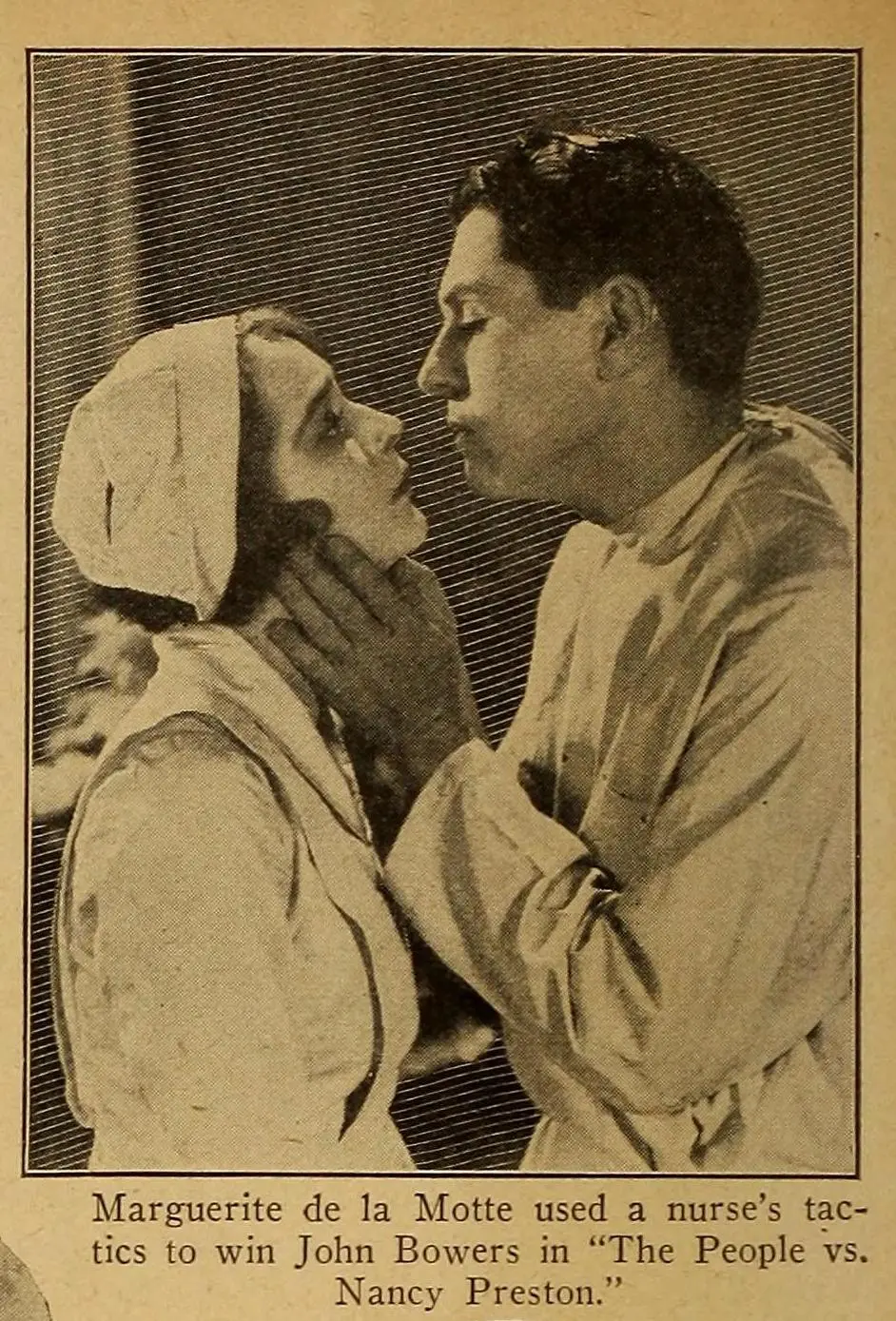
The screenplay by Marion Orth, based on the work of John A. Moroso, is remarkably sophisticated for 1925. It avoids the easy sentimentality that often plagued silent dramas, instead opting for a gritty realism that feels surprisingly modern. The dialogue intertitles are sparse but impactful, allowing the visual storytelling to carry the narrative weight. The pacing is deliberate, building a sense of impending doom that only breaks in the final act. We see echoes of this structural tension in other international works of the period, like the German production Der verlorene Schuh, though The People vs. Nancy Preston is far more grounded in the sociopolitical realities of the American landscape.
The supporting cast deserves significant praise. Alphonse Ethier’s portrayal of Tierney is not that of a cartoonish villain, but of a man blinded by professional duty. His eventual transformation is earned through the narrative’s focus on his vulnerability during his illness. Similarly, the role of Bubsy, played by Frankie Darro, provides the emotional stakes necessary to keep the audience invested in Nancy’s flight. Darro’s naturalistic performance avoids the saccharine pitfalls seen in A kölcsönkért csecsemök, grounding the family dynamic in a palpable sense of shared trauma and hope.
The resolution of the film, where 'Gloomy Gus' experiences a change of heart, is the narrative’s most controversial element. Some critics of the era found it to be a convenient deus ex machina, but a closer reading suggests it is the logical conclusion of the film’s thematic preoccupation with redemption. Gus has spent his entire professional life viewing the world through the binary lens of 'criminal' and 'innocent.' Seeing Nancy and Mike in a context of healing and community shatters that binary. It is a moment of profound psychological rupture for the character, proving that even the most obdurate legal zealot can be moved by the evidence of a reformed life. This thematic pivot is reminiscent of the redemptive arcs in Willy Reilly and His Colleen Bawn, though handled here with a more cynical, noir-inflected edge.
The marriage of Mike and Nancy at the film's conclusion is not just a romantic happy ending; it is a political statement. It validates their right to exist outside the shadow of the penitentiary. It asserts that the 'People'—represented by the jury of their peers in the small town—have found them not guilty of their pasts. This conclusion offers a stark contrast to the bleaker outcomes found in films like Minaret Smerti, providing a glimmer of optimism in an otherwise harrowing tale.
Ultimately, The People vs. Nancy Preston stands as a vital piece of cinematic history that deserves a modern audience. It anticipates the hard-boiled detective fiction of the 1930s and the social realism of the 1940s. Its exploration of the 'Straw Nancy' archetype—a woman forced into a persona by a judgmental society—is particularly resonant in our current era of digital footprints and the 'cancel culture' debate. The film asks us: how long must a person pay for a mistake? When does the punishment end and the life begin? These are questions that remain as urgent today as they were in 1925.
For those interested in the evolution of the crime drama, this film is essential viewing. It lacks the slapstick levity of Look Out Below! or the rural simplicity of Up and Going, but it gains something far more valuable: a soul. It is a haunting, beautiful, and ultimately triumphant look at the human capacity for change. Whether you are a fan of Marguerite De La Motte or a scholar of silent film techniques, The People vs. Nancy Preston provides a rich, multi-layered experience that rewards multiple viewings. It is a testament to the power of silent cinema to communicate complex moral truths through the sheer force of visual poetry and emotional honesty.
IMDb —
1920
Community
Log in to comment.