
Cult Cinema
The Forbidden Frame: Decoding the Subversive DNA and Transgressive Pulse of Cinema’s Early Misfit Masterpieces

“Journey into the subterranean world of early cinema to discover how forgotten silent-era rebels and transgressive narratives birthed the modern cult movie phenomenon.”
The history of cinema is often told through the lens of the victors—the massive blockbusters, the Academy Award winners, and the sanitized classics that populate the 'Greatest of All Time' lists. However, beneath the polished surface of the mainstream lies a jagged, electric undercurrent of cult cinema. This is the realm of the fringe, the home of the misfits, and the sanctuary of the transgressive. While many contemporary critics trace the origins of cult obsession to the midnight movie craze of the 1970s, the true genetic markers of this devotional culture were etched into the celluloid long before, during the chaotic and experimental dawn of the silent era. To understand the modern cult psyche, we must exhume the forgotten reels of the early 20th century, where genre-defying pioneers were already dismantling social norms and exploring the darker recesses of the human condition.
The Primordial Soup of Transgression
What makes a film a 'cult' classic? It is rarely about technical perfection. Instead, it is about a certain narrative anarchy—a refusal to adhere to the rigid structures of commercial storytelling. In the early days of film, before the Hays Code tightened its grip on the American imagination, directors were operating in a wild frontier. Take, for example, the 1918 film Sacrifice. Decades before the body horror of David Cronenberg or the transgressive experiments of the New French Extremity, this film presented a plot that would still shock audiences today: an insane doctor named Ten Brinken uses the biological material of a deceased man to artificially inseminate a prostitute. The resulting child, a beautiful but inherently 'evil' woman, becomes a vessel for chaos. This is not just a drama; it is a proto-cult masterpiece that explores themes of eugenics, scientific hubris, and moral decay, all wrapped in a shroud of silent-era melodrama.
Films like these were the 'forbidden fruit' of their time. They existed on the periphery of polite society, much like the characters they portrayed. In The Branding Iron, we see a literalization of toxic possession that predates the psychological thrillers of the 1940s. Pierre Landis, consumed by an insane jealousy, uses a branding iron to mark his wife, Joan, as his property. The sheer brutality of this image—and the subsequent rescue by a playwright named Prosper Gael—creates a visceral reaction that transcends the limitations of silent film. It is this ability to provoke a deep, often uncomfortable, emotional response that defines the cult experience. We are not merely watching a story; we are witnessing a cinematic ritual of transgression.
Gender Subversion and Social Satire
Cult cinema has always been a space for the subversion of gender roles and societal expectations. Long before the feminist movements of the late 20th century, filmmakers were playing with the concept of the 'new woman' and the collapse of traditional masculinity. The short film Her First Flame (released in 1920 but set in the 'future' of 1950) presents a world where women have taken over men’s jobs and become the romantic aggressors. While played for laughs, the image of Lizzie Hap stuffing a ballot box and defeating her opponent, Minnie Fish, reflects a deep-seated cultural anxiety that the cult audience of the time likely found both hilarious and revolutionary. It is a piece of speculative fiction that uses the 'misfit' nature of comedy to probe the boundaries of social change.
Similarly, Her Husband's Trademark explores the performative nature of high-society marriage. Lois Miller, caught between the rivalry of her husband James Berkeley and his college chum Allan Franklin, becomes a decorative object—a 'trademark' of her husband’s success. This critique of the commodification of beauty and the hollowness of the New York elite resonates with the cynical, counter-cultural spirit that often defines cult fandom. These films offered a mirror to the audience, but it was a distorted, carnival mirror that revealed the absurdities of the status quo.
The Global Reach of the Weird: From Berlin to Marrakesh
The 'midnight mindset' was never confined to Hollywood. The early cult pulse was a global phenomenon, with filmmakers from Germany, France, and Australia contributing to the lexicon of the strange. Meyer from Berlin offers a bumbling, self-indulgent husband whose mountain-climbing vacation turns into a surreal comedy of errors. This type of physical, almost grotesque humor laid the groundwork for the 'lovable loser' archetype that would later dominate cult comedies. Meanwhile, in France, The Vampires: The Terrible Wedding continued the saga of Philip Guard and his battle against a secret society of criminals. The sheer persistence of the 'Vampires'—accidentally poisoning a janitor with wine meant for a wedding—showcases the serialized, pulp-fiction energy that keeps cult audiences coming back for more. It is about the world-building, the secret societies, and the sense that danger lurks just behind the curtain of everyday life.
Adventure and the 'exotic' also played a massive role in forging the cult soul. Films like Die Abenteuerin von Monte Carlo - 2. Marokkanische Nächte and Terror Island (featuring an inventor searching for buried treasure in the South Seas) tapped into a collective desire for escape. In Terror Island, we see the classic cult trope of the 'civilized' world clashing with the 'primitive'—a girl’s father held captive by cannibals until a stolen pearl is returned. These narratives were often messy, politically incorrect by modern standards, and wildly over-the-top, but they possessed a raw energy that the more refined 'prestige' films of the era lacked.
The Supernatural and the Divination of the Reel
There is a spiritual, almost occult quality to cult cinema. Many of these early films dealt directly with the supernatural or the power of ancient artifacts. In Hendes ungdomsforelskelse, an Egyptian prince gifts a dancer a piece of jewelry endowed with a power that affects her future. This idea of the 'haunted object' or the 'cursed legacy' is a cornerstone of cult horror. It suggests that the past is never truly dead, but rather waiting to be reawakened by the flicker of the projector. This is mirrored in The Girl with the Champagne Eyes, where a simple act of theft and a misplaced wallet lead to a two-year prison sentence for an innocent man. The 'champagne eyes' of the title suggest a hypnotic, perhaps even malevolent, charm—the kind of visual icon that burns itself into the viewer's memory.
Even the more grounded dramas of the era, such as The Blizzard, possess a haunting, atmospheric quality. The story of Gunnar Hede, a musician pressured into the reindeer trade who eventually loses his grip on reality, is a poignant exploration of the fractured psyche. The vast, snowy landscapes of Sweden become a metaphor for the isolation of the artist—a theme that has always appealed to the 'outsider' status of the cult film enthusiast.
The War, the Afterlife, and the Cinema of Remorse
Perhaps the most significant turning point for the 'cult' mindset was the First World War. The trauma of the trenches birthed a new kind of cinematic darkness. Abel Gance’s J'accuse! is the definitive example. By using the story of two men—one a husband, the other his wife's lover—meeting in the trenches, Gance created a microcosm for the horrors of war. The film’s famous 'return of the dead' sequence, where fallen soldiers rise to ask if their sacrifice was worth it, is one of the most powerful and subversive images in film history. It is a direct challenge to the nationalist propaganda of the time and a rallying cry for the disillusioned. This is cult cinema at its most potent: a film that refuses to let the audience look away from the truth.
Other films from this period, such as Remorse, a Story of the Red Plague and The Miner's Curse, dealt with the physical and moral rot that followed the war. These were 'social hygiene' films, often sensationalist and moralistic, yet they attracted a devoted following because they dared to speak about the 'unspeakable'—disease, poverty, and the crushing weight of the past. In Life's Whirlpool (1917), we see Esther Carey trapped in a marriage to a cold, heartless man after the death of her invalid father. The 'whirlpool' of the title is a perfect metaphor for the inevitable descent that many cult narratives track—the feeling of being caught in a system that is designed to destroy the individual.
The Maverick Spirit: From Chaplin to The Bull-Dogger
Finally, we must acknowledge the role of the 'maverick' performer. Cult cinema is built on the backs of icons who refuse to fit the mold. While Charlie Chaplin is a global superstar, the 'Charlie' archetype appeared in more fringe, experimental contexts, such as Charlie in Turkey and Parson Pepp. In the latter, Charlie plays the valet to a forceful missionary who attempts to 'revolutionize morals' with his fists. This blending of the sacred and the profane—the Bible and the boxing glove—is a classic cult juxtaposition. It mocks authority while simultaneously celebrating the rebellious spirit of the underdog.
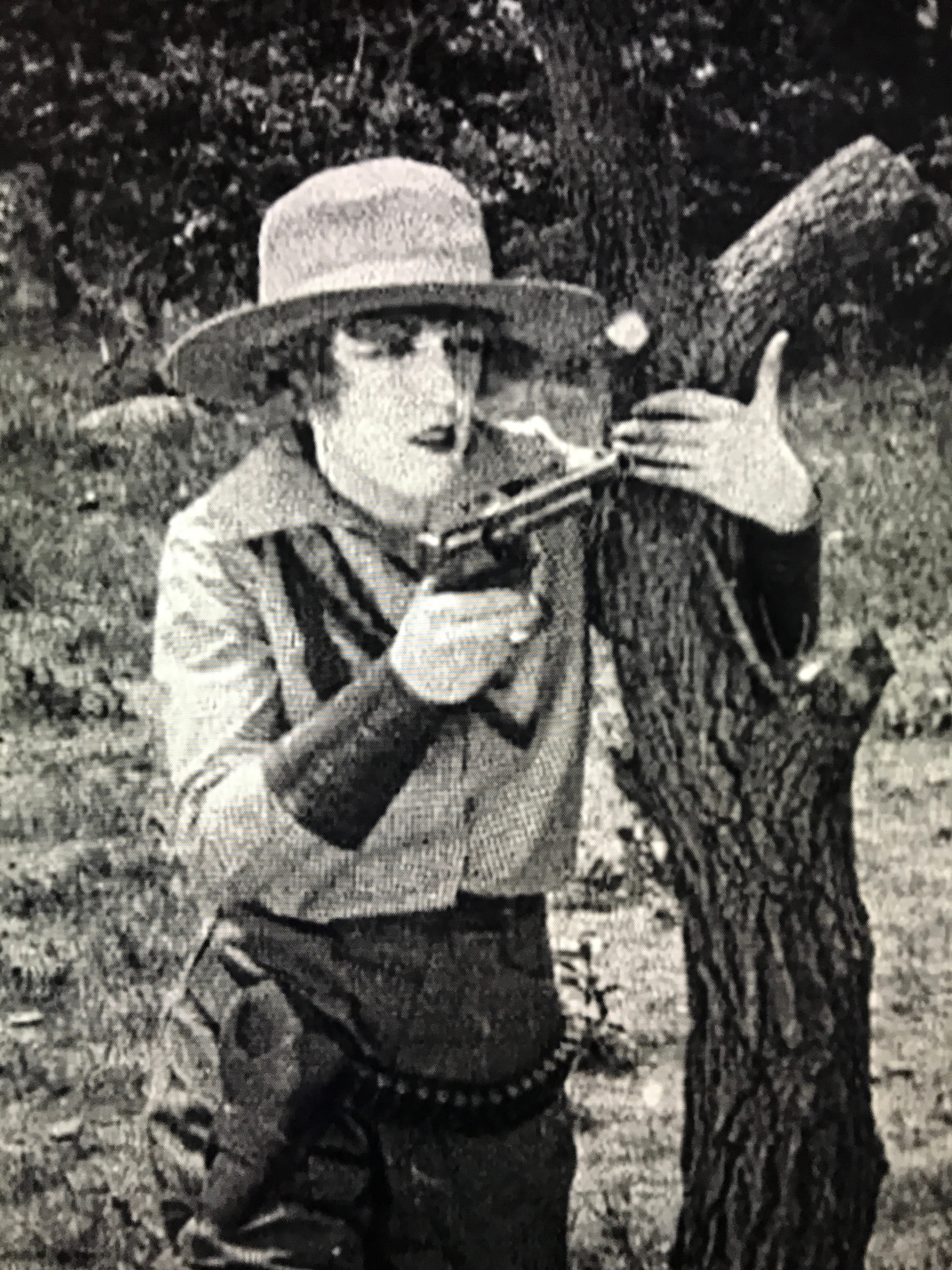
In America, the 101 Ranch Wild West Show’s film The Bull-Dogger showcased a different kind of maverick. By capturing the raw, unscripted acts of a traveling show, it offered an authenticity that scripted Westerns lacked. It was a 'found footage' ancestor, a documentary-style glimpse into a disappearing world. For the cult viewer, this authenticity is everything. Whether it is the 'untamed' spirit of Dan in The Untamed or the desperate struggle of Art and his dog in Young America, we are drawn to characters who exist on the edge of the frame, fighting for their place in a world that has already written them off.
Conclusion: The Eternal Flicker of the Fringe
As we look back at these fifty films, from the high-stakes poker games of Bill Henry to the blinding fires of The Stolen Paradise, we see a pattern emerge. Cult cinema is not a modern invention; it is an eternal impulse. It is the desire to see the unseen, to speak the unspoken, and to find beauty in the 'misfit reels' of history. These early genre rebels, with their champagne eyes and their branding irons, their artificial inseminations and their trench-warfare ghosts, provided the blueprint for everything we love about the midnight movie. They remind us that the most powerful stories are often found not in the palace of the king, but in the shadows of the periphery, where the forbidden frame continues to flicker, waiting for a new generation of devotees to rediscover its secrets.
Community
Comments
Log in to comment.
Loading comments…