
Cult Cinema Deep Dive
The Primordial Fringe: Decoding the Transgressive Soul and Maverick DNA of Cinema’s Earliest Outliers
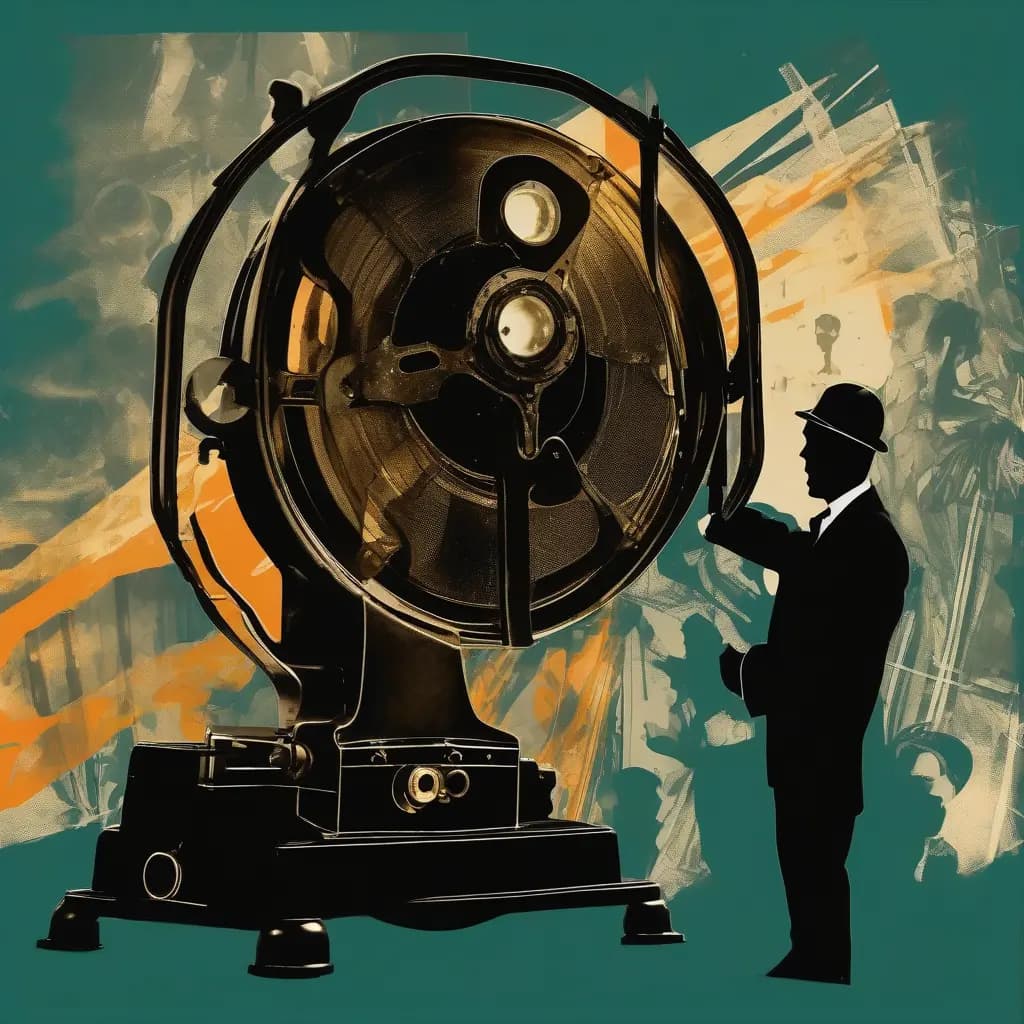
“Explore how the silent era's forgotten rebels, from the subversions of Salomé to the regional grit of Amalia, established the foundational blueprint for modern cult cinema devotion.”
When we discuss the genesis of cult cinema, the conversation often drifts toward the midnight movie explosion of the 1970s—the acid-tripping landscapes of Jodorowsky or the gender-bending rituals of the Rocky Horror Picture Show. However, to truly understand the devotional DNA of the cult film, one must look further back into the shadows of the silent era. Long before the term "cult" was codified by critics, there existed a subterranean layer of filmmaking that defied the burgeoning Hollywood hegemony. These were the outliers, the misfit reels, and the transgressive experiments that prioritized raw expression over commercial viability. From the avant-garde decadence of Salomé (1922) to the gritty, regional realism of Amalia (1914), the seeds of cinematic rebellion were sown in the very soil of the medium's infancy.
The Architecture of Anarchy: Morality and the Misfit Reel
The early 20th century was a period of rapid industrialization and shifting moral goalposts. Cinema, as the newest art form, became the primary battleground for these cultural anxieties. Films like Woe to the Conqueror; or, The Law of War served as early markers of this tension. By depicting the "vice and immoral tactics" of army officers, the film did more than just entertain; it provoked. This provocation is the heartbeat of cult cinema—a refusal to adhere to the sanitized narratives expected by the masses. When a film like The Drifter explores the destructive passion for gambling within a divinity student, it taps into a primal human fallibility that resonates far more deeply than any simplistic moral fable.
Cult cinema thrives on the "broken" character—the individual who cannot, or will not, fit into the prescribed social box. Consider Chivalrous Charley, a man whose very virtue is treated as a "temperamental fault." This inversion of values—where a hero's strength is his social weakness—is a trope that would later define the anti-heroes of the 1960s and 70s. In the silent era, these characters were often found in the margins, in films like The Extra Seven or The Soft Boiled Yegg, where the protagonists navigate worlds defined by gambling, poverty, and the constant threat of the "clutch of the law."
Transgressive Bodies and Sacred Taboos: The Case of Salomé
Perhaps no film from the early 1920s embodies the aesthetic of the "cult" more than the 1922 production of Salomé. Starring Alla Nazimova and featuring sets and costumes inspired by Aubrey Beardsley, the film was a high-camp, avant-garde masterpiece that stood in stark contrast to the naturalistic trends of the time. Its depiction of Salome’s seduction of Herod and her eventual demand for the head of John the Baptist was not merely a retelling of a biblical story; it was a visual manifesto of decadence. The film’s failure at the box office only cemented its status as a proto-cult classic. It was too strange for the general public, too stylized for the critics, but for the fringe viewer, it was a revelation.
This intersection of the sacred and the profane is a recurring theme in the early cinematic underground. Nathan der Weise, set during the Third Crusade, attempted to bridge the gaps between Judaism, Islam, and Christianity through the figure of the wise merchant. In an era of rising nationalism and religious intolerance, such a film was inherently subversive. It challenged the viewer to look beyond the "othering" of the enemy, a radical act that aligns with the cult film’s tradition of championing the outsider.
The Regional Rebel: Amalia and the Birth of National Identity
While Hollywood was perfecting the studio system, other parts of the world were using the camera to forge their own unique identities, often through narratives that were deeply transgressive in their local contexts. Amalia (1914), the first feature film produced in Argentina, is a prime example. Based on the novel by José Mármol, it used the medium of film to reflect on national history and political struggle. Similarly, Chile’s La agonía de Arauco offered a harrowing look at grief, suicide, and the Mapuche culture. These films were not just entertainment; they were acts of cultural preservation and resistance. They represent the "global fringe" of cult cinema—films that are revered in their homelands for their bravery and their refusal to mimic the American aesthetic.
The cult obsession often stems from a sense of discovery—the feeling that the viewer has unearthed a hidden truth that the mainstream has ignored. Films like The Kelly Gang, focusing on the notorious Australian outlaw, tapped into a local mythology that felt dangerous and immediate. This "outlaw" energy is what draws fans to the fringes of the archive. We are attracted to the stories that were almost lost, the reels that were suppressed, and the visions that were deemed too intense for the average theatergoer.
The Absurd and the Abject: Short-Form Oddities
Cult cinema is not always about grand narratives or political subversion; sometimes, it is about the purely bizarre. The silent era was rife with short-form experiments that defied logic. Take Swat That Fly, a documentary short that, in its very specificity, feels like a fever dream. Or the "Snooky" series, such as Snooky's Wild Oats and Snooky's Home Run, featuring a chimpanzee protagonist navigating human society. These films predate the surrealist movement but share its DNA—the delight in the incongruous and the celebration of the nonsensical.
This lineage of the absurd extends to the slapstick of Back Stage (1923) and the frantic energy of Live Wires. These shorts were the "filler" of the early cinema experience, yet they often contained the most inventive visual gags and the most daring physical comedy. They were the training grounds for a generation of filmmakers who would go on to push the boundaries of what was acceptable on screen. In the world of cult cinema, these "minor" works are often given major importance because they represent the raw, unpolished creativity of the medium.
The Shadow of the Law: Crime, Vice, and the Underworld
The fascination with the criminal underworld is a cornerstone of the cult mentality. Early films like The Mysterious Lady, involving the theft of engine designs by a notorious criminal, or The Conspiracy, where a mystery writer attempts to solve a real crime, set the stage for the noir and neo-noir movements. These films explored the dark alleys of the human psyche, where morality is gray and the law is often an obstacle rather than a solution. Kiss or Kill, with its story of a man snatching a wallet to escape poverty only to be drawn into a wealthy man's web, perfectly encapsulates the fatalistic worldview that cult audiences find so compelling.
Even the Westerns of the era, such as The Sage Hen or Hair Trigger Stuff, were less about the triumph of civilization and more about the isolation of the individual. Jane Croft, nicknamed "The Sage Hen" and driven out of town by a "Home Purity League," is a classic cult figure—the victim of social hypocrisy who must find her own path in the wilderness. This theme of social exile is what makes these early films feel so modern. They speak to the feeling of being an outsider in a world that demands conformity.
The Eternal Mother and the Melodrama of the Fringe
Melodrama, often dismissed by critics as "low art," is another fertile ground for cult devotion. Films like The Eternal Mother or Her Surrender dealt with themes of desertion, lost children, and the crushing weight of social expectations. These films were often aimed at female audiences, but their intensity and their focus on emotional extremes have given them a second life among cult aficionados. The "over-the-top" nature of the silent melodrama—the wide eyes, the clutching of the heart, the dramatic swoons—is a form of expressionism that transcends the limits of the script.
In A Bit o' Heaven, the story of a crippled child becomes a vehicle for a profound exploration of empathy and wealth. In The Royal Pauper, a workhouse child’s pretend play becomes a commentary on the harsh realities of poverty. These films do not shy away from the "ugly" parts of life; instead, they lean into them, creating a cinematic experience that is both painful and beautiful. This willingness to dwell in the uncomfortable is exactly what defines the cult experience.
Conclusion: The Ghost in the Projector
The 50 films mentioned here—from the boxing drama of Jack and Jill to the adventurous quest of The Pool of Flame—are more than just historical artifacts. They are the ghosts that haunt the modern cinema. Every time a director chooses a non-linear narrative, every time an actor gives a performance that is "too much," and every time a fan spends years tracking down a lost reel, they are participating in a tradition that began in the flickering light of the silent era. The primordial fringe was not a mistake; it was a choice. It was the choice to prioritize the vision of the artist over the demands of the market.
As we continue to digitize and rediscover these early masterpieces, we are not just expanding our knowledge of film history; we are reconnecting with the very soul of the medium. The transgressive pulse that beat in the heart of Salomé or the gritty rebellion of The Kelly Gang is the same pulse that drives the cult cinema of today. By decoding this ancient DNA, we gain a better understanding of why we watch, why we obsess, and why we will always be drawn to the shadows at the edge of the frame.
In the end, cult cinema is a testament to the enduring power of the maverick spirit. It is a reminder that the most important stories are often the ones that were never meant to be told, and the most lasting images are the ones that were almost forgotten. From the silent rebels of the 1910s to the digital outlaws of the 21st century, the journey of the outlier remains the most fascinating story in all of cinema.
Community
Comments
Log in to comment.
Loading comments…