
Cult Cinema
The Primal Transgression: Unearthing the Silent Era’s Moral Mavericks and the Architecture of Cult Obsession
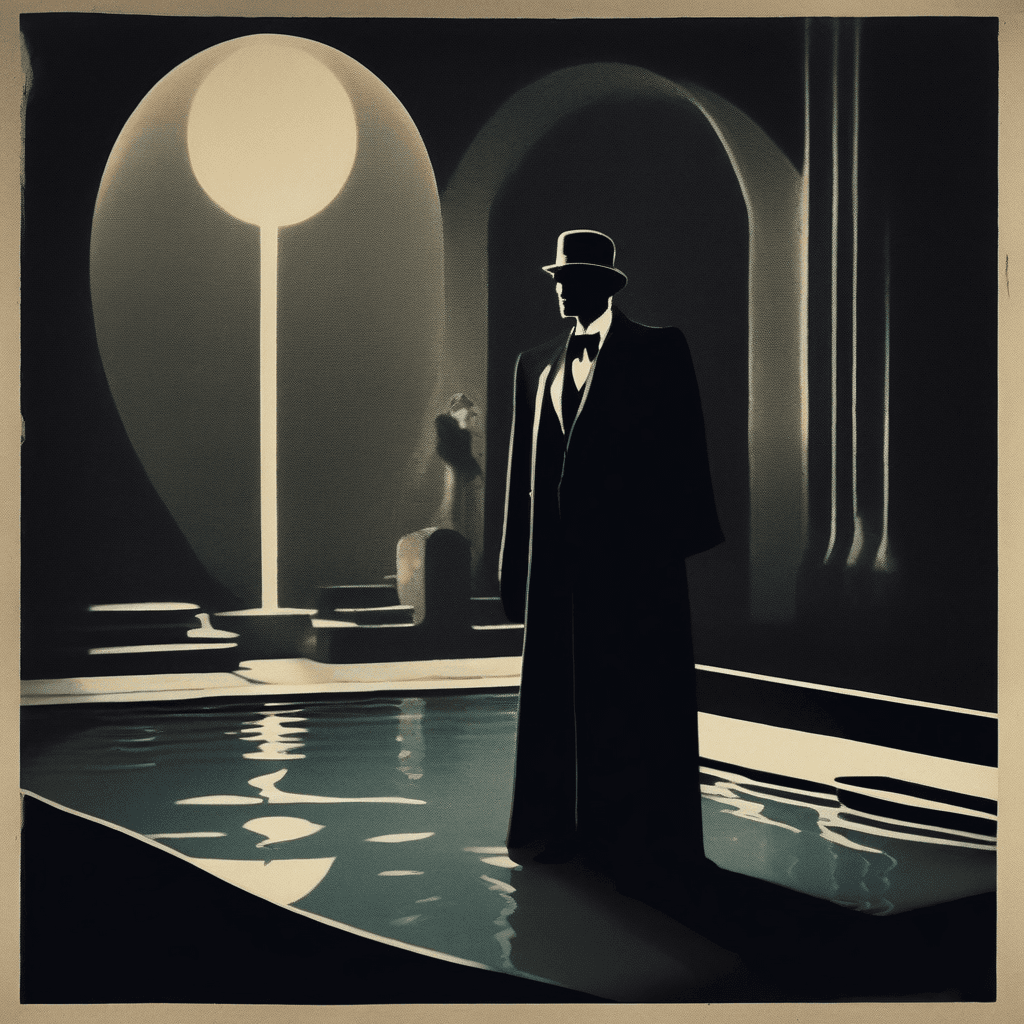
“A deep dive into the early 20th-century roots of cult cinema, exploring how silent-era misfits and moral outliers forged the transgressive DNA of the modern midnight movie.”
To understand the modern midnight movie, one must first descend into the nitrate shadows of the 1910s and 20s. Long before the term 'cult cinema' was coined by critics in the 1970s, the seeds of the transgressive, the weird, and the socially defiant were being sown in the flickering light of silent projectors. This was an era of unprecedented experimentation, where the lack of rigid genre boundaries allowed for narratives that were often more radical than anything produced in the contemporary mainstream. The cult mindset—that fanatical devotion to the fringe—finds its genesis in the stories of the misunderstood, the morally ambiguous, and the outright bizarre characters that populated the early screen.
The Archetype of the Moral Outlier
The foundation of cult devotion often rests on the shoulders of the 'outsider.' In the 1917 film The Tiger Woman, we encounter Princess Petrovich, a character of unmitigated evil who, as she faces the gallows, reviews a life of treachery. This brand of unrepentant villainy, devoid of the softening edges of later Hollywood moralism, creates a magnetic pull for audiences who crave the subversion of traditional heroism. Similarly, in La Gioconda (1916), the seductive old flame returns to destroy an artist's marriage, embodying a primal, destructive force that challenges the sanctity of the domestic sphere. These films didn't just tell stories; they presented archetypes of rebellion that resonated with those who felt alienated by the burgeoning status quo of early 20th-century society.
In Dzieje grzechu (1911), or 'The Story of Sin,' the narrative dives headfirst into the teenage psyche, dealing with confession and the warning against impure thoughts. This early exploration of forbidden desire and its consequences established a template for the 'transgressive' cinema that would later flourish in the underground circuits. By centering narratives on the 'sinful' rather than the 'saintly,' these films invited a different kind of gaze—one that sought truth in the shadows rather than comfort in the light.
Genre Anarchy and the Birth of the Bizarre
One of the defining characteristics of cult cinema is its refusal to stay within the lines of a single genre. We see this 'genre anarchy' in Tepeyac (1917), which bizarrely juxtaposes a diplomatic mission to Europe with the sinking of a ship by a German submarine and religious devotion in Mexico. This jarring blend of contemporary warfare and spiritual mysticism is a precursor to the 'kitchen sink' style of cult filmmaking. It refuses to be one thing, demanding that the viewer accept its internal, albeit fractured, logic.
The supernatural also played a pivotal role in establishing the 'weird' factor. The Devil (1921) takes a high-concept approach, where the titular character, in human guise, challenges a young couple to prove that evil can never triumph over good. It’s a philosophical duel that predates the psychological thrillers of the 1960s. Then there is the 1920 adaptation of Dr. Jekyll and Mr. Hyde, a film that remains a cornerstone of the cult canon. By literalizing the hidden, dark side of man, it provided a visual language for the internal monsters that haunt the cult imagination. The transformation of Jekyll into Hyde is not just a special effect; it is the ultimate metaphor for the 'otherness' that cult fans celebrate.
The Law of the Fringe: Frontier Justice and Social Defiance
Cult cinema often thrives in the liminal spaces—the frontiers where the 'law' is a flexible concept. Films like The Law of the Woods and An Odyssey of the North (1914) take us into the harsh, unforgiving landscapes of the wilderness and the Klondike. These aren't just adventure tales; they are studies of men pushed to the brink of their humanity. In The Way of the Strong (1919), the abandonment of a family in an Alaskan blizzard highlights a cold, Darwinian reality that flies in the face of the polite society of the time. This 'primitive' morality is a recurring theme in cult narratives, where the environment itself acts as a judge and jury.
Social defiance also takes a more grounded, yet equally radical form in films like The Dwelling Place of Light (1920). By addressing sexual harassment in the workplace and the decision to join a strike, the film touched on raw nerves of class and gender struggle. These were not the 'safe' stories of the era; they were the 'dangerous' ones that spoke to the disenfranchised. Even in comedy, the cult spirit was alive. Number, Please? (1920) and Too Much Business (1922) subvert the traditional path to success through trickery, bluffing, and the chaotic energy of the underdog. The 'misfit' hero, whether played by Edward Everett Horton or Harold Lloyd, became a symbol of the individual's struggle against an increasingly mechanized and bureaucratic world.
The Cult of the Global Underground
The early cult phenomenon was never restricted to Hollywood. The international landscape provided some of the most enduring 'rebel' narratives. Jánosík (1921), the story of the Slovak highwayman and folk hero, represents the 'outlaw' as a social savior—a theme that has been recycled in cult cinema from Westerns to dystopian sci-fi. Meanwhile, Michael Strogoff (1914) brought the epic scale of Russian rebellion to the screen, proving that the 'fringe' could also be grand and sweeping. These films offered a window into cultures and struggles that were 'exotic' to Western audiences, satisfying the cult fan's perpetual hunger for the 'other.'
Even the shorter, more experimental works like Luciella (1911) from Naples, which blended the grit of prostitution with the beauty of poetry and passion, showcased a willingness to explore the 'low-life' with a high-art sensibility. This 'high-low' hybridity is a hallmark of the cult aesthetic, where the trashy and the sublime coexist in a single frame. Whether it was the smugglers in The Ghost of Old Morro (1917) or the family feuds of The Call of the Cumberlands (1916), early cinema was obsessed with the margins of society.
The Legacy of the Forgotten Reel
Why do we still look back at films like The Sins of St. Anthony or The Impostor? It is because they represent a time before the 'rules' of cinema were set in stone. They contain a raw, unpolished energy that modern blockbusters often lack. The cult fan is, at heart, a cinematic archaeologist, digging through the layers of history to find the anomalies that don't fit the standard narrative. Films like Kick In (1922), which explores the difficulty of going straight after prison, or The Man from Funeral Range (1918), with its blend of prospecting and cabaret-room violence, offer a glimpse into a world that was far more complex and morally grey than we often give it credit for.
The enduring power of these films lies in their ability to transfix us with their 'otherness.' They remind us that the 'midnight mindset' is not a product of the 1970s, but a fundamental part of the human experience. We have always been drawn to the shadows, to the misfits, and to the stories that the 'mainstream' would rather forget. From the mountain feuds of Kentucky to the frozen wastes of the Klondike, the silent era was a laboratory for the weird, and we are still living with the results of its experiments today. The 'primal transgression' of these early filmmakers was their refusal to look away from the darkness, and in doing so, they created a legacy of rebellion that will continue to inspire the cult disciples of tomorrow.
As we look at the 'six-o-one' gang in The White Masks (1917) or the frantic competition of A Waiting Maid, we see the early iterations of the tropes that now define niche cinema. The 'cult' is not just a category; it is a way of seeing the world. It is the recognition that the most interesting stories are often found on the cutting room floor, in the forgotten archives, and in the hearts of those who prefer the flickering ghost of a nitrate reel to the sterile perfection of a digital screen. The silent era’s moral mavericks were the first to walk this path, and their footsteps still echo in every midnight screening across the globe.
Community
Comments
Log in to comment.
Loading comments…