DbcultAccessing Vault...
6.1/10
Senior Film Conservator
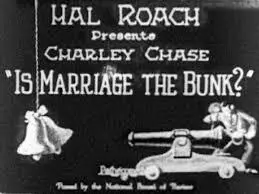
A definitive 6.1/10 rating for a film that redefined the boundaries of cult cinema. Is Marriage the Bunk? remains a cornerstone of transgressive art.
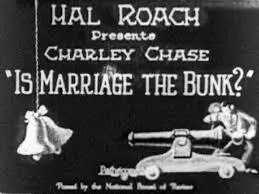
In the pantheon of silent comedy, Charley Chase occupies a space uniquely distinct from the acrobatic pathos of Keaton or the sentimental slapstick of Chaplin. His 1925 short, Is Marriage the Bunk?, stands as a testament to his prowess in 'cringe comedy' decades before the term entered the cultural lexicon. The film operates not just as a series of gags, but as a psychological profile of the suburban male under the heel of capitalist expectation. Unlike the broad melodrama found in A Soul for Sale, Chase focuses on the minute, agonizing details of social failure.
The premise is deceptively simple: a man's worth is measured by the size of his bank account and the cut of his jib, or so his wife’s family believes. To bridge the gap between his modest reality and the gilded life of his brother-in-law, Chase’s character embarks on a frantic performance of wealth. This thematic preoccupation with 'passing' for someone of higher status mirrors the narrative tension seen in Alice Adams, yet Chase infuses the struggle with a kinetic, almost manic energy that is purely cinematic.
The brilliance of the film lies in its casting and the interplay between the archetypes. Rolfe Sedan and William Gillespie provide the perfect foils—rigid embodiments of the status Chase so desperately craves. While The Girl from Bohemia might explore the fringes of social acceptability through a romantic lens, Is Marriage the Bunk? keeps the conflict within the claustrophobic confines of the family dinner table and the parlor room. The 'brother-in-law' serves as a mirror, reflecting back all of Chase’s insecurities.
Chase’s physical performance is a masterclass in subtlety amidst chaos. His lanky frame, often squeezed into ill-fitting or overly formal attire, becomes a visual metaphor for his social discomfort. He moves with a jittery precision that suggests a man constantly on the verge of a nervous breakdown. This is a far cry from the rugged, outdoor action of Snowblind or the high-seas tension of The Marconi Operator. Here, the stakes are purely internal, yet they feel as life-or-death as any survival drama.
Produced during the golden era of the Hal Roach Studios, the film benefits from a directorial rhythm that prioritizes the 'slow build.' The gags are not isolated incidents; they are cumulative. Each lie Chase tells necessitates a more complex physical maneuver to maintain the illusion. This structural integrity reminds one of the experimental pacing found in Kino-Pravda No. 18, though applied to the service of narrative humor rather than Soviet documentary formalism.
The cinematography, while standard for the mid-20s, utilizes depth of field to keep the 'judges'—the family—always in the background, their disapproving glares framing Chase’s every move. This visual strategy emphasizes the protagonist's isolation. In contrast to the sprawling urban landscapes of East of Broadway, the domestic interiors here feel like a cage. The lighting is crisp, highlighting the sweat on Chase's brow and the artificial sheen of the 'rich' lifestyle he attempts to emulate.
Katherine Grant’s role as the wife is often overlooked in traditional silent film discourse, yet she provides the essential emotional anchor. She is not merely a prize to be won or a domestic fixture; she is the silent observer of the masculine ego’s fragility. Her performance carries a nuanced weariness that suggests she sees through the 'bunk' of the title. While films like The Reckless Sex might deal with more overt moral transgressions, the quiet desperation in Grant’s eyes speaks to the systemic fatigue of the 1920s housewife.
The chemistry between Chase and Grant is predicated on a shared secret: they both know the charade is failing, yet they are bound by the social contract to continue the dance. This adds a layer of pathos that elevates the film above mere slapstick. It shares a certain DNA with Miscarried Plans, where the gap between intention and reality becomes the primary source of both humor and tragedy.
When placing Is Marriage the Bunk? alongside its contemporaries, its sophistication becomes even more apparent. If The Great Gamble represents the external risks of the era, Chase’s film represents the internal ones. The 'gamble' here is one’s own identity. Even in the more fantastical realm of Alice and the Three Bears, we see themes of intrusion and social hierarchy, but Chase grounds these concepts in a gritty, recognizable reality.
The film’s climax, a crescendo of domestic mishaps, serves as a catharsis. The 'bunk' is finally exposed, and in that exposure, there is a liberation. It lacks the violent finality of The Kelly Gang or the high-stakes athleticism of The Big Game, but its impact is longer-lasting because it reflects the audience’s own fears back at them. We have all been Charley Chase at a dinner party, desperately trying to sound more knowledgeable or successful than we are.
Ultimately, Is Marriage the Bunk? transcends its 1925 origins. While the hats and the cars have changed, the fundamental human desire to impress the unimpressible remains. Chase’s work here is a precursor to the modern 'loser' protagonist, the man who tries too hard and fails spectacularly. It is a more honest portrayal of the human condition than the romanticized pursuits in In Quest of a Kiss or the atmospheric dread of In the Night.
For the modern viewer, the film offers more than just a history lesson in silent comedy; it offers a mirror. It asks us to laugh at Chase, but in doing so, we are laughing at our own social pretension. The 'bunk' isn't just marriage; it's the entire artifice of social standing. In the hands of Charley Chase, that artifice is dismantled with the precision of a surgeon and the heart of a clown. This is essential viewing for anyone who appreciates the intersection of social satire and physical comedy, proving that the silent era had plenty to say about the noise of human vanity.
IMDb 5.9
1928
Community
Log in to comment.