DbcultAccessing Vault...
6.9/10
Senior Film Conservator

A definitive 6.9/10 rating for a film that redefined the boundaries of cult cinema. La belle Nivernaise remains a cornerstone of transgressive art.
To watch La belle Nivernaise is to witness the very moment cinema shed its theatrical chrysalis and took flight as a distinct, autonomous art form. Directed in 1923 by the visionary Jean Epstein, this film is not merely a narrative adaptation of Alphonse Daudet’s novella; it is an experimental liturgy dedicated to the concept of photogénie. Epstein, a theorist as much as a craftsman, believed that the camera possessed a unique ability to reveal the hidden soul of objects and landscapes, a philosophy that saturates every frame of this maritime odyssey.
Unlike the rigid historical pageantry found in Marc'Antonio e Cleopatra, Epstein’s work here is light, airy, and profoundly concerned with the texture of reality. The story of Victor, the foundling raised on a barge who must choose between his biological father’s wealth and his adoptive family’s labor, provides a sturdy enough scaffolding for Epstein’s visual excursions. However, the plot is secondary to the atmosphere. The Nivernaise canal is not just a setting; it is a living, breathing protagonist. The way the light dances upon the water's surface, the rhythmic creaking of the wooden hull, and the slow, inexorable pace of the journey reflect a cinematic tempo that was revolutionary for its time.
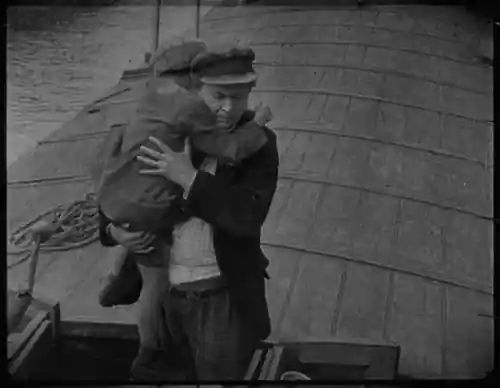
Where other films of the era, such as The Greatest Question, relied heavily on Griffith-style melodrama and moral didacticism, La belle Nivernaise opts for a nuanced naturalism. The performances are remarkably restrained. Blanche Montel, as Clara, conveys a depth of longing through subtle shifts in expression that feel startlingly modern. There is an absence of the histrionic gesticulation that often mars silent-era productions, replaced instead by a quiet intimacy that draws the viewer into the characters' inner lives.
The technical centerpiece of the film—the navigation of the barge through the lock—remains a breathtaking achievement. Epstein utilizes rapid-fire editing and dynamic camera angles to heighten the sense of peril. It is a sequence that rivals the structural precision of The Fourth Musketeer, yet it feels more grounded in physical reality. The water churning, the heavy gates groaning, and Victor’s frantic efforts to save the boat create a visceral experience that transcends the limitations of the medium in 1923. This isn't just action for the sake of spectacle; it is the externalization of Victor’s internal struggle to protect the only life he has ever known.

Epstein’s use of the close-up deserves particular scholarly attention. He doesn't just use it for emotional emphasis; he uses it to deconstruct the human face into a landscape of its own. When we see Victor or Clara in close-up, the background blurs into a soft, impressionistic haze, forcing the audience to confront the raw immediacy of their existence. This technique creates a sense of isolation and intimacy that was far ahead of its time, predating the psychological depth of later sound dramas like Gimme.
The conflict between Maugendré’s bourgeois aspirations and Louveau’s proletarian authenticity serves as the film’s socio-economic backbone. When Victor is taken to Paris to be "educated," the film’s visual language shifts. The fluid, handheld-like quality of the canal scenes is replaced by static, formal compositions. Paris is depicted as a cage of stone and etiquette, a stark contrast to the verdant, ever-changing banks of the canal. This thematic dichotomy—nature versus civilization—is a recurring trope in cinema, seen in various forms from Os Fidalgos da Casa Mourisca to Johanna Enlists, but Epstein imbues it with a poetic melancholy that avoids easy clichés.

Maugendré is not a villain; he is a man blinded by the conventions of his class. His eventual realization that Victor’s happiness cannot be bought with charcoal profits provides a poignant resolution. The final image of the new barge, a vessel of independence for the young couple, acts as a powerful metaphor for the synthesis of tradition and progress. It is a far more satisfying conclusion than the escapism found in Smiling Jim or the pulp adventures of The Tents of Allah.
One cannot discuss La belle Nivernaise without acknowledging its influence on the French New Wave and the subsequent generations of filmmakers who prioritized visual poetry over narrative rigidity. Epstein’s insistence on shooting on location, using natural light, and embracing the "accidents" of the environment paved the way for a more authentic cinematic language. While films like Britain's Bulwarks, No. 1 served as functional propaganda, Epstein sought a higher truth—a spiritual connection between the viewer and the viewed.

Even when compared to contemporary genre pieces like Casey at the Bat or the exoticism of Ashoka, La belle Nivernaise stands apart for its sheer aesthetic purity. It does not seek to entertain through gimmicks or shock; it invites the viewer into a state of contemplative grace. The film’s pacing may seem deliberate—slow, even—to modern audiences accustomed to the hyper-kinetic editing of today’s blockbusters, but for those willing to surrender to its rhythm, the rewards are immense.
The restoration of this film allows us to appreciate the subtle gradations of grey and white that Epstein and his cinematographers utilized to create a silvery, dreamlike quality. It is a reminder that before cinema was a business of billion-dollar rewards—the kind of stakes found in $1,000 Reward—it was an avant-garde frontier. Epstein was an explorer of that frontier, and La belle Nivernaise remains his most accessible and enduring map.
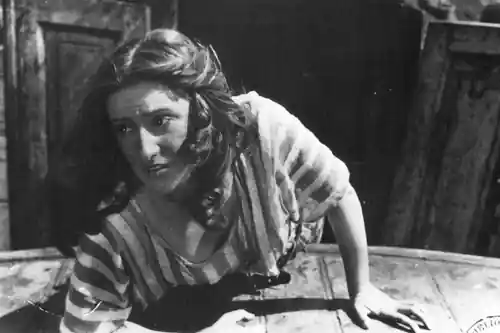
The casting of Max Bonnet and Pierre Ramelot provides a grounded reality that anchors the film’s more abstract tendencies. Their interactions feel lived-in, possessing a rugged charm that avoids the saccharine pitfalls of Gypsy Love or the simplistic comedy of Beaches and Peaches. Every character in this film, from the minor bargehands to the stern Maugendré, is treated with a level of dignity and complexity that was rare for the 1920s.
In the final analysis, La belle Nivernaise is a triumph of humanism. It suggests that our true identity is not found in the papers we carry or the houses we inhabit, but in the work we do and the people we love. It is a film that demands to be felt rather than just watched. Like the canal itself, it flows at its own pace, indifferent to the world’s hurry, yet carrying within its depths a profound and moving reflection of the human condition. For any serious student of cinema, or indeed anyone who appreciates the intersection of art and life, this film is an essential voyage. It is a beacon of silent cinema, shining as brightly today as it did a century ago, reminding us that the most powerful stories are often those whispered by the wind and the water.
IMDb —
1919
Community
Log in to comment.