
Cult Cinema
The Sepia Subversion: Decoding the Primal Anarchy and Niche Devotion of Cinema’s Earliest Misfit Wave
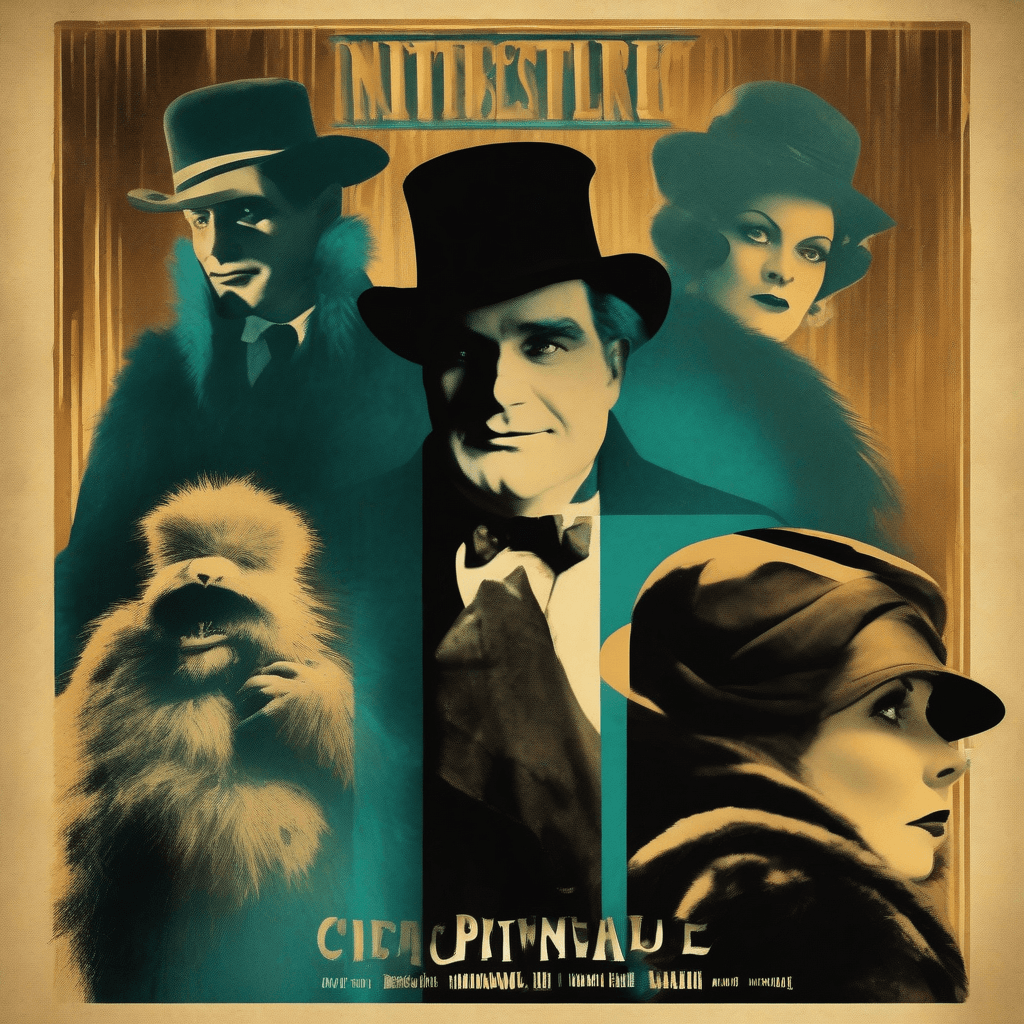
“Explore the hidden foundations of cult cinema through the lens of early 20th-century anomalies and transgressive silent masterpieces that defined the midnight soul.”
The concept of the 'cult film' is often erroneously tethered to the counter-culture of the 1970s, a product of the midnight movie circuit and the rise of home video. Yet, as any diligent film archaeologist knows, the genetic rebellion of the cinematic outlier was drafted in the flickering, nitrate-fueled shadows of the silent era. Long before the term 'cult' was formalized, a wave of rogue narratives and moral anomalies were already carving out a space for what we now recognize as niche devotion. This was the era of the Sepia Subversion, a time when the rules of storytelling were still being written—and frequently broken—by a cadre of misfit directors and transgressive themes.
The Architecture of the Early Cinematic Outlier
To understand the origins of cult cinema, one must look at the films that dared to defy the burgeoning commercial standards of the 1910s and 20s. These were not merely 'bad' movies or forgotten relics; they were experiments in narrative anarchy. Take, for instance, the 1914 adaptation of The Jungle. While mainstream cinema was beginning to favor escapist romance, this film plunged audiences into the visceral rot of the American industrial dream. It was a precursor to the gritty, socio-political cult films of the 1960s, using the medium as a blunt instrument for social critique. Its focus on the financial hardship of a Lithuanian immigrant in Chicago offered a level of realism that was both repulsive and magnetic to a specific, politically-charged audience.
Similarly, the 1919 film The Amateur Adventuress subverted the traditional 'virtuous girl' trope. By presenting William Claxtonbury as a lecherous figurehead of a welfare association, the film engaged in a biting satire of moral gatekeeping. This kind of cynical subversion is a hallmark of the cult ethos—a refusal to accept the face value of institutional authority. When we examine the 1922 production of Othello, we see the roots of literary subversion, where the treacherous Iago’s plans to ruin the Moor become a study in psychological obsession that would later inform the dark, character-driven cult dramas of the noir era.
Voyeurism and the Gaze: The Birth of the Midnight Mindset
Cult cinema thrives on the 'taboo' and the 'forbidden gaze.' This is perfectly encapsulated in the 1917 film Scandal. The opening sequence, featuring male gossips peering through windows to comment on passers-by, is a meta-commentary on the act of watching itself. It mirrors the voyeuristic thrill that modern cult audiences seek in transgressive cinema. This film, alongside The Moral Code (1917), explored the friction between public reputation and private reality. In The Moral Code, the protagonist’s marriage to a 'loose' woman to protect a family name serves as a primitive blueprint for the melodrama-turned-cult-camp that would define the works of Douglas Sirk or John Waters decades later.
We also see the emergence of the 'dangerous woman' archetype in The Huntress of Men (1916). The titular character, dubbed 'The Huntress' for her wild attention-craving ways, represents a rejection of the domestic ideal. The narrative attempt to 'domesticate' her in a mining town is a classic conflict that resonates with the rebel spirit of cult fandom—the untamable force that refuses to fit into a polite society. This archetype is further explored in La tigresa, a film that, even in its title, suggests a feral, uncontainable femininity that challenged the era's gender norms.
The Surreal and the Absurd: Proto-Camp Origins
If cult cinema has a soul, it is often found in the absurd. Call for Mr. Caveman (1919) is a staggering example of early genre mutation. A giant caveman kidnapping a woman named 'Adorable' in exchange for a new suit of clothes is the kind of surrealism that pre-dates the Dadaist movement’s influence on film. It is pure cinematic eccentricity, a proto-camp masterpiece that prioritizes the bizarre over the logical. This same energy is found in Hard Cider (1914) and Private Preserves (1917), short comedies that leaned into the physical and situational absurdity that would later become a staple of the 'so-bad-it's-good' midnight movie circuit.
The fascination with the 'other' and the 'exotic' also played a role in forging the cult psyche. Das Mädchen aus der Opiumhöhle (The Girl from the Opium Den) and The Blue Fox (1921) delved into subcultures and racial intersections that were often handled with a mix of exploitation and genuine curiosity. The Blue Fox, featuring a protagonist of mixed heritage caught between cultures and facing tribal jealousy, provided an early template for the 'identity-in-crisis' narratives that are so prevalent in the cult canon. These films were the 'underground' of their day, offering glimpses into worlds that the average theater-goer was meant to avoid.
Genre Defiance and the Mutation of the Western
While the Western is often seen as the most 'American' and mainstream of genres, the early silent era used it as a canvas for strange, moralistic deep-dives. The Sheriff of Hope Eternal (1921) and The Highway of Hope (1917) are not your standard tales of white-hat heroism. They are stories of 'fallen' men—stage drivers abashed by beauty, or sons cast out for wild shenanigans who marry in drunken stupors. This focus on the flawed protagonist is essential to the cult film’s allure; we root for the underdog, the drunk, and the outcast.
Even in the realm of short films, such as The Overland Express or Walt Disney’s early Did You Ever Take a Ride Over Kansas City Street 'in a Fliver' (1923), we see a restless energy. Disney’s third drawing of life in Kansas City represents the birth of an animation style that would eventually become its own kind of cult obsession. The frantic, kinetic movement of these early 'flivers' mirrored the rapid, often chaotic evolution of the film industry itself.
The International Rogue Wave
Cult devotion is never restricted by borders. The silent era was a truly global phenomenon, and the 'misfit' films of this period spanned the continent. From the Hungarian drama A vörös Sámson to the Italian spectacle of Maciste innamorato, the primal language of the screen was used to explore themes of strength, love, and betrayal that transcended linguistic barriers. L'Arlésienne (1922) offered a French perspective on obsessive love, while Die Gespensterstunde (The Ghostly Hour) from Germany utilized the 'haunted castle' trope to explore anxieties about inheritance and legitimacy—a precursor to the Gothic cult horror that would follow.
In Scandinavia, Baron Olson (1920) delivered a comedy of manners that poked fun at the high-grade bachelor life, while Denmark gave us the mystery of Manden med de ni Fingre III. These films, often overlooked in standard histories, represent the peripheral pulse of a global underground. They were the films that traveled in suitcases, the ones that were whispered about in the backrooms of European cinema clubs, forging a sense of community among those who preferred the shadows to the spotlight.
The Legacy of the Forgotten Fringe
As we look back at films like The Old Curiosity Shop (1921) or The Avalanche (1919), we see the recurring theme of the 'relic' and the 'addiction.' In The Avalanche, a woman’s gambling addiction threatens her daughter, a narrative cycle that mirrors the obsessive nature of the cult film fan. We are addicted to the flicker, to the strange, to the things that society tells us to forget. The dwarf usurer in The Old Curiosity Shop is a grotesque figure that belongs in a David Lynch film, a reminder that the weirdness of the human condition has always been a primary subject of the cinematic fringe.
The enduring power of these films lies in their refusal to be forgotten. Whether it is the tragic romance of Lady Rose's Daughter (1920) or the action-packed adventure of The Blue Fox, these movies are the ancestors of every midnight movie ever screened. They taught us how to love the unloved, how to find beauty in the 'amateur,' and how to celebrate the rebel heart of the moving image. Cult cinema is not a genre; it is a way of seeing. It is a commitment to the strange, a devotion to the different, and it all began with the sepia-toned subversions of a century ago.
In conclusion, the 'misfit wave' of the silent era was the original underground. By examining the transgressive DNA of films like The Jungle, Scandal, and Call for Mr. Caveman, we can see that the modern cult obsession is simply a continuation of a primal urge to witness the unorthodox. The silent era was not just the birth of cinema; it was the birth of the cinematic outlaw. And as long as there are screens, there will be those who seek out the shadows of the sepia subversion, looking for the truth in the beautiful, bizarre anarchy of the fringe.
Community
Comments
Log in to comment.
Loading comments…