
Cult Cinema
The Topaz Transgression: Unearthing the Silent Era’s Transgressive DNA and the Genesis of the Midnight Mindset
“A deep dive into how the 1910s and 20s silent film fringe, from surrealist animations to moral-defying dramas, constructed the blueprint for modern cult cinema.”
To the casual observer, the phenomenon of cult cinema is a modern invention, a byproduct of the 1970s midnight movie circuit and the subsequent home video boom. We think of the neon-soaked transgression of the underground, the campy rituals of fan participation, and the glorification of the B-movie aesthetic. However, the true genetic code of the cult outlier was written much earlier, in the flickering, nitrate-fueled shadows of the silent era. Long before the term 'cult film' was coined, the 1910s and 1920s were already producing works that defied the burgeoning mainstream, embracing moral ambiguity, surrealist imagery, and narrative anarchy. These were the original transgressive masterpieces, films that didn't just tell stories but challenged the very fabric of early 20th-century social norms.
The Moral Maverick: Redefining the Heroic Archetype
One of the primary pillars of cult cinema is the subversion of the traditional hero. In the early days of Hollywood, the 'moral' path was often rigid, yet several films from the 1910s dared to explore the gray areas of the human psyche. Take, for instance, the 1917 film The Sons of Satan. This narrative features a detective who secretly heads a gang of jewel thieves—a shocking duality for its time. This protagonist isn't a beacon of justice but a vessel of contradiction, prefiguring the anti-heroes that would later dominate the cult landscape. By blurring the lines between law and crime, the film invited a specific kind of devotion: an audience that appreciated the complexity of the 'gentleman thief' and the inherent corruption within authority.
Similarly, His Robe of Honor (1918) presents Julian Randolph, a dishonest attorney specializing in phony jurors who is offered a judgeship to clear a murderer. This exploration of systemic corruption and personal redemption through illicit means is a hallmark of what we now recognize as the cult ethos—the celebration of the outsider who operates within a broken system. These films didn't just provide entertainment; they offered a mirror to the societal hypocrisies of the era, attracting viewers who sought something more profound than the sanitized morality plays of the major studios.
Surrealism and the Birth of the Bizarre
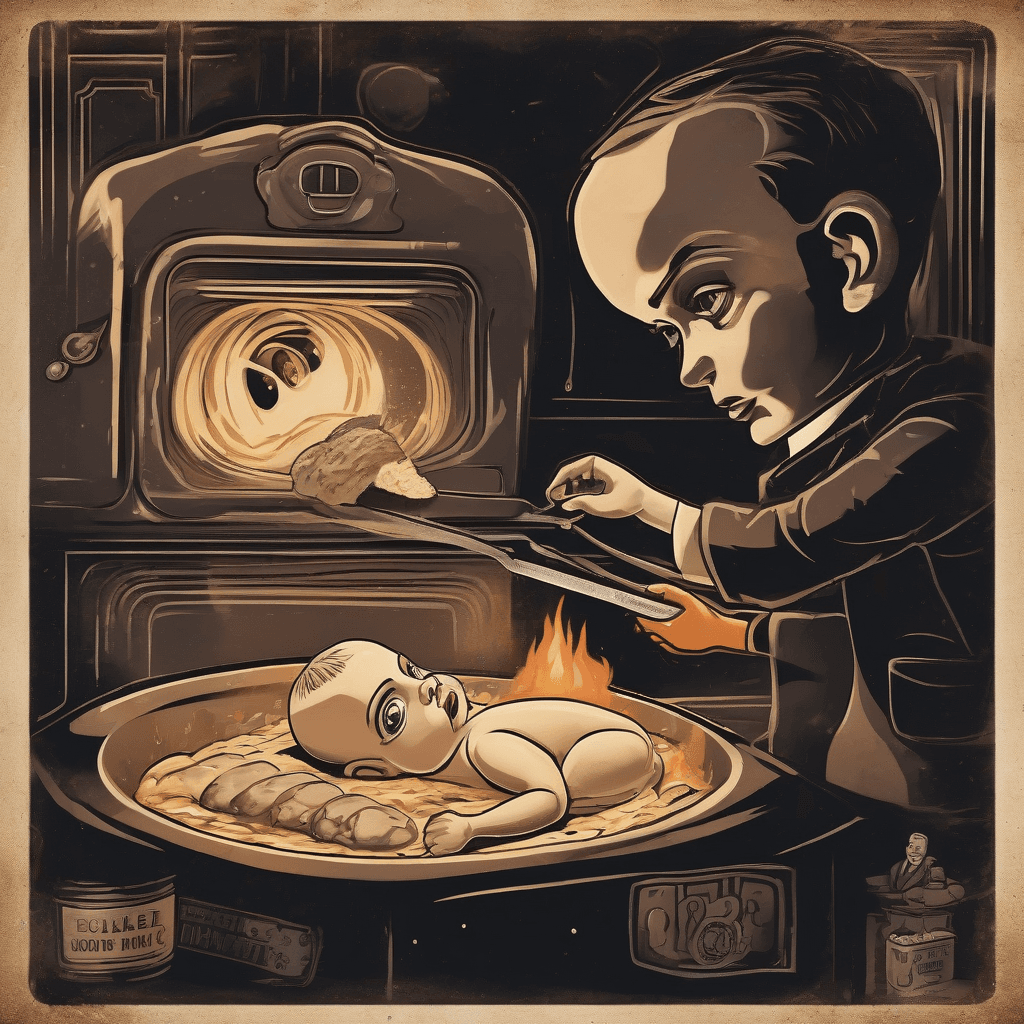
If cult cinema is defined by its 'weirdness,' then the silent era was its most fertile laboratory. The 1917 short The Stork's Mistake offers a glimpse into a surrealism that feels almost Lynchian in its execution. In 'Babyland,' babies are made of clay and baked in ovens until done; if they are burnt, the elves have played a game. This kind of bizarre, dreamlike logic is the ancestor of the avant-garde and the 'midnight movie' aesthetic. It presents a world where the biological is replaced by the industrial and the whimsical is tinged with the grotesque. It is this exact blend of the fantastic and the unsettling that drives fanatical devotion in niche circles.
The era’s fascination with the unknown extended to the cosmos with Hello, Mars! (1920), an early animated exploration of extraterrestrial life. During a time when space travel was pure fantasy, these films allowed audiences to escape the terrestrial grind. This penchant for the 'other' is also evident in The Chinese Honeymoon (1918), where animation and live-action tropes began to merge, creating a visual language that was as experimental as it was entertaining. These films were not aiming for the widest possible audience; they were aiming for the curious, the dreamers, and those who found beauty in the strange.
Genre Mutations: From Crime to Cosmic Comedy
Cult cinema often thrives on the 'genre-bender'—the film that refuses to stay in its lane. The silent era was rife with these mutations. Sherlock Brown (1922) is a perfect example, blending crime, comedy, and drama into a cocktail that defies easy categorization. William Brown, an aspiring detective who buys a tin badge for five dollars, finds himself embroiled in a plot involving stolen government explosives. The film mocks the very detective tropes it utilizes, a meta-textual approach that would later define the works of cult icons like John Waters or the Coen Brothers.
We also see this in the 1919 film The Lincoln Highwayman, which uses a prologue to depict the evolution of banditry from the road agent to the modern automobile bandit. By contextualizing crime through a historical and technological lens, the film elevates a simple heist story into a commentary on modernity itself. This intellectual layering, hidden beneath the surface of 'pulp' entertainment, is exactly what modern cult disciples spend decades decoding. It is the 'hidden law' of the fringe—the idea that there is always more than meets the eye.
The Cinema of Failure and the Ebb Tide of Success
A recurring theme in the annals of the cinematic underground is the 'failure'—the protagonist who is cast out by society and forced to forge their own path. Ebb Tide (1922) captures this spirit perfectly. Centered on three failures—Captain Davis, Robert Herrick, and J. L. Huish—on a derelict ship, the film is a masterclass in atmospheric dread and the isolation of the human condition. These characters are not looking for glory; they are looking for survival on the fringes of the world. This focus on the marginalized and the 'derelict' resonates deeply with the cult audience, who often see themselves as outsiders to the mainstream cultural narrative.
Similarly, The Third Kiss (1919) tells the story of Missy, an heiress who seeks atonement for the lives lost in her uncle's factory fire. It is a narrative of guilt, class struggle, and the heavy burden of inheritance. These films addressed the anxieties of the working class and the moral failures of the elite, grounding their 'melodrama' in a grit that felt revolutionary. When we look at Marta of the Lowlands (1914), where a beggar child is victimized by a wealthy landowner, we see the early roots of the social-thriller—a genre that remains a staple of the transgressive underground.
The Meta-Narrative and the Mighty Maciste
Perhaps the most fascinating precursor to modern cult obsession is Marvelous Maciste (1915). In a stunning display of meta-cinematic storytelling, the character Josephine flees from gangsters and enters a movie theater where she watches the film 'Cabiria.' Seeing the incredible strength of Maciste on the screen, she believes he can help her in real life. This blurring of the line between the screen and reality is the ultimate tribute to the power of the image. It anticipates the way cult fans 'live' within their favorite films, treating characters as deities and the screen as a portal to another dimension. Maciste became a recurring icon, a proto-superhero whose physical prowess and moral clarity provided a sanctuary for audiences navigating the chaos of the early 20th century.
The Kinetic Anarchy of the Silent Short
Cult cinema is not always about the 'long-form' epic; sometimes, it is found in the frantic energy of the short film. The comedy of the 1910s and 20s, such as Twin Lizzies (1917) or Going! Going! Gone! (1919), relied on a kinetic anarchy that felt dangerous. These films featured bank robbers, police chases, and 'wading women in distress,' all captured with a frenetic pace that mirrored the instability of the era. This 'slapstick' was often tinged with a darker edge—a 'close shave' with death or a 'stork's mistake' that hinted at a world governed by chaos rather than order.
In The Fowl Bird (1917) and A Rare Bird (1917), the titles themselves suggest an obsession with the eccentric and the anomalous. These were 'rare birds' indeed—films that existed for the moment, providing a burst of visual adrenaline before disappearing back into the nitrate vaults. The 'hick' who falls in love against his father's wishes in The Hick (1921) or the idle rich boy buying a detective agency in Leave It to Me (1920) all point toward a fascination with the reversal of roles and the overturning of expectations.
Legacy of the Silent Shadows
As we trace the lineage from Tarzan of the Apes (1918) to the modern action-cult, or from the religious fervor of Life of Christ (1906/1917 re-release) to the transgressive religious satires of today, the connection is undeniable. The silent era was not a 'pre-history' of cinema but its most daring chapter. It was a time when the rules were still being written, and the 'mavericks' were the ones holding the pens. Films like Beyond the Rocks (1922), featuring the magnetic chemistry of Gloria Swanson and Rudolph Valentino, showed that even within the 'romance' genre, there was a space for the 'noble' failure and the heart-wrenching choice between duty and desire.
The enduring allure of these films lies in their primal honesty. They were made before the 'Code,' before the homogenization of the studio system, and before the 'cult' was something that could be marketed and sold. They were genuine anomalies, born of a desire to push the boundaries of what could be shown and what could be felt. Whether it was the 'clown' saving a child in The Clown (1917) or the 'charming deceiver' navigating a world of forgery and eviction in The Charming Deceiver (1917), these stories provided the emotional and narrative scaffolding upon which the entire edifice of cult cinema was built.
Today, as we look back at Ludzie bez jutra (1919) and its 'flirtatious coquette' or the 'boundary rider' chasing opium smugglers in The Boundary Rider (1914), we are reminded that the 'midnight' spirit has always been with us. It is a spirit of rebellion, of curiosity, and of a deep-seated love for the 'unconventional' reel. The silent era’s moral mavericks and genre mutants didn't just invent the cult cinema psyche—they perfected it, leaving behind a legacy of shadows that continue to haunt and inspire the modern cinematic mind.
Community
Comments
Log in to comment.
Loading comments…