
Deep Dive
The Outlier's Omen: How Early Cinema's Misfit Experiments Engineered the Cult Movie Soul
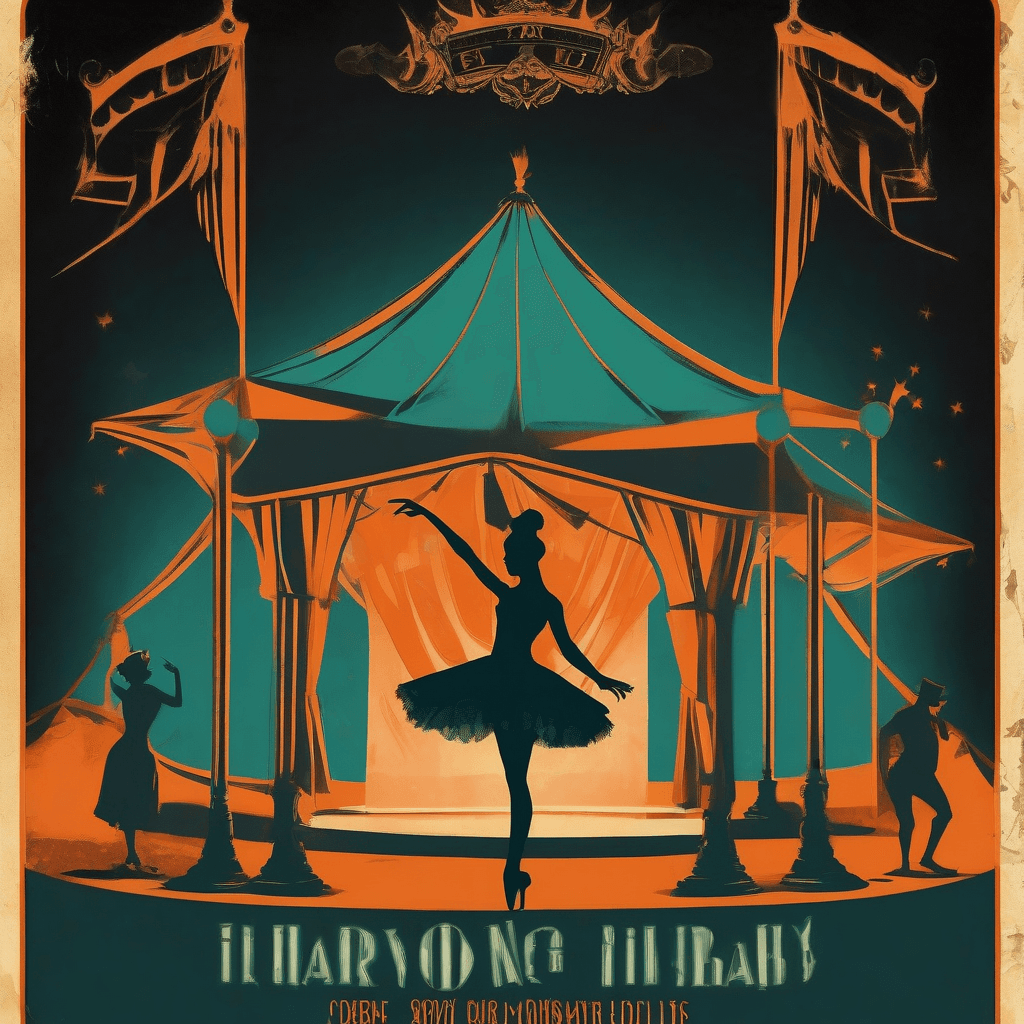
“A deep dive into the primal roots of cult cinema, exploring how the silent era's transgressive experiments and narrative outcasts birthed the modern midnight movie obsession.”
The history of cinema is often written by the victors—the blockbusters that shattered box office records and the prestige dramas that swept award ceremonies. Yet, beneath the polished veneer of mainstream success lies a darker, more vibrant subterranean current: cult cinema. While many associate the term with the 1970s midnight movie boom, the DNA of the cult film was actually sequenced decades earlier. It was forged in the flickering shadows of the silent era and the early talkies, where directors like Ashley Miller and Max Fleischer began experimenting with themes that the polite society of the time found baffling, if not outright dangerous.
The Genesis of the Transgressive Image
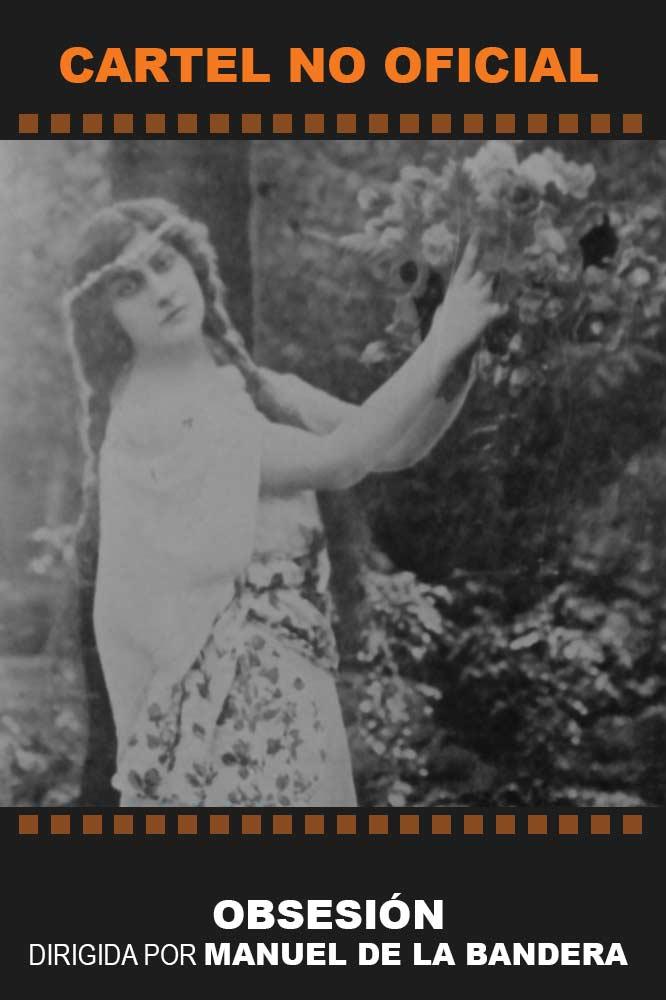
To understand the modern cult obsession, one must look at the early 20th-century works that dared to step outside the boundaries of conventional storytelling. Consider the 1921 short Dracula's Death. Though much of the film is lost to the ravages of time, its premise—a girl plagued by visions after encountering an inmate who claims to be the legendary vampire—predates the gothic saturation of modern horror. It represents the first spark of the cult aesthetic: the blurring of reality and nightmare. This same psychological tension is found in Umirayushchiy lebed (The Dying Swan), where a ballerina becomes the muse for an artist whose obsession spirals into madness. These films didn't just tell stories; they created atmospheres that lingered in the mind long after the projector stopped humming.
The cult film is defined by its refusal to conform. In the early days, this often meant exploring social taboos. Vingarne, an early adaptation of Herman Bang's novel, dared to explore the complexities of a friendship between a sculptor and his model that was laced with unspoken desire and jealousy. By centering narratives on the fringes of acceptable social behavior, these early filmmakers laid the groundwork for the transgressive cinema of the 1960s and 70s. They proved that the screen could be a mirror for the outcasts and the misunderstood.
Social Rupture and the Birth of the Rebel Narrative
Cult cinema has always been a sanctuary for political and social dissent. Following the upheaval of World War I, films like A Friend of the People reflected the deep-seated divisions of the working class through the lens of three brothers fighting for justice in their own ways. This wasn't just entertainment; it was a manifesto on celluloid. Similarly, The Finger of Justice took a bold stance against political corruption and urban vice, using the medium to expose the rot within the system. These films resonated with audiences who felt disenfranchised by the status quo, creating a template for the "us vs. them" mentality that defines many modern cult followings.
Even within the realm of comedy, the seeds of rebellion were sown. Nineteen and Phyllis and Good References might appear as lighthearted romps on the surface, but they frequently poked fun at the rigid class structures of the era. The protagonist of Nineteen and Phyllis, Andrew Jackson Cavanaugh, is a man defined by his lack of wealth in a world that demands it—a classic cult archetype of the underdog trying to navigate a world that wasn't built for him. These narratives allowed audiences to laugh at the absurdity of their own societal constraints, fostering a communal bond that is the hallmark of niche cinema.
The Surreal and the Grotesque: Breaking the Fourth Wall
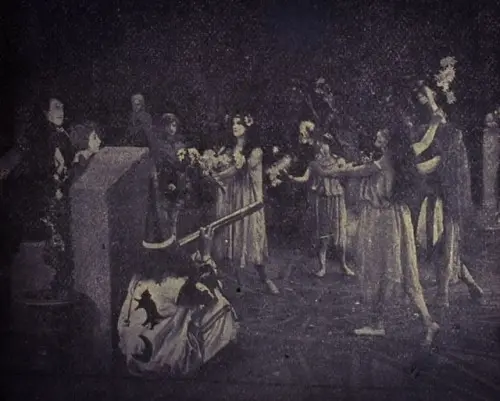
Before the avant-garde movements of the mid-century, early animation and shorts were already pushing the limits of the possible. The Clown's Little Brother, featuring Koko the Clown, is a prime example of meta-commentary. When Koko’s brother wreaks havoc in Max Fleischer’s studio, the film breaks the fourth wall, reminding the audience of the artifice of the medium. This self-awareness is a key component of the cult movie soul—a recognition that the film itself is an artifact, a living thing that exists in dialogue with its creator and its viewer.
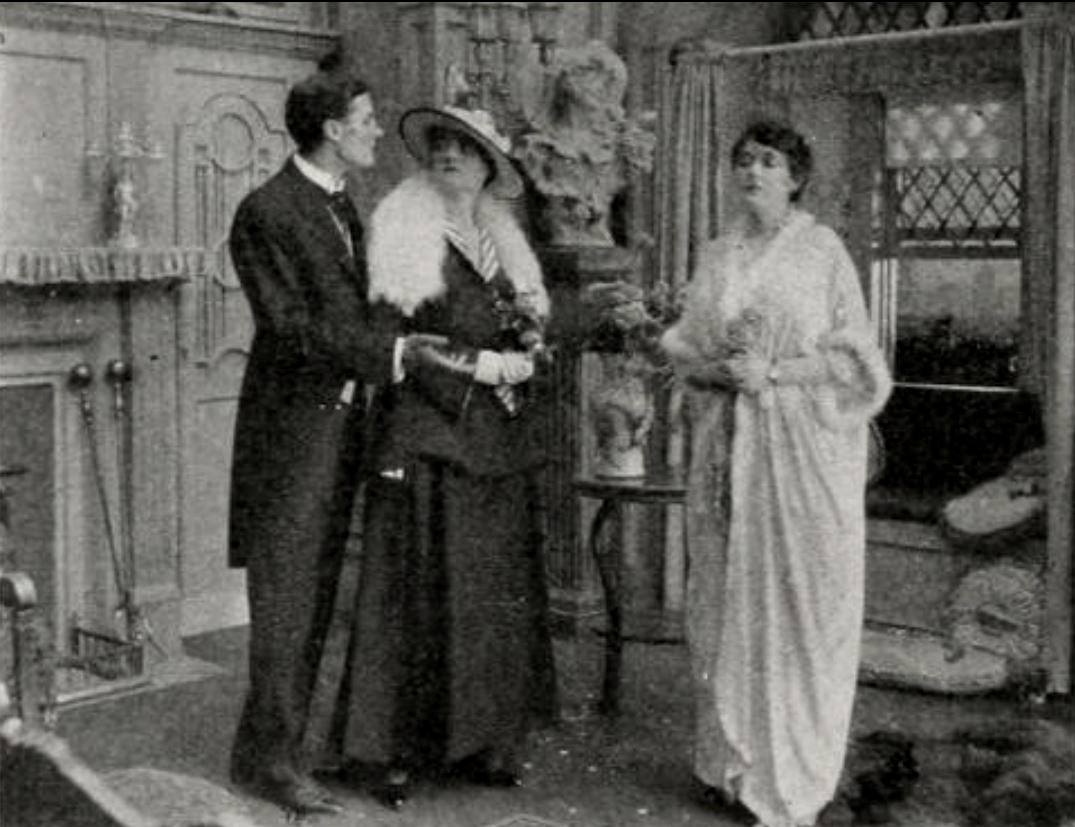
Then there is the bizarre, the supernatural, and the downright weird. Teufelchen (The Little Devil) presents a doctor from hell prescribing an elixir to a red rascal with a stomach ache. It is an image of the grotesque that feels entirely modern in its irreverence. This lineage of the "weird" continues through films like His Majesty, Bunker Bean, where a bashful stenographer is convinced he is the reincarnation of Napoleon. These stories embrace the absurdity of existence, providing a blueprint for the surrealist masterpieces that would eventually populate the midnight movie circuit.
Gender, Identity, and the Masquerade
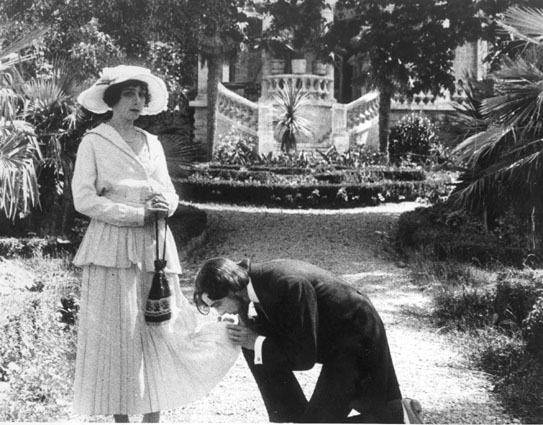
Cult cinema often thrives on the exploration of identity and the subversion of gender roles. A Broadway Scandal features Nenette Bisson, a woman who defies her father’s expectations to engage in joyrides and survive a police shooting—a proto-feminist rebel who refuses to be contained. In The Cave Man, we see a reversal of social engineering as a woman attempts to transform a man from the streets into a social leader on a wager, highlighting the performative nature of class and masculinity. These films used the "masquerade" as a way to question the inherent truths of the human condition.
The theme of the "double life" or the "hidden truth" is a recurring motif that draws cult audiences in. The Dazzling Miss Davison and Mary Lawson's Secret center on women with hidden pasts or dangerous secrets, forcing the audience to look beyond the surface. This creates a sense of narrative mystery that invites repeated viewings—a necessity for any film hoping to achieve cult status. When a movie suggests that what you see is not what you get, it demands that the viewer become a detective, a participant in the unfolding of the story.
The Aesthetics of the Fringe: Landscapes of the Outcast
The settings of early cult films were often as unconventional as their characters. From the treacherous logging camps of The Brute Breaker to the dusty cow towns of Charley on the Farm, these films moved away from the drawing rooms of the elite and into the rugged, untamed periphery. Hurry West and By Indian Post utilized the American West not just as a backdrop, but as a space of lawlessness and transformation, where a "tenderfoot" could become a man or a foreman could fight for love against all odds. This fascination with the liminal space—the edge of civilization—mirrors the cult film's position on the edge of the cinematic industry.
In the maritime world of The Naulahka, the journey to secure a fabled jewel in India serves as a metaphor for the pursuit of the unattainable. Cult cinema is often a journey toward a "holy grail" of sorts—be it a rare print, a misunderstood masterpiece, or a profound emotional truth buried under layers of camp or low-budget production values. The sheer ambition of films like The Life Story of David Lloyd George or the war-torn realism of Heroic France and On the Belgian Battlefield showed that cinema could capture the grand scale of history while remaining deeply personal and, at times, eccentric.
Why the Early Anomalies Still Matter
Why do we return to these flickering relics? It is because they represent a time of pure cinematic possibility. Before the Hayes Code and the homogenization of the studio system, there was a wildness to the medium. Films like Jinx, about a circus girl who causes chaos, or The Honeymoon, which dives into the corrosive nature of jealousy, were unafraid to be messy. They were unafraid to be unlikable. In Giving Becky a Chance, the protagonist’s shame regarding her parents' humble origins provides a raw, uncomfortable look at social climbing that feels startlingly contemporary.
The cult film is an act of survival. It is a film that was rejected by the many but embraced by the few. Whether it is the silent slapstick of A Dollar's Worth or the tragic weight of The Mayor of Casterbridge, these works have endured because they speak to the rebel heart in every cinephile. They remind us that the most powerful stories are often found in the most unlikely places—in a stolen car on Broadway, in a French Canadian logging camp, or in the delusional mind of a stenographer who thinks he is an emperor. As long as there are outcasts, there will be cult cinema, and its roots will always remain firmly planted in these early, daring experiments of the silent screen.
Ultimately, the legacy of films like Lili, Stay Down East, and The Suspect is a testament to the enduring power of the unconventional vision. They are the omens that predicted the rise of the midnight movie, the genetic markers of a genre that thrives on its own exclusion. To watch them today is to witness the birth of a revolution—one frame at a time.
Community
Comments
Log in to comment.
Loading comments…